Celebrating Black LGBTQ History. Black History Is Expansive. Beautifully Queer.#TheOtherSideOfChange
YouTube · lHAVwqYqcN4
Quick Read
Summary
Takeaways
- ❖Black history is not just trauma and struggle; it encompasses brilliance, innovation, queerness, rebellion, art, softness, audacity, and survival.
- ❖Black queer history, specifically, is often erased, despite Black queer icons shaping movements, cultures, language, fashion, and politics.
- ❖Reverend Jesse Jackson's presidential run paved the way for Barack Obama, demonstrating the power of Black leadership in higher office.
- ❖The WNBA players' fight for revenue sharing and their use of alternative leagues (like Unrivaled) exemplify powerful worker resistance against unfair compensation.
- ❖You cannot tell the story of Black liberation without Black queer people; figures like Bayard Rustin, Audre Lorde, Marsha P. Johnson, Angela Davis, and James Baldwin were foundational.
- ❖The omission of Black queer history is intentional, designed to promote patriarchal narratives and deny the existence of queer people.
- ❖Current anti-LGBTQ+ attacks, including book bans and anti-trans legislation, are coordinated efforts to build an authoritarian infrastructure, often funded by taxpayer dollars.
- ❖Black transgender women face exponentially higher homicide rates, and LGBTQ+ youth are significantly more likely to attempt suicide, especially when race is a factor.
- ❖Pre-colonial African societies often had more fluid understandings of gender and sexuality; rigid gender constructs were imposed through colonization.
- ❖Telling the truth about history and living authentically are critical ways to move from discomfort to celebration and achieve collective freedom.
Insights
1Intentional Erasure of Black Queer History
The omission of Black queer figures from mainstream historical narratives is not accidental but a deliberate strategy to maintain patriarchal lenses and deny the existence and contributions of queer people. This erasure serves to sanitize history and control perceptions of identity.
Co-host Bria Baker states, 'Far too often, entire chapters of that history, specifically black queer history, get erased.' () and 'That omission is not accidental. It's very intentional.' (). Dr. David Johns adds, 'the history has always been queer... that's purposeful.' ()
2Black Queer People as Architects of Liberation Movements
Black queer individuals were central to the civil rights and Black liberation movements, serving as strategists, theorists, and organizers. Their contributions, often overlooked, were fundamental to the progress achieved.
Co-host Jamira Burley highlights Bayard Rustin organizing the March on Washington, Audre Lorde redefining feminism, Marsha P. Johnson sparking resistance at Stonewall (). Bria Baker adds Angela Davis and James Baldwin as brilliant Black queer figures (). Dr. Johns notes Bayard Rustin's role in introducing nonviolent civil disobedience to Dr. King ().
3Anti-LGBTQ+ Attacks as Authoritarian Infrastructure
Current legislative efforts to ban books, restrict healthcare for trans youth, and police gender expression are not merely 'culture wars' but a coordinated authoritarian strategy to control people's lives and dismantle civil rights, starting with the most vulnerable.
Bria Baker notes, 'In the last few years, there have been more than 500 anti-LGBTQ bills introduced across state legislatures. This is a a decentralized movement to control the way that people dress, to control the people that we the way that people celebrate and love and show up in public. It's not random. It's extremely coordinated.' (). Jamira Burley adds, 'That's an authoritary infrastructure being built in real time in front of our faces.' ().
4Colonialism Redefined Gender and Sexuality for Black People
Pre-colonial African societies often embraced gender fluidity and diverse sexual expressions. The rigid, binary definitions of masculinity and femininity were imposed through colonization, forcing Black people into boxes antithetical to their original cultural understandings.
Jamira Burley states, 'queerness and trans communities have always existed throughout the history of black people if you look at the continent.' () and 'our masculinity and femininity were redefined. But it's all BS.' (). Dr. David Johns explains, 'everything originated in Africa... where gender constructs don't exist... those people actually occupy revered sacred space in the community.' ()
5The Psychological Toll of Erasure and Attacks
The lack of visibility and the constant political attacks on Black queer youth contribute to significantly higher rates of suicide, depression, and anxiety, exacerbated by a lack of access to mental health support. This systemic targeting amounts to a form of genocide.
Bria Baker highlights, 'LGBTQ youth are more than four times as likely to attempt suicide compared to their peers. And when you add race to that equation, um where are black LGBTQ youth um finding themselves?' (). Dr. David Johns reports, 'the suicide rate for black youth generally has continued to increase while while the same time it has decreased for every other group of children' ().
Bottom Line
WNBA players are actively challenging unfair revenue sharing by signing with Euro League teams and creating player-led leagues (Unrivaled), demonstrating a powerful model for athlete agency and collective bargaining.
This directly confronts the systemic underpayment of women athletes, particularly Black women, by leveraging international opportunities and internal solidarity to force change, offering a blueprint for other marginalized labor groups.
Support player-led initiatives and advocate for equitable revenue sharing in women's sports leagues, recognizing these actions as a form of economic and social justice.
The concept of 'white mediocrity' is framed as the origin of lies that create rigid gender constructs and societal norms, rather than 'white supremacy' which is seen as its manifestation.
This reframes the root cause of systemic oppression, suggesting that challenging the foundational 'lies' and internalized beliefs is more effective than only addressing the symptoms of supremacy. It encourages a deeper decolonization of thought.
Critically examine and deconstruct internalized beliefs about gender, sexuality, and power that originate from dominant, often white, cultural narratives, fostering intellectual autonomy and resistance.
Key Concepts
Decolonization of Identity
The concept that modern, rigid gender and sexual identity constructs are largely products of colonization and white mediocrity, and that reclaiming pre-colonial African ways of being offers a path to greater freedom and self-understanding for Black people, queer or not.
Intersectionality as a Tool for Liberation
Applying Black feminist critique and intersectionality theory allows for a deeper understanding of how various forms of oppression (racism, homophobia, transphobia, sexism) converge, particularly impacting Black queer and trans individuals, and how addressing these intersections is essential for universal liberation.
Celebration as Defiance
The idea that actively celebrating Black LGBTQ+ history, joy, and existence is a powerful form of resistance against attempts to erase, minimize, or criminalize these identities, asserting visibility and resilience in the face of systemic attacks.
Lessons
- Actively resist 'complying in advance' with policies or narratives that seek to diminish or erase marginalized communities, especially Black LGBTQ+ individuals.
- Become a historian of Black queer history by seeking out and consuming resources like 'Sister Outsider' by Audre Lorde, 'Time on Two Crosses' by Bayard Rustin, and 'All Boys Aren't Blue' by George M. Johnson.
- Support and amplify organizations dedicated to Black LGBTQ+ rights, such as the National Black Justice Collective (nbjc.org), the Marsha P. Johnson Institute, and the Black Trans Advocacy Coalition.
- Engage in conversations with family and community elders to challenge internalized homophobia and transphobia, creating spaces of reprieve and community care.
- Pursue joy and live authentically as a form of defiance against systemic attempts to force conformity and silence, recognizing that celebration is resistance.
Notable Moments
The hosts express frustration and anger over the passing of Reverend Jesse Jackson, juxtaposing it with their desire for Donald Trump's demise, highlighting the deep political polarization and the perceived loss of a crucial leader.
This moment encapsulates the emotional weight of losing civil rights leaders at a time when their work feels under renewed attack, and reveals the raw sentiment towards figures seen as dismantling progress.
A judge orders the Trump administration to restore the slavery exhibit at the Philadelphia presidential house, pushing back against attempts to whitewash history.
This is a concrete example of successful local resistance against federal efforts to erase or minimize the historical trauma and economic foundations of slavery, reinforcing the importance of preserving accurate history.
Dr. David Johns explains the historical origins of gendered language in English ('mister' vs. 'miss/ms./mrs.') and its connection to property rights and colonial power structures.
This detailed linguistic and historical analysis reveals how seemingly innocuous language reinforces patriarchal systems and demonstrates the deep, structural nature of gender-based oppression, making the argument for decolonization more tangible.
Quotes
"Black history is not just trauma. It's not just struggle. It's brilliance, innovation, queerness, rebellion, art, softness, audacity, survival. It's all the things. And far too often, entire chapters of that history, specifically black queer history, get erased."
"You cannot tell the story about black liberation without black queer people. Period."
"It's all lies birthed from the worst parts of white mediocrity."
"Celebration is not denial, right? Celebration is defiance. It is to say that you tried to erase us and you failed."
"We always have what we need in order to get free."
Q&A
Recent Questions
Related Episodes
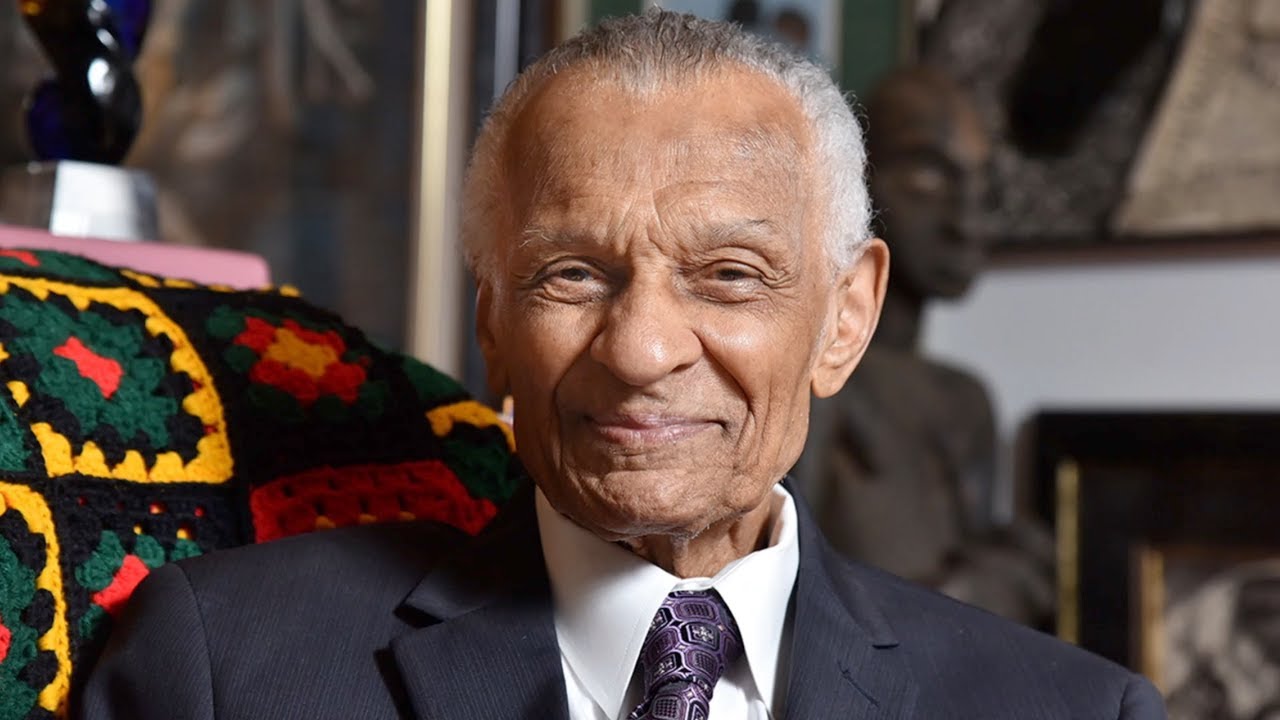
Rev. C.T. Vivian talks MLK and staring death in the face. #MLKDay2026
"Civil Rights icon Rev. C.T. Vivian reflects on a lifetime of struggle, from facing childhood bullies to confronting Jim Clark, and shares his profound insights on the continuous fight for freedom and the true cost of a movement."
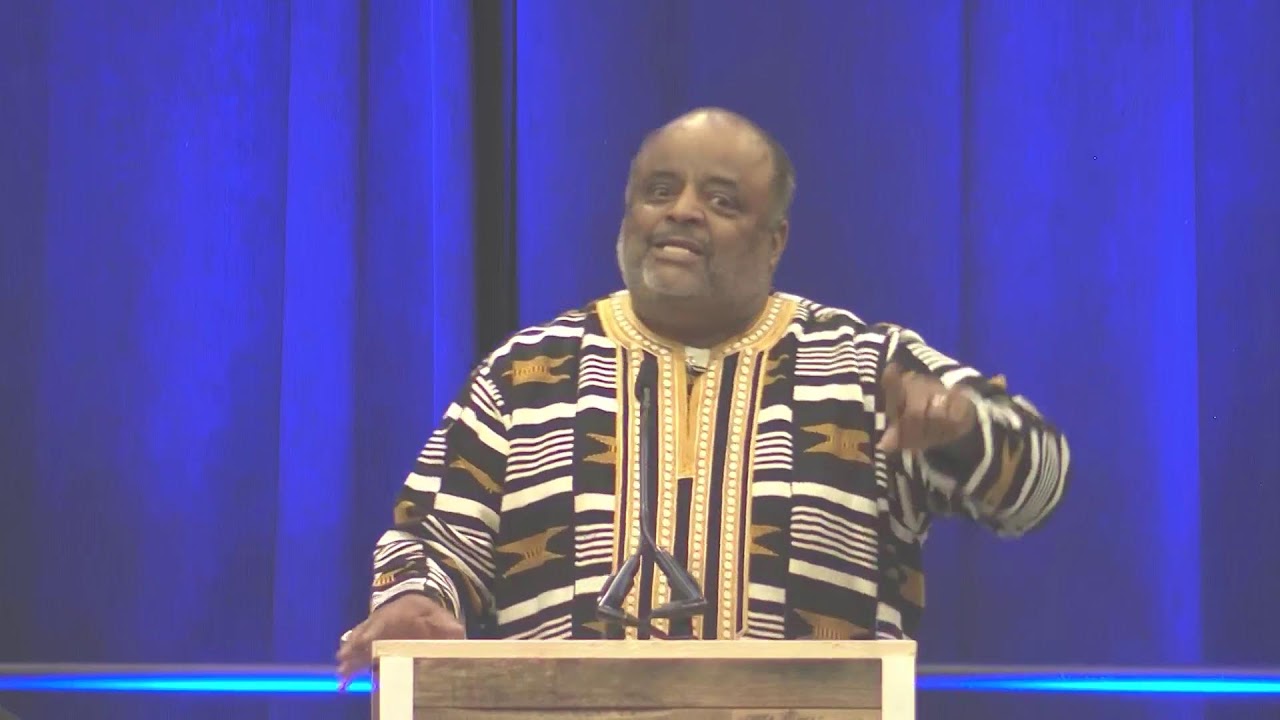
Roland speaks at Columbus Educ. Assoc. MLK Dinner
"Roland Martin challenges the audience at an MLK dinner to move beyond passive celebration and engage in active, sustained political and economic struggle, emphasizing that 'rest time is over' for those seeking real societal change."

All Roads Lead To the South: Nat’l Day Of Action For Voting Rights | Mass Rally | Montgomery, AL
"A mass rally in Montgomery, Alabama, ignites 'Freedom Summer 2026' to combat the Supreme Court's decimation of Black political power and demand unprecedented voter mobilization across the South."

MAGA Voting Rights Power Grab. Stacey Abrams Dire Warning. Justin Jones Stripped of All Committees.
"Roland Martin and guests expose a coordinated Republican effort to dismantle Black political power across the South through aggressive gerrymandering, voter suppression, and economic attacks, urging a unified, immediate, and sustained counter-mobilization."