BREAKING: Hezbollah Elite Forces Chief ELIMINATED; U.S. & Iran RAMP UP War Preparations | TBN Israel
YouTube · lQta1uFDniU
Quick Read
Summary
Takeaways
- ❖The U.S. is demanding Iran commit to not pursuing nuclear weapons, dismantle facilities, ban underground activity, and freeze uranium enrichment for 20 years, in exchange for sanctions relief.
- ❖Iran's Revolutionary Guards view the U.S. proposal as 'unthinkable' and the country is preparing for a potential U.S. attack, despite ongoing negotiations.
- ❖The naval blockade has severely impacted Iran's oil exports and overall economy, forcing it to reduce oil production and seek alternative trade routes.
- ❖Israel eliminated Malik Balot, commander of Hezbollah's elite Radwan force, in Beirut, coordinating the strike with the U.S. during sensitive Iran negotiations.
- ❖Hamas explicitly informed the Americans it 'will not disarm,' prompting Israel to prepare for renewed fighting in Gaza and consider expanding its operational 'yellow line' within the Strip.
- ❖Hamas is rebuilding its capabilities by smuggling weapons via drones and maritime containers, and by confiscating and selling humanitarian aid to fund its operations and strengthen its governance.
Insights
1U.S.-Iran Nuclear Negotiations: Demands and Divisions
The U.S. is pushing for a comprehensive nuclear agreement with Iran, demanding an explicit commitment against nuclear weapons, complete dismantling of key facilities (Fodo, Natans, Isvahan), a ban on underground activities, a 20-year uranium enrichment freeze, and strict inspections. In return, Iran would see gradual reopening of the Strait of Hormuz and sanctions relief contingent on actual implementation. However, Iran's Revolutionary Guards reject parts of the proposal, and the country's leadership is internally divided, with some believing Iran holds the upper hand.
The United States is demanding an explicit Iranian commitment that it is not pursuing nuclear weapons alongside the complete dismantling of the nuclear facilities in Fodo, Natans, and Isvahan. The United States is also demanding a complete ban on the underground nuclear activity and a 20-year freeze on uranium enrichment... If Thran does not agree to the American agreement, the bombing will begin. [] ...the revolutionary guards came out sharply against them and announced that the proposal is unthinkable. []
2Israel's Targeted Strikes Against Hezbollah and Hamas Leadership
During a period of purported ceasefire and ongoing U.S.-Iran negotiations, Israel conducted significant targeted strikes. The IDF eliminated Malik Balot, commander of Hezbollah's elite Radwan force, in Beirut, who was actively working to rebuild the unit and its plan to invade the Galilee. Concurrently, Azam Khalil Al Kaya, the son and a key liaison for the Hamas leader in Gaza, was killed in a strike, highlighting Israel's strategy of dismantling leadership and infrastructure across multiple fronts.
An Israeli official said that Malik Balot, the commander of Hisbala's elite forces, the commando unit Raduan was eliminated along with additional terrorists. [] ...Azim Khalil Al Kaya, the son of Hamas leader in the Gaza Strip, Khalil Al Kaya, died of his wounds after being hit in a strike in the Elaj neighborhood of Gaza City. []
3Hamas's Ceasefire Exploitation and Rebuilding Strategy
Despite a ceasefire, Hamas has explicitly refused to disarm and is actively rebuilding its military capabilities. This includes smuggling weapons and ammunition via drones from Egyptian territory and maritime containers, as well as exploiting humanitarian aid by confiscating portions, selling them at high prices, and distributing money to operatives. This strategy allows Hamas to strengthen its control over Gaza and prepare for future conflicts, turning the 'media quiet' into a 'smoke screen' for rearmament.
Hamas informed the Americans, 'We will not disarm.' [] ...weapons and ammunitions have been smuggled by drones from Egyptian territory directly into the Gaza Strip. [] ...Hamas uses aid in four directions. It tries to smuggle equipment inside the Gaza Strip, inside the air, the aid trucks. It confiscates parts of it and then sells it to the market, to the Palestinian people at high prices. []
4Israel's Multi-Front Security Dilemma
Israel faces a complex security challenge operating on multiple fronts simultaneously: against Hezbollah in Lebanon, Hamas in Gaza, Iranian presence in Syria, and managing diplomatic relations with Washington regarding Iran. The IDF is stretched, with divisions operating in the north, forces in Judea and Samaria, and the air force preparing for Iran. This multi-front engagement means Israel must fight with precision and broad thinking, ensuring that focus on one arena does not lead to neglect or rearmament in another.
In the north, divisions are operating against hisbala. In Syria, there is presence and activity. In Judea and Samaria, additional forces are needed. The air force is busy preparing for Iran. And at the same time, in Gaza, Hamas is using every day of quiet to rebuild itself. [] ...Israel has to do something very difficult. Fight with precision, think broadly, and not allow one arena to put it to sleep in another arena. []
Bottom Line
Iran's 'suicide dolphin' unmanned vessels, while dismissed by Western experts as psychological warfare, indicate a strategic focus on unconventional and perception-based deterrence, aiming to neutralize Western technological advantages through novel, low-cost methods.
This highlights Iran's broader strategy of asymmetric warfare and propaganda, where even seemingly absurd military developments serve to project strength and sow uncertainty, rather than representing a direct conventional threat. It forces adversaries to consider and potentially counter a wider range of perceived threats.
Develop advanced counter-propaganda and psychological warfare strategies to expose and neutralize such 'threats' before they gain traction, while also investing in defenses against unconventional, low-cost autonomous systems that might evolve beyond mere psychological tools.
Key Concepts
The Long Game in Geopolitics
This model suggests that in complex geopolitical conflicts, immediate agreements are often imperfect and temporary. Actors like Iran and its proxies play a 'long game,' using ceasefires and negotiations to rebuild strength and capabilities, necessitating continuous vigilance and proactive measures from adversaries like Israel, rather than expecting definitive, lasting resolutions.
Imperfect Agreements as Necessary Evils
This model posits that in conflicts with terrorist organizations or hostile states, perfect agreements are unattainable. Negotiating parties must accept flawed compromises because the alternative (perpetual warfare or complete annihilation) is often worse or impossible. The challenge lies in ensuring these imperfect agreements still serve vital security interests and do not merely provide cover for enemy rearmament.
Lessons
- Monitor Iranian internal divisions (e.g., Revolutionary Guards vs. Foreign Ministry) for indicators of genuine shifts in negotiation posture or potential instability.
- Evaluate 'ceasefire' agreements not by their stated terms, but by observable actions on the ground, specifically the enemy's ability to rearm, smuggle, and consolidate power.
- Advocate for international aid mechanisms in conflict zones that prevent diversion by terrorist organizations, ensuring aid reaches civilians and does not inadvertently fund rearmament.
Notable Moments
Discussion of Iran's 'suicide dolphins' (unmanned vessels simulating dolphins) as a psychological warfare tactic.
This moment illustrates Iran's unconventional approach to military development and its focus on perception management, even when the actual threat is deemed low by Western experts. It highlights the role of psychological operations in modern conflict.
Quotes
"The history is is that at every turn and every time in the past, the Iranians have been crafty enough, they've been resilient enough, they've had enough patience to wait out whoever they were negotiating with to the point where the agreement was without teeth to really be enforced against them."
"Israel has an amazing ceasefire agreement with Lebanon and no ceasefire agreement with who are the people we're fighting in Lebanon."
"You do not measure a threat by the noise that it makes today. You measure it by the capability it is building for tomorrow."
Q&A
Recent Questions
Related Episodes
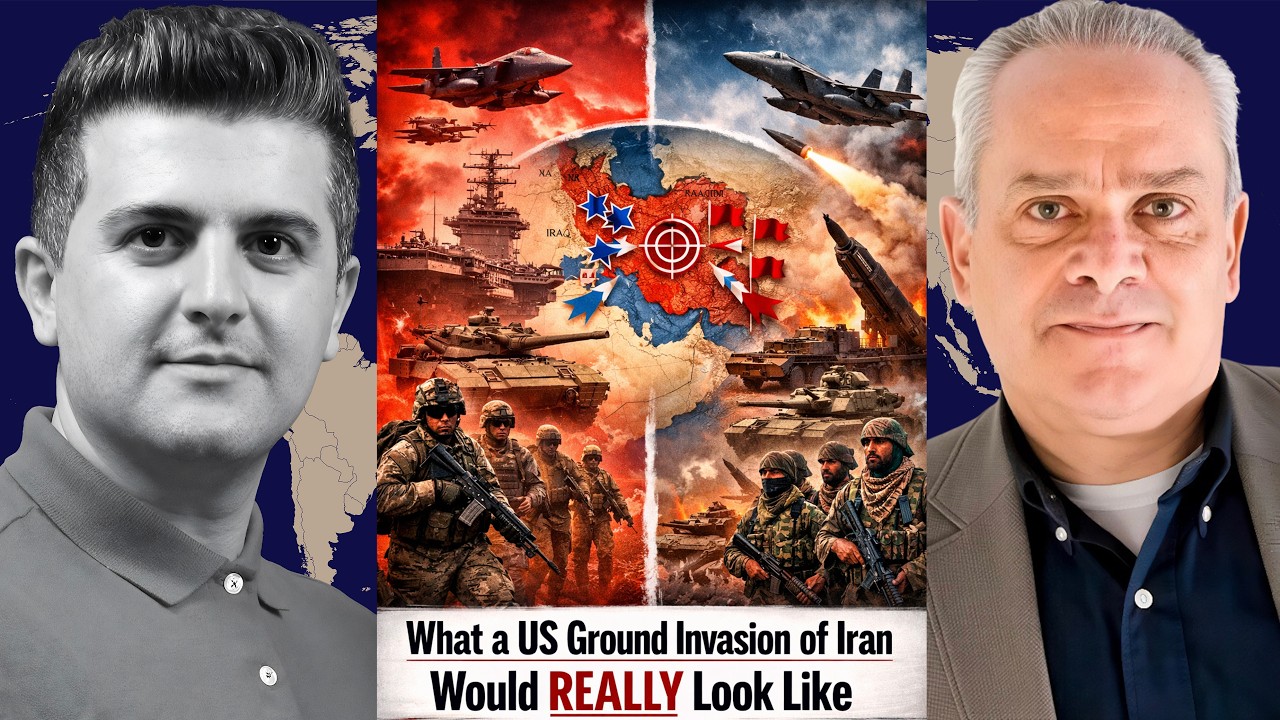
Col. Jacques Baud: What a US Ground Invasion of Iran Would REALLY Look Like
"Colonel Jacques Baud dissects the strategic futility of a US ground invasion of Iran, arguing that current troop levels are insufficient and such an action would backfire, exposing US allies and potentially leading to Iran's nuclearization."

Patrick Henningsen: Hezbollah JUST Fired Back at Israel - Iran Vows to “Crush” All Attacks
"Patrick Henningsen argues that the US and Israel initiated an illegal war against Iran, driven by Trump's incompetence and Israeli influence, leading to an inevitable escalation with severe global economic repercussions."
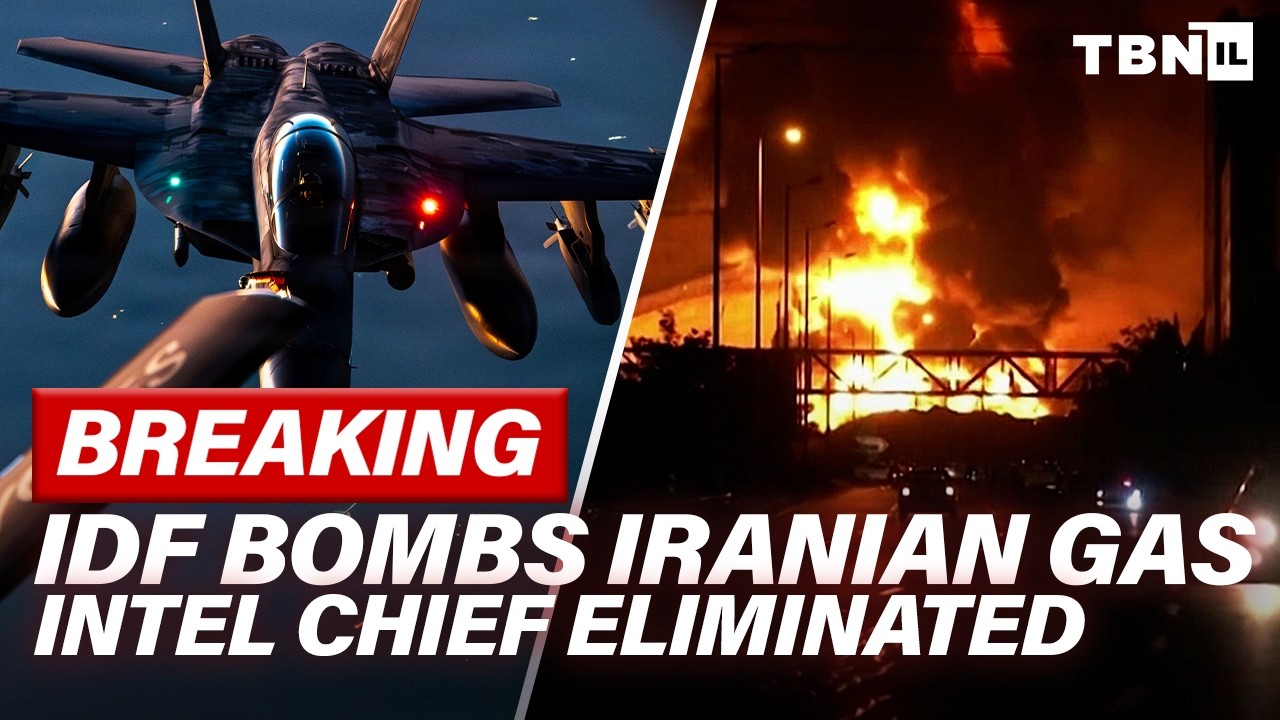
BREAKING: Israel BOMBS Major Iran Gas Site; Top Mullah ELIMINATED; Iran Vows VENGEACE | TBN Israel
"Israel and the United States have escalated their 'Roaring Lion War' against Iran, striking its largest gas facilities, eliminating key intelligence and military figures, and disrupting missile production, while Iran threatens a broader energy war in the Gulf."
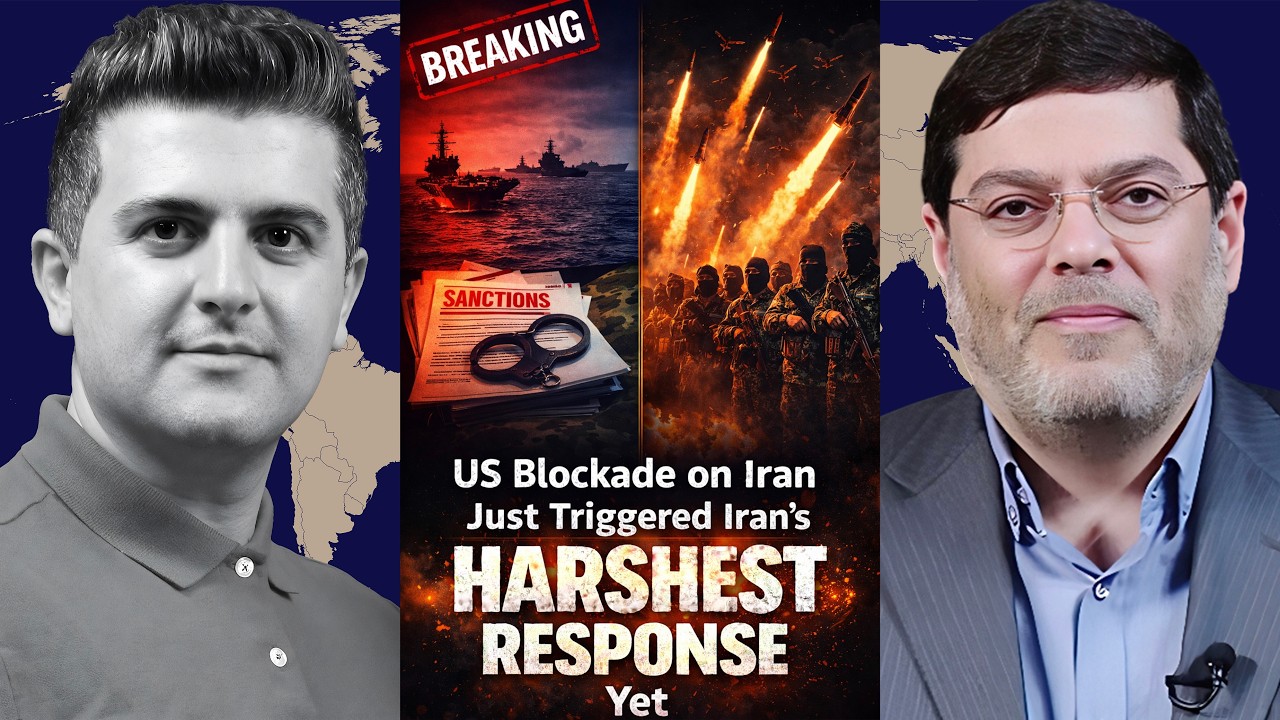
Seyed M. Marandi: US Blockade on Iran Just Triggered Iran’s HARSHEST Response Yet
"An Iranian professor details how US demands and an imposed blockade triggered Iran's harshest response, exposing American strategic missteps and the vulnerability of Gulf Arab states."