"Iran Is Not Going to Surrender": Johns Hopkins Prof. Says U.S. and Israel Underestimate Iran
YouTube · nGWF_AvV7yo
Quick Read
Summary
Takeaways
- ❖The assassination of Supreme Leader Khamenei is a significant symbolic act of martyrdom within Shia culture, fueling widespread protest and resistance.
- ❖Iran anticipated decapitation strikes and implemented deep succession planning for key government and military posts.
- ❖Israel's 'Dahiya doctrine' involves carpet bombing densely populated urban areas to turn civilian populations against their leadership.
- ❖The US and Israel have underestimated Iran's asymmetrical warfare capabilities and its determination to engage in a prolonged war of attrition.
- ❖Iran aims to inflict damage on the American security architecture in the Gulf region, leveraging perceived US shortages in interceptors.
- ❖The CIA arming Kurdish factions risks escalating the conflict into a broader regional war, potentially involving Turkey.
Insights
1Symbolic Martyrdom of Supreme Leader Khamenei
The assassination of Supreme Leader Ayatollah Ali Khamenei in his compound was a decapitation strike by US-Israeli forces. However, Khamenei's decision not to go into hiding, coupled with his advanced age and illness, positioned him as a symbol of martyrdom and resistance against the war, a concept with profound meaning in Shia culture. This has sparked protests across the Muslim world.
The host states the reported death toll in Iran has surpassed 1,000, including children, and mentions the assassination of Supreme Leader Ayatollah Ali Khamenei. Professor Bajoghli explains Khamenei's choice to be martyred and its significant meaning within Shia culture, leading to protests in Pakistan, Bahrain, and India.
2Iran's Succession Planning Against Decapitation Strikes
Anticipating decapitation strikes, Iran's leadership had already ordered the creation of three to four lines of succession for every major government and military post. This strategy aims to ensure continuity and resilience against targeted assassinations, recognizing that any announced successor would likely become an immediate target.
Professor Bajoghli states that 'the Iranians have been obviously looking at and studying the way that the Israelis and Americans do war across the region. They know that their MO is decapacitation strike. So in the leadup to this war, the leader in Iran had already ordered across the government to create three and four lines of succession for every major post.'
3Israel's Dahiya Doctrine for Tehran
Israeli media reported that Benjamin Netanyahu intends to apply the 'Dahiya doctrine' in Tehran. This doctrine, developed for strikes on Beirut, involves carpet bombing residential and critical infrastructure in densely populated urban areas. The goal is to turn the population against their ruling establishment, but it results in widespread destruction.
Professor Bajoghli explains, 'yesterday there were reports on Israeli media that BB Netanyahu... wants to start enacting the Dahiya doctrine in Tehran. The Dahiya doctrine is a doctrine that the Israeli military created for striking the southern suburbs of Beirut... what the Dahiya doctrine is is carpet bombing residential infrastructure and critical infrastructure of densely populated cities.'
4Underestimation of Iran's Asymmetrical Warfare Capability
Despite Israeli and US assertions of Iran's weakness, Professor Bajoghli contends that both nations have underestimated Iran's capacity for asymmetrical warfare. Iran has developed its defense doctrine over decades to counter militarily superior forces, indicating it will not surrender but will fight to inflict damage on both Israel and US security assets in the Gulf.
Professor Bajoghli states, 'for over a year now in Washington, you would hear over and over again this Israeli talking point that Iran is very weak... part of what we're seeing is that the Israelis and the Americans have underestimated Iran's capabilities to strike back hard against the region.' She adds that Iran's defense doctrine is 'asymmetrical warfare against these kinds of forces in the region.'
5Iran's Long-Term Attrition Strategy Against US Weaknesses
Iran is pursuing a long-term war of attrition, absorbing initial strikes and playing a 'long game' against the US, which prefers short conflicts. Iran is specifically targeting US vulnerabilities, such as critical low amounts of interceptors in the region, to prolong the conflict and wear down US resources.
Professor Bajoghli responds to Trump's comments: 'the way that Iran is responding to all of these strikes right now is by it knows that the US has critical low amounts of interceptors in the region and it's playing the long game. The Americans do not want a long-term war and a war of attrition. and Iran is absorbing the hits and is going for a long-term war of attrition.'
Bottom Line
The CIA arming Kurdish factions in Iran could trigger a wider regional war involving Turkey, which has its own national interests regarding Kurdish groups.
This intervention risks destabilizing the region far beyond the immediate US-Iran conflict, potentially drawing in other major players and creating unforeseen alliances or conflicts.
Analysts and policymakers should closely monitor Turkey's response to any increased CIA support for Kurdish groups in Iran, as it could be a key indicator of broader regional escalation.
Iran's strategic decision to allow its Supreme Leader to be martyred, rather than hide, amplifies internal and regional resistance, turning a military loss into a powerful ideological rallying point.
This demonstrates a deep understanding of cultural and religious leverage, which can be more potent than military might in sustaining long-term conflict and popular support.
Understanding the cultural and religious dimensions of conflict is critical for predicting adversary responses and avoiding miscalculations based purely on military or economic metrics.
Key Concepts
Dahiya Doctrine
An Israeli military doctrine for urban warfare, specifically developed for strikes on Beirut's southern suburbs. It involves carpet bombing residential and critical infrastructure in densely populated cities, with the stated aim of turning the civilian population against their ruling establishment.
Asymmetrical Warfare
A military strategy employed by a weaker combatant against a stronger one, leveraging non-conventional tactics to exploit the superior force's vulnerabilities. Iran has developed its defense doctrine around this to counter the US's military superpower status and Israel's nuclear capabilities.
War of Attrition
A military strategy in which one side attempts to wear down the enemy's strength and resources through continuous losses, to the point of collapse. Iran is adopting this strategy, absorbing initial strikes and playing the 'long game' against the US, which prefers short conflicts.
Lessons
- Re-evaluate intelligence assessments of Iran's military capabilities and strategic resolve, moving beyond assumptions of weakness.
- Anticipate and prepare for a prolonged, asymmetrical conflict in the Middle East, rather than expecting a swift resolution.
- Consider the broader geopolitical implications of supporting proxy forces, such as Kurdish groups, to avoid unintended regional escalations involving other state actors like Turkey.
Quotes
"He didn't go into bunkers and so in many ways and because he was killed in his compound he wanted to uh be martyed this time around for... he was now has become a symbol of of martyrdom and resistance against uh Israeli and American war. And that has significant meaning within Shia culture."
"The Dahiya doctrine is a doctrine that the Israeli military created uh for striking the southern uh suburbs of Beirut... And what the Dahiya doctrine is is carpet bombing residential uh infrastructure and critical infrastructure of uh densely populated cities in order to eventually turn uh the population against uh their ruling establishments."
"The Israelis and the Americans have underestimated Iran's capabilities to strike back hard against the region. Iran in is up against the biggest military superpower in world history... However, um it has de uh sort of defined and declared and developed its uh uh defense doctrine over all of these decades to be asymmetrical warfare against these kinds of uh forces in the region. And so what we're going to see play out, Iran is not going to surrender."
"Well, I don't know if there's a worst case. We have them very much uh beaten militarily from the military standpoint. They're still lobbying some missiles. At some point, they won't even be able to do that because we're hitting all of their carriers. We're hitting all of their missile stock."
"The Americans do not want a a long-term war and a war of attrition. and Iran is uh absorbing the hits and is going for a long-term war of attrition. And this is something that both the Americans, the Israelis, and those in the region have to sort of consider."
"This has already turned into a regional conflagration. Uh, and this could turn into a regional war of a scale that will make the past 25 years of forever wars in the Middle East seem like a walk in the park."
Q&A
Recent Questions
Related Episodes
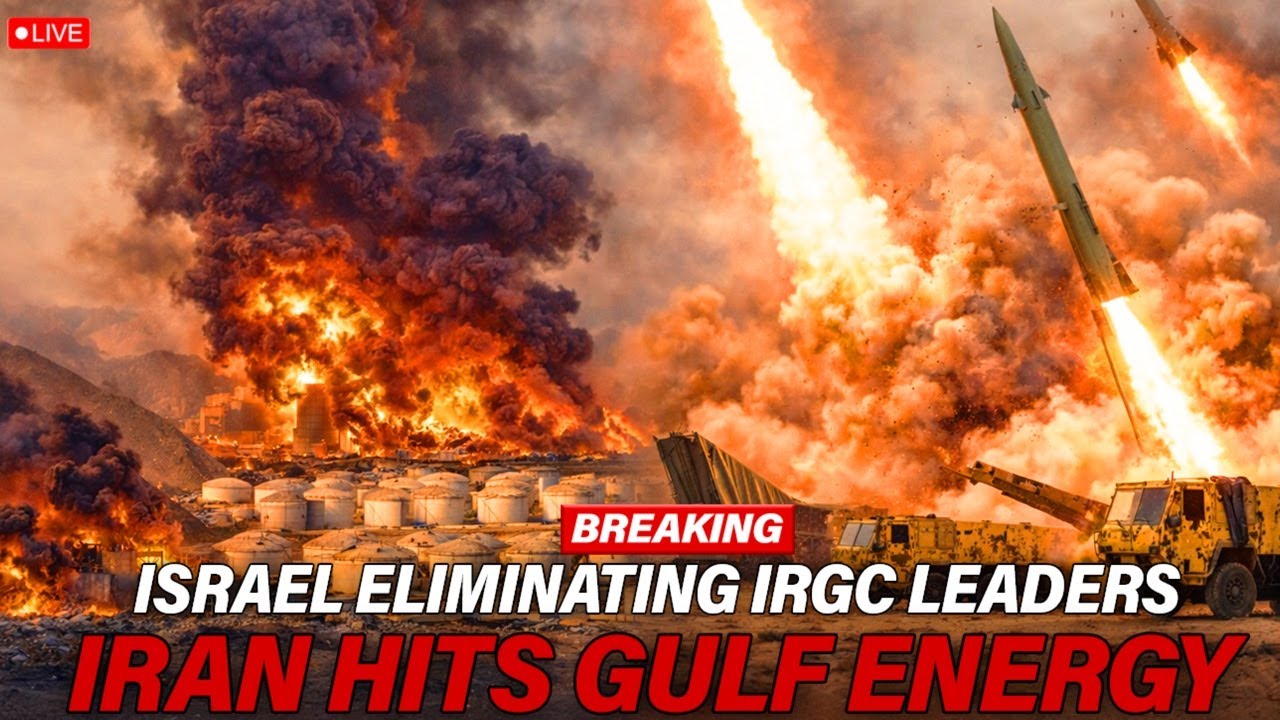
BREAKING: U.S. Weighs INVADING Iran Oil Island; Gulf Energy Crisis Grows | TBN Israel
"As the US and Israel systematically dismantle Iran's military and leadership, the conflict escalates into an energy war, with the US considering ground invasion of Iran's critical Karag oil island to secure global oil routes."
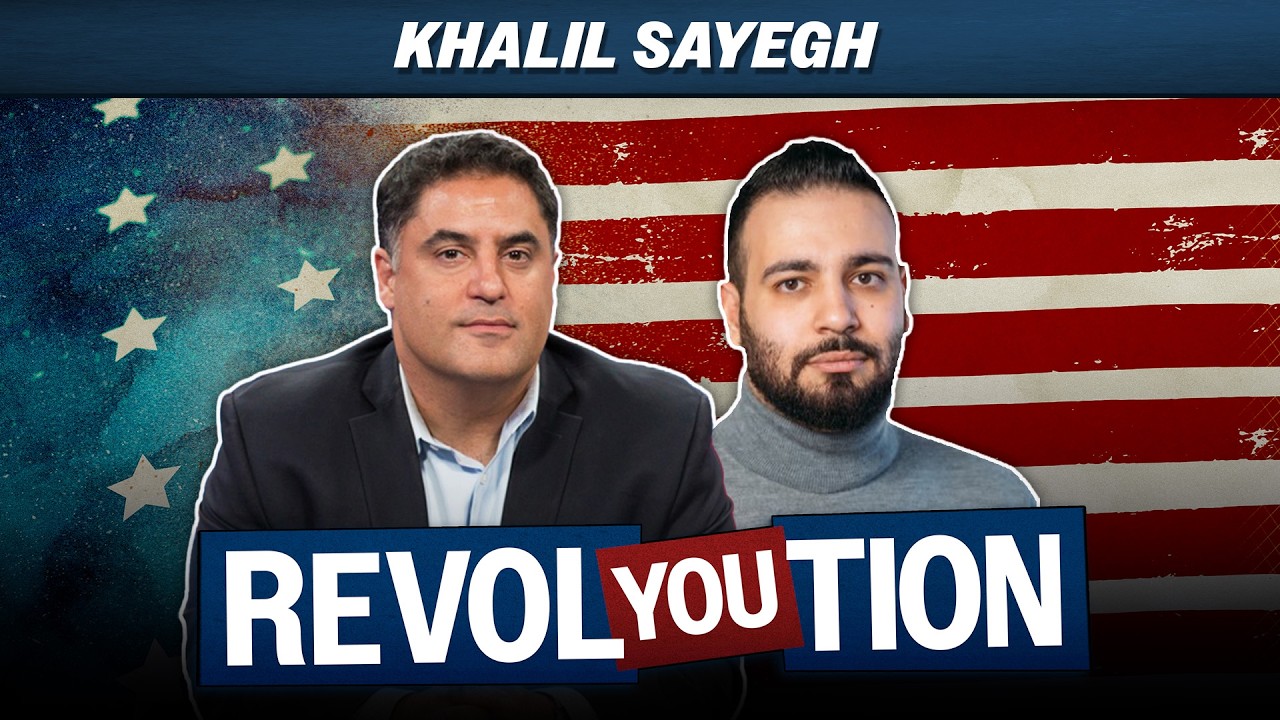
Palestinian Evangelical Analyst REACTS To U.S-Israeli War In Iran!
"The Young Turks dissect the US-Israeli war in Iran, alleging it's driven by Israeli expansionist goals, fueled by US political and media subservience, and resulting in devastating civilian casualties and economic fallout, while a Palestinian Christian analyst details the brutal realities of Israeli occupation and humiliation."

Iran Deal Skepticism. Whoopi Vs Vance. Potomac Park Invasion. Racist Hurls Slurs At Black Boy.
"This episode dissects multiple instances of alleged anti-Black policies and racial injustice, from the Trump administration's legal challenges to reparations and the Iran deal, to police brutality and the erasure of Black history."

PBS News Hour full episode, June 12, 2026
"The U.S. and Iran inch closer to a contentious peace deal amidst conflicting terms, while President Trump hosts a UFC cage fight on the White House lawn, and Gaza's children struggle for education in war-torn conditions."