
Pravin Sawhney: IRAN's Missiles TAKE OUT FIGHTER JETS in Jordan
YouTube · naAabzpa0Y8
Quick Read
Summary
Takeaways
- ❖Iran is in a dominant position in West Asia, having 'won' the 39-day air war against the US.
- ❖President Trump is trapped in West Asia; he cannot fight a ground war nor can he withdraw due to petrodollar dependency, Eurasian geopolitical stakes, and the acceleration of a new world order.
- ❖The new global order prioritizes geoeconomic development and collective security over absolute military security, a concept championed by China and Russia.
- ❖The US struggles to negotiate as an equal, clinging to a unipolar mindset in a multipolar world.
- ❖Europe is in decline, suffering from 'Russophobia' and lacking a cohesive security or foreign policy, making it irrelevant in West Asia.
- ❖Iran's military strategy involves an 'axis of resistance' (Hezbollah, Houthis, Hamas) and demonstrated missile capabilities extending 4,000 km.
- ❖Pakistan is uniquely positioned as a trusted mediator between the US, China, Russia, and regional West Asian powers.
Insights
1Iran's Dominance and US Predicament in West Asia
Iran has emerged as a dominant power in West Asia, effectively 'winning' a 39-day air war against the US. President Trump is now trapped in a 'no war, no peace' situation, unable to launch a decisive military campaign (lacking ground options and air war failure) and unable to withdraw due to critical implications for the petrodollar system, ongoing geopolitical contestation in Eurasia (especially Central Asian republics), and the acceleration of a new multipolar world order supported by China and Russia.
Host mentions Iranian strikes on Bandar Abbas and Karaj, and unconfirmed reports of ballistic missiles taking out fighter jets in Jordan. Sawhney states Iran 'won the war' after 39 days, and details Trump's three reasons for being unable to leave: petrodollars, Eurasian contestation (Trump route, C5 summit), and the new world order (China-Russia agreement).
2Shift from Geopolitics to Geoeconomics in the New World Order
The global contestation has shifted from military-centric geopolitics to development-focused geoeconomics. In the emerging multipolar world, the priority is development and collective security, contrasting with the old order's emphasis on absolute security and military power. China's Belt and Road Initiative exemplifies this, fostering 'influence' through economic ties and infrastructure development across 152 countries, rather than seeking traditional 'spheres of influence' through military dominance.
Sawhney states 'Indo-Pacific contestation is over' due to US-China 'constructive strategic stability,' leading to a 'geoeconomic contestation.' He explains the new world order's priority is 'development' and 'collective security' (Xi Jinping's Global Security Initiative), contrasting with the old order's 'absolute security.' He cites China's BRI in 152 countries as an example of seeking 'influence' through trade.
3US Inability to Negotiate as an Equal
The United States, accustomed to its unipolar superpower status post-Cold War, struggles to negotiate as an equal with other countries. This inability to adapt to the multipolar reality hinders diplomatic progress, as seen in its approach to Iran and its reliance on dictating terms via social media rather than engaging in serious, equitable talks.
Sawhney states, 'the Americans... simply do not know how to negotiate as an equal with another country.' He notes Trump 'is doing everything through the truth social... dictating terms then he retracts.'
4Europe's Decline and Irrelevance in the New Global Order
The European Union is experiencing a rapid decline in global influence, characterized by a lack of a cohesive security or foreign policy, heavy reliance on a 'NATO in ICU,' and economic stagnation. Its 'Russophobia' prevents it from recognizing Russia's self-sufficiency and strategic position, further isolating it from the emerging Eurasian economic and security architecture.
Sawhney describes the EU as 27 countries without an elected parliament, security policy, or cogent foreign policy, with NATO 'in the ICU.' He cites declining EU trade/GDP figures and contrasts G7 (29% world GDP) with BRICS (40% world GDP, 40% population), attributing Europe's issues to 'Russophobia' and a failure to understand Russia's vast resources and self-sufficiency.
Quotes
"What I call is happening there in West Asia is a no war no peace situation."
"Iran which started with a war which was a war of survival today is in a dominant position."
"President Trump has got in a war without understanding what the war was about."
"If they lose the petro dollars, they are in big trouble."
"The Americans are still living in fantasy in an illusion world. And the dye has been cast in the war in West Asia."
"The Americans because they won the cold war because they were the sole superpower in the unipolar world they simply do not know how to negotiate as an equal with another country."
"In the new world order the priority is development and security is not absolute security. Looking at collective security an entirely different concept what Xi Jinping calls the global security initiative."
"As far as Israel is concerned, the dream that Netanyahu still harbors of greater Israel is dead. It's over."
"Pakistan is the only country in the world today which has good relations with all the three great powers in the multipolar world."
Q&A
Recent Questions
Related Episodes
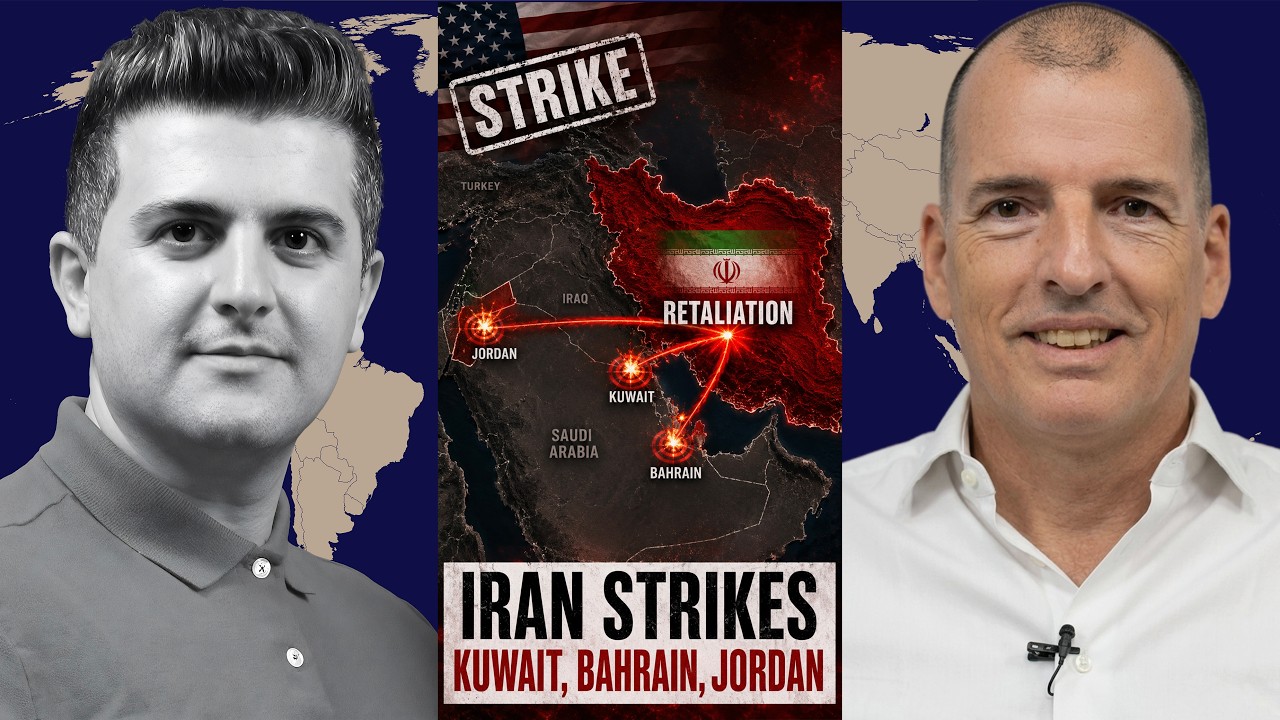
Alex Krainer: US STRIKES Iran – Iran RETALIATES Against Kuwait, Bahrain & Jordan!
"Amidst escalating US-Iran conflict and Iranian retaliation against regional US allies, this episode argues that US foreign policy is deeply controlled by an 'Anglo-Zionist conspiracy' led by the Rothschild banking dynasty, prioritizing Israeli interests over American ones."

Patrick Henningsen: Hezbollah JUST Fired Back at Israel - Iran Vows to “Crush” All Attacks
"Patrick Henningsen argues that the US and Israel initiated an illegal war against Iran, driven by Trump's incompetence and Israeli influence, leading to an inevitable escalation with severe global economic repercussions."
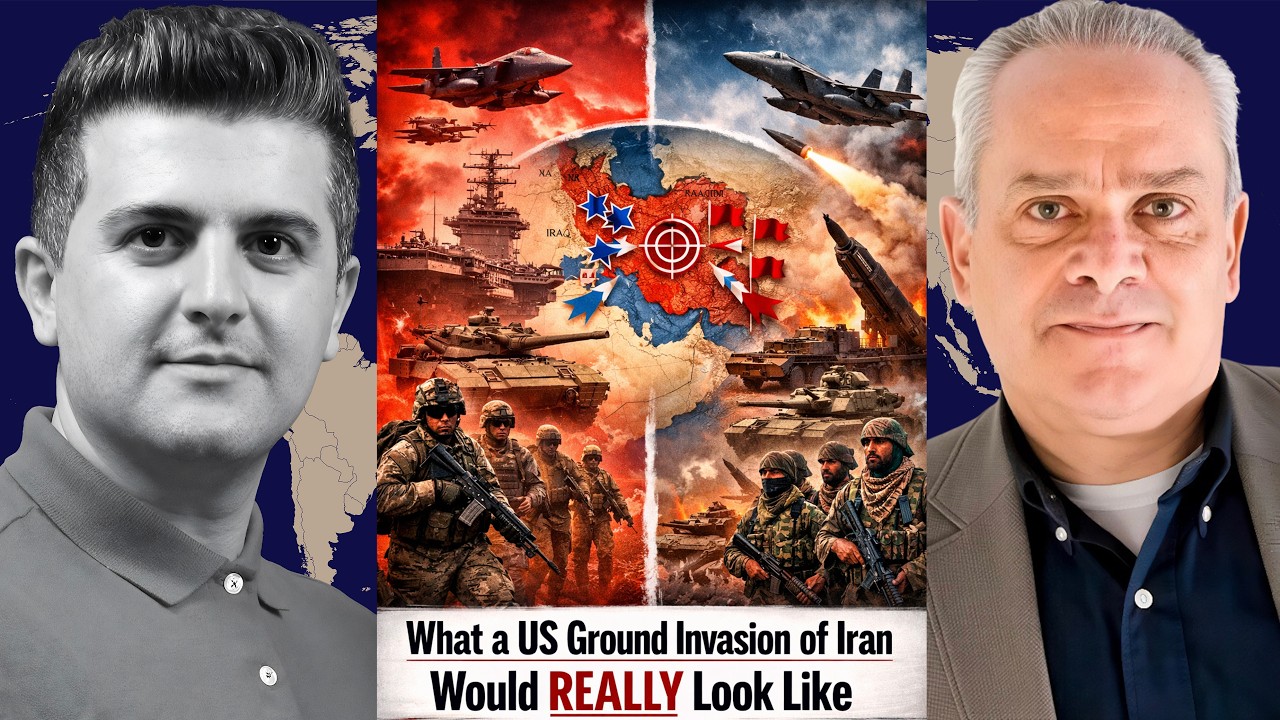
Col. Jacques Baud: What a US Ground Invasion of Iran Would REALLY Look Like
"Colonel Jacques Baud dissects the strategic futility of a US ground invasion of Iran, arguing that current troop levels are insufficient and such an action would backfire, exposing US allies and potentially leading to Iran's nuclearization."

Bibi DEMANDS Ground Troops As Marines Rushed to Iran
"Benjamin Netanyahu is pushing for US ground troops in Iran, framing air strikes as insufficient, while the US rushes Marines to the region and struggles to secure the Strait of Hormuz against surprisingly capable Iranian defenses."