
Larry Johnson: BREAKING: Iran Forces Trump Into Concession – War Price Unbearable
YouTube · oVIpH5FQF3Y
Quick Read
Summary
Takeaways
- ❖Donald Trump's public statements on Iran are highly inconsistent, oscillating between threats of war and announcements of imminent peace deals.
- ❖The US is conducting 'limited surgical strikes' focused on the Strait of Hormuz, avoiding dual-use military/civilian targets, though some civilian infrastructure has reportedly been hit.
- ❖Iran has significantly upgraded its air defense systems, successfully intercepting US cruise missiles and reportedly inflicting damage on US F-35s in Jordan.
- ❖Iran's five key demands for any agreement include lifting sanctions, unfreezing assets, control over the Strait of Hormuz, lifting the blockade, and an Israeli retreat from Lebanon with a legitimate ceasefire.
- ❖Mediators like Qatar and the UAE are actively engaged in diplomatic efforts, but Israel's influence and ongoing actions in the region are a major impediment to a deal.
- ❖The idea of a US ground invasion of Kark Island is dismissed as a dangerous and logistically impossible trap.
- ❖The oil market has shown no significant reaction to the ongoing conflict, with speculators reportedly profiting from Trump's erratic behavior.
Insights
1Trump's Erratic Diplomacy Undermines Stability
Donald Trump's public statements on Iran are highly inconsistent, shifting from threats of 'bombing the [__] out of Iran' to claiming an imminent deal. This erratic behavior creates confusion for foreign leaders and hinders genuine diplomatic progress, as Iran's foreign ministry spokesman noted the US kept changing its positions on draft agreements.
Trump's statements: 'I'm going to bomb the [__] out of Iran' vs. 'Hey, we got a deal. We're going to be signing any day soon.' (). Iranian Foreign Ministry spokesman stated 'Americans kept changing their positions' ().
2Iran's Enhanced Air Defense Capabilities
Iran has significantly upgraded its air defense systems, enabling it to effectively intercept US cruise missile attacks. This new capability was demonstrated during recent US strikes, where 49 cruise missiles were reportedly intercepted with no damage to key targets like the petrochemical plant in Asaluyeh.
Iran 'significantly upgraded its air defense systems' (). 'Last night it was 45 cruise missiles, something like that. 49. Yeah, you're right. 49. The important part last night for me was the interception of those missiles because Iran hadn't done that before.' (). 'no damage was reported in Iran. no damage in in that petrochemical plant' ().
3Israel's Role as a Stumbling Block to Peace
The primary obstacle to a US-Iran deal is Israel's continued actions in the region and its influence on US policy. Iran's demands include compelling Israel to retreat from Lebanon, impose a legitimate ceasefire, and stop violence against Palestinians, conditions that Trump finds difficult to enforce due to Zionist lobbying and domestic political pressures.
Larry Johnson states, 'I think Iran must contend with the fact that Israel ultimately will hold may or may not hold the veto power.' (). Iran's fifth key demand is 'force Israel to retreat from Lebanon to impose a legitimate ceasefire... and stop the violence against the Palestinians.' (). 'Trump's difficulty, his difficulty comes from Israel' ().
4Kark Island Invasion: A Costly Trap
The idea of a US ground invasion of Kark Island is dismissed as impractical and suicidal. The island is small, heavily mined by Iranian forces, and offers no cover against drone or missile attacks, making it a 'trap' where US forces would be easily targeted and difficult to resupply.
Senator John Kennedy expressed concern that putting troops on the ground 'is going to turn into Vietnam' and 'it's going to be a trap.' (). Larry Johnson adds, 'the Iranian forces have already placed mines' and 'it's tiny... they're going to be targeted... don't have any good cover... against drone attacks and short range ballistic missiles' ().
Lessons
- Monitor official and alternative news sources to discern the true state of US-Iran negotiations, as public statements from leaders like Trump can be misleading or inconsistent.
- Analyze the regional roles of mediating countries like Qatar and the UAE, as their diplomatic efforts are critical in facilitating communication and potential agreements between the US and Iran.
- Assess the impact of geopolitical tensions on global oil markets, recognizing that short-term price fluctuations may be driven by speculation on political unpredictability rather than fundamental supply changes.
Quotes
"Trump thinks that this these attacks can put pressure on Iran to make concessions because that's all Donald Trump knows right now in terms of his negotiating if you want to call it a negotiating strategy. Fear and intimidation. But uh I don't see Iran being fearful nor intimidated."
"The United States has yet to demonstrate that they can commit to any kind of agreement."
"Why would he then go public blowing essentially, you know, exposing this successful secret program or top secret program so now it won't be successful? What what sort of logic is that? I I don't I don't get that."
"The problem Israel and the United States have is that the locations where if you want to take out the nuclear capability, they're built in underground shelters that were specifically designed to withstand a nuclear blast."
Q&A
Recent Questions
Related Episodes
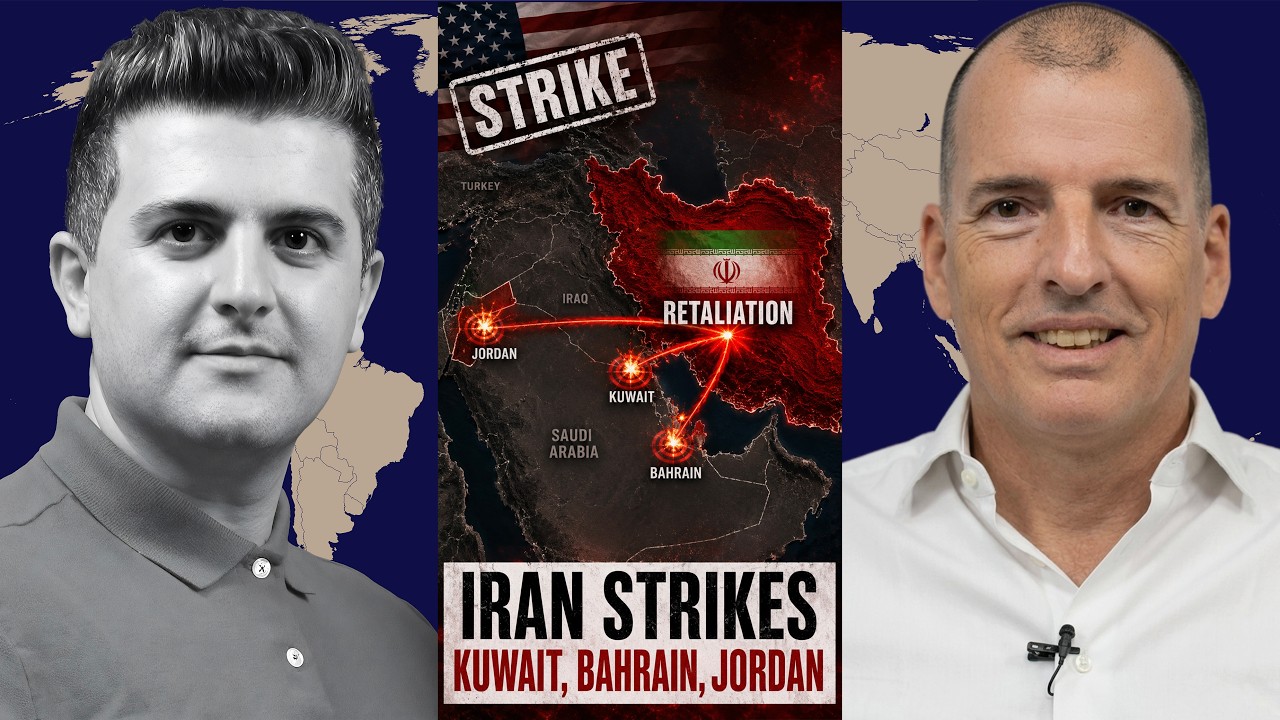
Alex Krainer: US STRIKES Iran – Iran RETALIATES Against Kuwait, Bahrain & Jordan!
"Amidst escalating US-Iran conflict and Iranian retaliation against regional US allies, this episode argues that US foreign policy is deeply controlled by an 'Anglo-Zionist conspiracy' led by the Rothschild banking dynasty, prioritizing Israeli interests over American ones."

Patrick Henningsen: Hezbollah JUST Fired Back at Israel - Iran Vows to “Crush” All Attacks
"Patrick Henningsen argues that the US and Israel initiated an illegal war against Iran, driven by Trump's incompetence and Israeli influence, leading to an inevitable escalation with severe global economic repercussions."
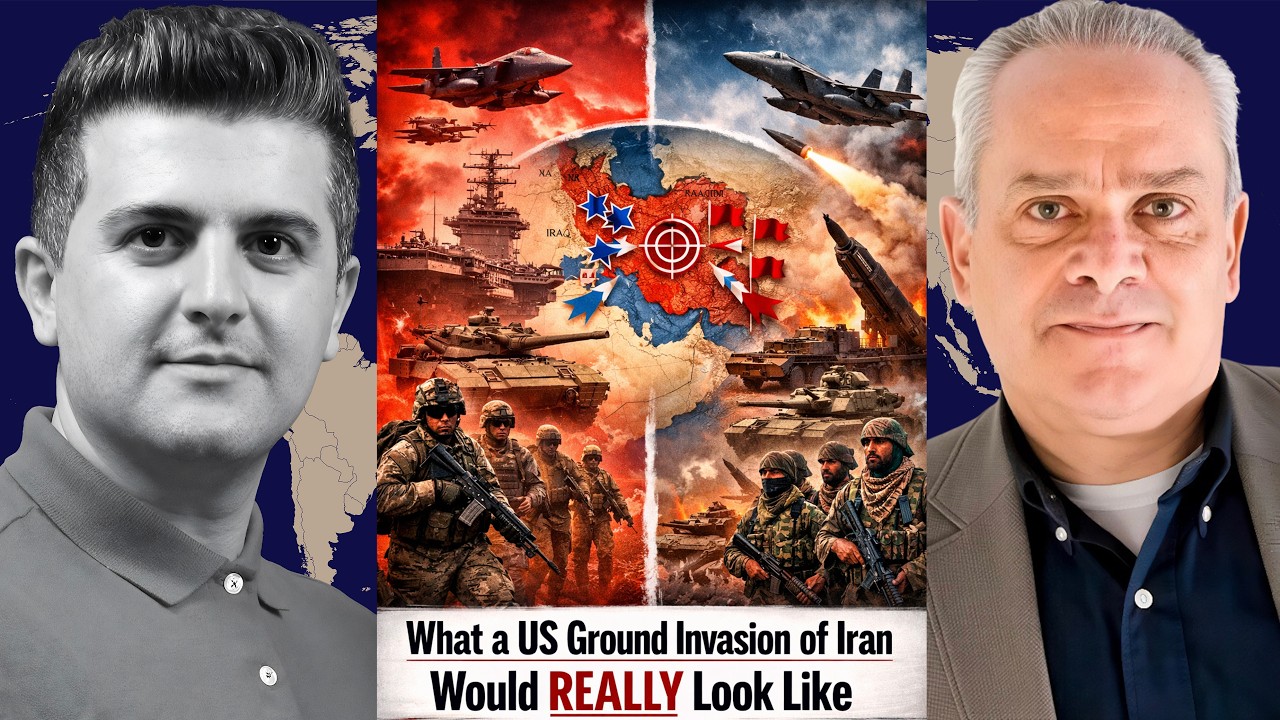
Col. Jacques Baud: What a US Ground Invasion of Iran Would REALLY Look Like
"Colonel Jacques Baud dissects the strategic futility of a US ground invasion of Iran, arguing that current troop levels are insufficient and such an action would backfire, exposing US allies and potentially leading to Iran's nuclearization."

Bibi DEMANDS Ground Troops As Marines Rushed to Iran
"Benjamin Netanyahu is pushing for US ground troops in Iran, framing air strikes as insufficient, while the US rushes Marines to the region and struggles to secure the Strait of Hormuz against surprisingly capable Iranian defenses."