
Matthew Hoh: US & Iran Exchange Heavy Attacks
YouTube · ojt4b8ivJ7o
Quick Read
Summary
Takeaways
- ❖Iran has disproportionately responded to US actions, escalating attacks against US allies like Bahrain and Jordan.
- ❖The alleged downing of a US Apache helicopter by a Shahed drone was likely an accident, not a deliberate attack, given Iran's lack of claim and the drone's capabilities.
- ❖The US President's statements suggest a reluctance to engage in further escalation, indicating a constrained political position.
- ❖Israel is overextended with campaigns across Lebanon, Gaza, West Bank, and Syria, and now faces threats from Houthis in the Red Sea.
- ❖The ongoing conflict is leading to a looming economic catastrophe with drawn-down oil inventories and impending commodity and consumer product inflation.
- ❖Donald Trump's claims of escorting 100 million barrels of oil through the Strait of Hormuz are dismissed as fantasies, lacking evidence and military feasibility.
- ❖Iran has established a new strategy of direct retaliation against Israel, even without being directly attacked first, signaling a shift in regional deterrence.
- ❖An Iranian official hinted at future 'land expansion,' which Matthew Hoh interprets as a potential claim on Bahrain, reflecting a changing regional order.
Insights
1Iran Dictates Terms of Escalation in Middle East
Matthew Hoh argues that Iran has taken control of the conflict's narrative and tempo. Iran's responses to perceived US or Israeli actions are consistently disproportionate, expanding the conflict horizontally by striking US allies like Bahrain and Jordan, and vertically by targeting strategic assets such as an F-35 base. This contrasts with the US's 'proportionate' responses, which Hoh interprets as a sign of reluctance to escalate.
Hoh states, 'Iran is in control. I mean, the fact that the Iranians disproportionately responded to the Americans proportional response to the Apache helicopter incident.' He cites Iranian strikes on Bahrain and Jordan in response to US actions, and previous strikes on US 5th Fleet headquarters and Camp Arifjan with no American response. (, , )
2US President's Reluctance to Escalate
Hoh interprets the US President's public statements, particularly regarding the Apache helicopter incident, as an apology for having to respond, indicating a lack of desire for further escalation due to political realities. This suggests the US is in a reactive, rather than proactive, stance.
Hoh notes, 'The president of the United States puts out a message saying the Apache got shot down... He's apologizing. He's basically saying, out of necessity, I have to respond. You know, you could you could read between the lines. It's very clear. He's saying, I don't want to do it, but because of the political realities... I need to respond.' (, )
3Ambiguity Surrounds Apache Helicopter Incident
The alleged downing of a US Apache helicopter by an Iranian drone is questioned due to lack of evidence and Iran's denial. Hoh suggests it was likely an accidental collision or mechanical failure, noting that Iran would have celebrated and provided evidence if it had successfully shot down a US aircraft.
Hoh states, 'If the Iranians had shot down, they would have shown us the video. They would have promoted it... In fact, the Iranians said, 'No, we didn't do it.'' He speculates on mechanical failure, collision with a drone, or an accidental interception, noting Shahed drones are not typically used to take down helicopters. (, )
4Looming Economic Catastrophe from Prolonged Conflict
The continuous conflict is depleting global oil inventories and disrupting the supply of critical commodities from the Persian Gulf. Hoh warns of an impending 'dual punch' of energy inflation and commodity-driven consumer product inflation, leading to significant political stress worldwide.
Hoh highlights 'this looming economic catastrophe coming as oil inventories are drawn down, as the Iranian and Russian oil... windows down... as the strategic petroleum reserves... are drawn down.' He adds, 'all these secondary, downstream, and byproducts of oil and gas, all these commodities that come out of the Persian Gulf, helium, fertilizer, aluminum, copper... We're going to start seeing those inflationary pressures start to hit.' (, )
5Iran's New Deterrence Strategy: Direct Retaliation
Iran has fundamentally altered its strategic calculus, now directly attacking Israel in response to perceived aggressions, even when not directly attacked first. This establishes a new, more aggressive deterrence posture in the region.
The host notes, 'Iran for the first time, Iran attacked Israel without being attacked by Israel. This is significant. Iran has never attacked any country.' Hoh agrees, stating, 'This idea that Iran has clearly established that it will provide a defensive umbrella to parts of Lebanon.' (, )
Bottom Line
The US President's public statements regarding military actions are being interpreted as apologies for necessary responses, rather than strong declarations of intent, signaling a deep political constraint.
This suggests a significant weakening of US resolve and influence in the region, as its leadership appears to be acting out of political obligation rather than strategic conviction. It emboldens adversaries who perceive this as a lack of commitment to escalation.
For regional actors, this creates an opportunity to test US red lines and expand their own spheres of influence, knowing that US responses may be limited and reluctant. For analysts, it highlights the importance of reading between the lines of official US statements for true strategic intent.
Iran's National Security and Foreign Policy Commission spokesperson hinted at future 'land expansion' following 'sea expansion' during the war, which Matthew Hoh interprets as a potential claim on Bahrain.
This is a highly provocative statement that suggests Iran's long-term strategic goals may include territorial claims beyond its current borders, potentially destabilizing the Gulf region further and challenging existing state sovereignties. It indicates a bold and aggressive vision for a 'new order' in the Middle East.
This insight provides a critical warning for Gulf states and international powers about Iran's potential maximalist ambitions. It necessitates a re-evaluation of regional security architectures and alliances, as the scope of future conflicts could extend to direct territorial disputes.
Notable Moments
Discussion of the US President's 'apologetic' tone when announcing retaliatory strikes against Iran, suggesting a lack of desire for escalation.
This highlights the political constraints on US foreign policy and its reluctance to deepen involvement in the Middle East, potentially signaling weakness to adversaries.
Matthew Hoh's dismissal of Donald Trump's claim about escorting 100 million barrels of oil through the Strait of Hormuz as a 'fantasy'.
This moment underscores the skepticism surrounding official statements and the potential for political rhetoric to diverge significantly from military reality, especially regarding the capabilities of the US Navy in a contested zone.
The Iranian official's statement about potential 'land expansion' in a future war, interpreted as a claim on Bahrain.
This is a highly significant and provocative statement, indicating a potential long-term Iranian ambition for territorial changes in the Gulf, which would dramatically reshape regional geopolitics and spark new conflicts.
Quotes
"Iran is in control. I mean, the fact that the Iranians disproportionately responded to the Americans proportional response to the Apache helicopter incident."
"He's apologizing. He's basically saying, out of necessity, I have to respond. You know, you could you could read between the lines. It's very clear. He's saying, I don't want to do it, but because of the political realities, because of how things work, I need to respond."
"If the Iranians had shot down, they would have shown us the video. They would have promoted it. They would have Right, they would have celebrated it."
"Iran for the first time, Iran attacked Israel without being attacked by Israel. This is significant. Iran has never attacked any country."
"In the next war, perhaps the extent of the Iran's land will increase."
Q&A
Recent Questions
Related Episodes
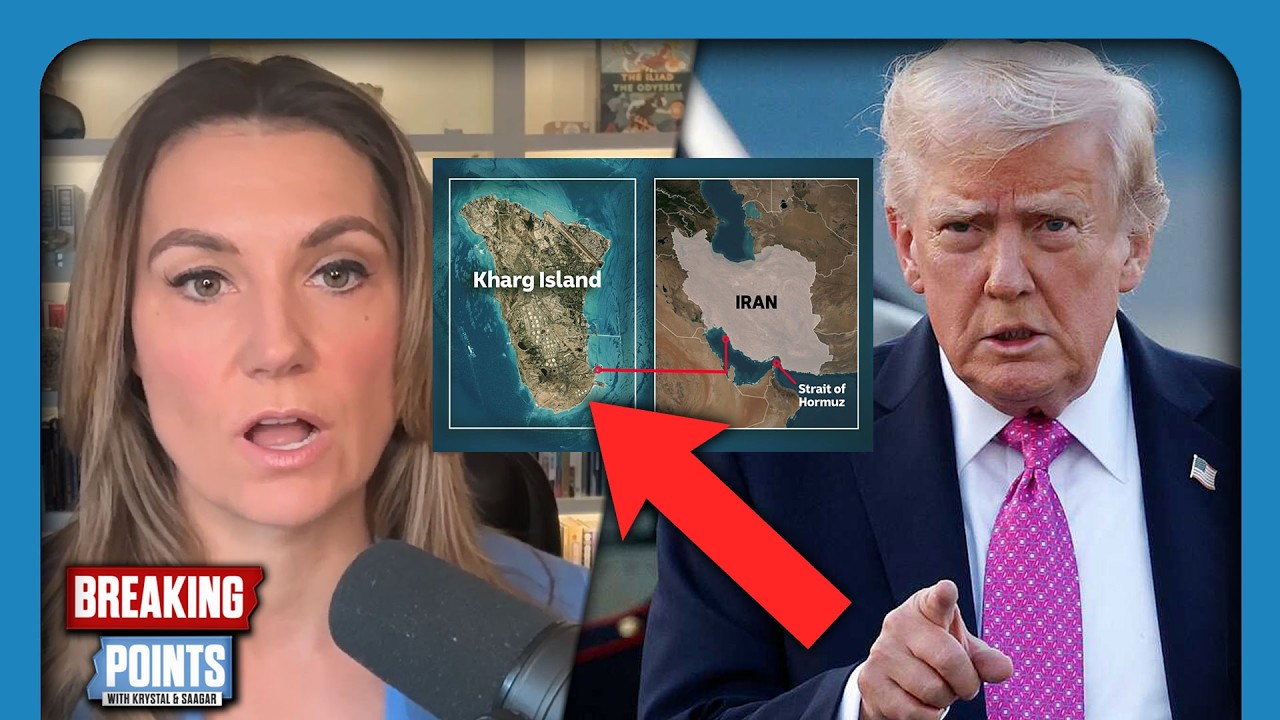
BREAKING: TRUMP ATTACKS OIL ISLAND, MARINES CALLED IN, 5 US PLANES HIT
"The US-Iran conflict escalates with a Trump-ordered strike on Iran's Karg Island, triggering Iranian retaliation against UAE oil facilities and US military assets, while the US deploys Marines and Israel plans a ground invasion of Lebanon."
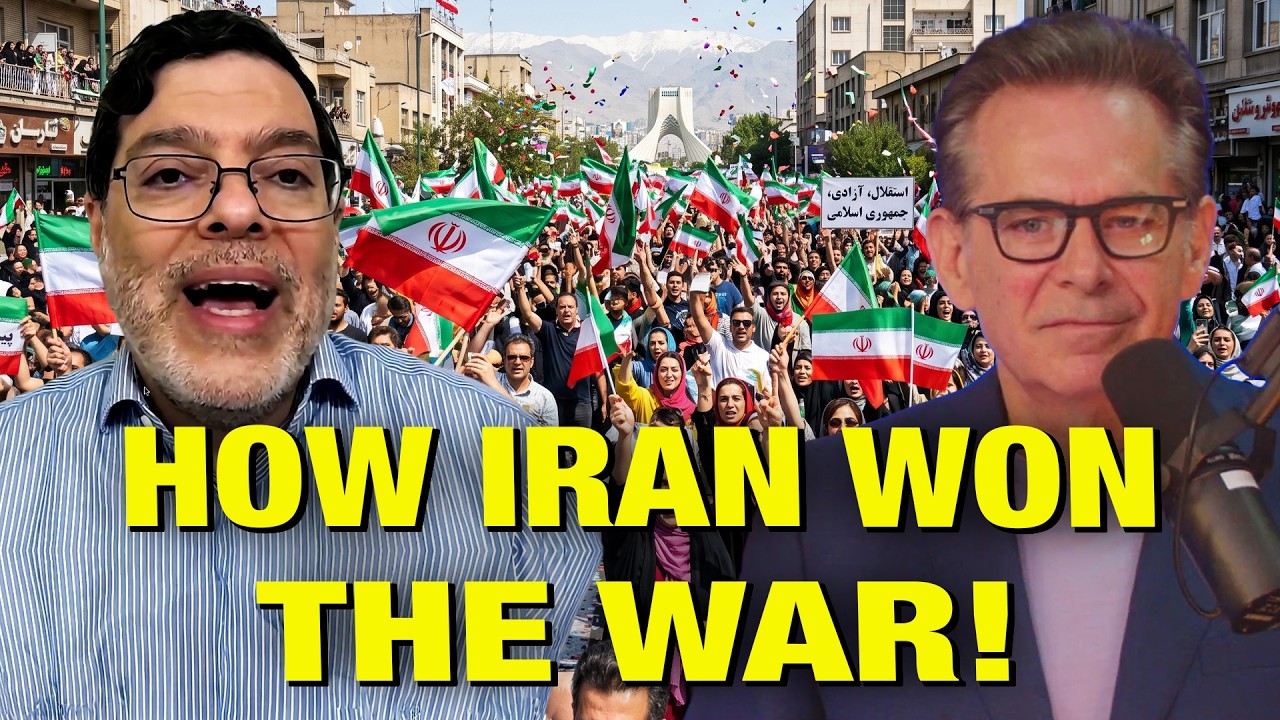
The REAL Story About The War From INSIDE IRAN! – Jimmy Interviews Prof. Marandi
"Professor Marandi, an Iranian academic, details how Iran emerged stronger from recent conflicts, now controlling the Strait of Hormuz and possessing a credible deterrent against its adversaries, despite facing economic siege and Western-backed regional proxies."

Larry Johnson & Col. Wilkerson: 4 US Warships Tried to Enter Strait of Hormuz – Then Iran Launched
"A critical analysis reveals escalating US-Iran military confrontations in the Strait of Hormuz, a stark disconnect in diplomatic rhetoric, and a significant geopolitical realignment in the Middle East away from US influence."
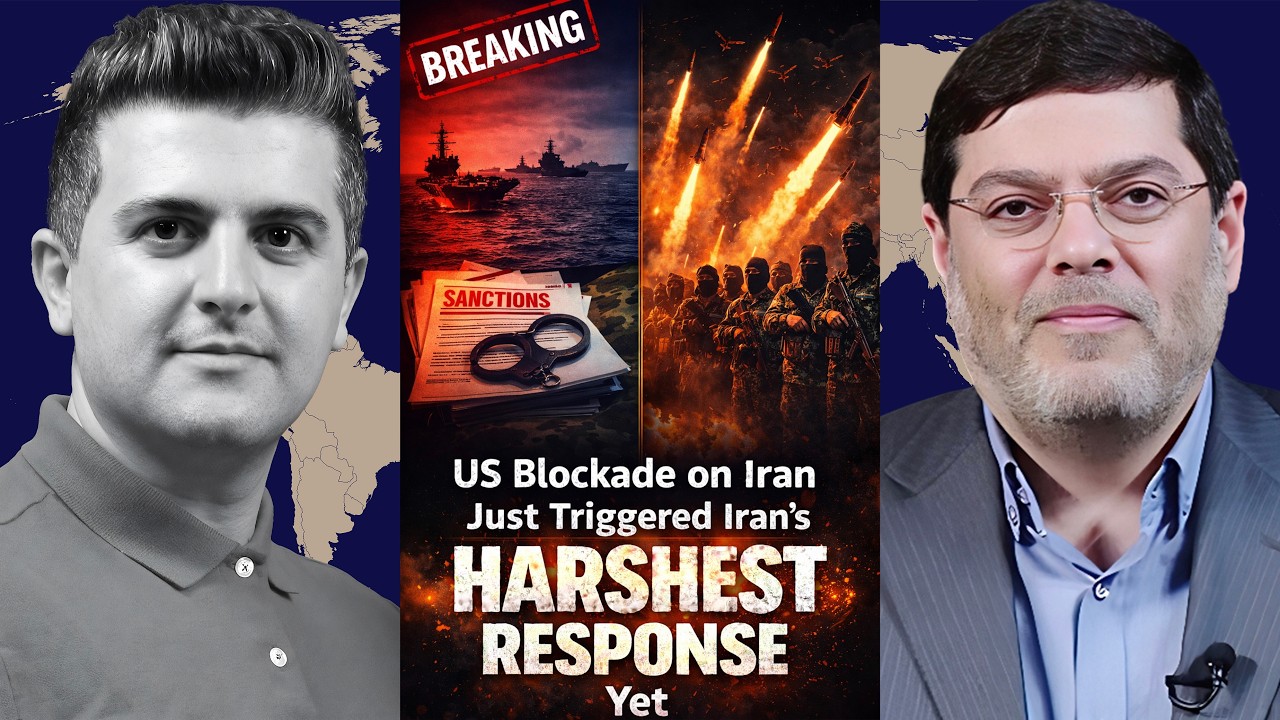
Seyed M. Marandi: US Blockade on Iran Just Triggered Iran’s HARSHEST Response Yet
"An Iranian professor details how US demands and an imposed blockade triggered Iran's harshest response, exposing American strategic missteps and the vulnerability of Gulf Arab states."