
Ray McGovern: Two Fronts, One War? Trump Confronts BOTH Iran & Russia
YouTube · p08Yhtd_qZA
Quick Read
Summary
Takeaways
- ❖The expiration of the New START treaty without US response is a major setback for US-Russia relations, eclipsing Ukraine.
- ❖Russia's military victory in Ukraine is considered inevitable, but their ultimate goal is a new security architecture for Central Europe.
- ❖NATO is effectively 'dead,' leading Russia to prefer a continued US presence in Europe over a re-armed Germany.
- ❖Europe lacks significant military capability without the US, rendering its hawkish rhetoric largely performative.
- ❖A US war with Iran is unlikely due to strong Iranian deterrence, US domestic political concerns (midterms), and Trump's alleged blackmail vulnerability.
- ❖Confidential negotiations between the US and Iran are ongoing, mediated by Oman, indicating a shift from public 'megaphone diplomacy'.
- ❖Iran possesses advanced missiles capable of penetrating Israeli defenses, making a 'lightning strike' by the US or Israel highly risky.
Insights
1New START Treaty Expiration and US-Russia Relations
The New START arms control treaty expired on February 5th, 2026, without a US response to Russia's proposal to maintain quantitative limits on offensive nuclear missiles for another year. This non-response, despite Russian efforts to engage, is framed as a significant blow to US-Russia relations, dwarfing other issues including Ukraine. Russian officials interpret this as Trump's inability to make independent decisions, possibly due to external pressures.
Putin's formal proposal on September 22nd, Russian officials (Lavrov, Peskov, Medvedev) pushing for a response as the deadline approached, and Trump's lack of public or private engagement. Lavrov's subsequent statements about US untrustworthiness.
2Russia's Post-Victory Goals in Ukraine and US Role in Europe
Russia's objective in Ukraine extends beyond military victory to establishing a new security architecture for Central Europe that prevents future conflicts. Paradoxically, Russia now desires the US to remain in Europe, a first in McGovern's 60-year career. This is because NATO is considered 'dead' and a US presence is seen as a check against European powers like Germany developing their own nuclear capabilities.
Medvedev's quote: 'The goal of victory is to prevent new conflicts.' The perceived inability of NATO's Article 5 to be respected, Rubio's cancellation of a Munich meeting, and concerns about France and Germany discussing nuclear weapons.
3Iran's Deterrent and Unlikely US War
A full-scale US war with Iran is improbable due to several factors: strong Iranian deterrent capabilities (hypersonic missiles that can penetrate defenses), US domestic political considerations (midterm elections), and Trump's alleged vulnerability to blackmail via the Epstein files. These factors limit the US and Israeli appetite for direct military conflict, pushing towards negotiations.
Iran's demonstrated ability to launch missiles that cannot be intercepted, the political cost of a protracted Middle East war before midterms, and the public revelation of Trump's name in Epstein files.
4Trump's Negotiation Strategy with Iran
Trump is engaging in confidential negotiations with Iran, mediated by Oman, despite Israeli pressure. A recent meeting between Netanyahu and Trump in the White House resulted in Trump insisting on continuing talks in Oman, with no other commitments made to Israel. This suggests Trump aims to achieve a 'deal' that he can present as a victory achieved through 'threats' (e.g., deploying aircraft carriers), while avoiding actual military conflict.
Trump's public comments about 'very good talks' in Oman with Iranians, the lack of a joint press conference or communiqué after Netanyahu's White House visit, and Trump's stated insistence on continuing negotiations.
Bottom Line
Russia, for the first time in 60 years, desires the US to remain in Europe because NATO is considered defunct, and a US presence prevents European powers like Germany from acquiring nuclear weapons.
This fundamentally alters the traditional US-Russia dynamic in Europe, suggesting that Russia views the US as a necessary, albeit complex, stabilizing force rather than a purely adversarial one in the European security landscape.
Policymakers could explore unconventional diplomatic channels that leverage this unexpected Russian preference for US involvement to de-escalate regional tensions and reshape European security dialogues.
Trump's alleged involvement in the Epstein files may significantly reduce Israel's leverage over US foreign policy decisions, particularly regarding Iran.
If Trump's blackmail vulnerability is publicly exposed or diminished, it could free his administration to pursue policies more aligned with broader US interests, potentially diverging from Israeli demands for military action against Iran.
Analysts should monitor the interplay between domestic legal pressures on US leaders and their foreign policy decisions, as this could reveal hidden drivers behind international relations.
Key Concepts
Political vs. Military Intelligence
McGovern distinguishes between purely military intelligence, which can be valuable but misleading if not balanced with political considerations, and comprehensive intelligence analysis that integrates economic, strategic, and political factors. He cites examples from Vietnam where military leaders suppressed accurate intelligence for political reasons.
Deterrence Theory
The concept that a state can prevent an attack by possessing sufficient retaliatory capabilities. McGovern applies this to Iran, arguing their advanced missile arsenal acts as a credible deterrent against US or Israeli military action, making a war 'really stupid'.
Lessons
- Re-evaluate the strategic relevance of NATO, considering Russia's perspective that it is 'dead' and their preference for a US presence in Europe.
- Monitor US-Iran negotiations, particularly those mediated by Oman, as they represent a significant shift from previous 'megaphone diplomacy' and could lead to unexpected outcomes.
- Consider the impact of domestic political vulnerabilities (e.g., Epstein files) on US foreign policy decisions, as they may influence leaders' capacity to act independently on international issues.
Notable Moments
Rubio's cancellation of his meeting with Europeans at the Munich Security Conference, leaving it to underlings to explain.
This act is cited as a clear indicator of NATO's diminished importance and the US's disengagement from traditional European alliances, reinforcing the 'NATO is dead' argument.
The outcome of Netanyahu's White House meeting with Trump, where Trump publicly insisted on continuing negotiations with Iran in Oman and made no other commitments to Israel.
This moment highlights a potential shift in US policy towards Iran, indicating Trump's willingness to pursue diplomacy despite Israeli pressure, possibly due to other constraining factors.
Quotes
"Putin clearly understands that Trump has to have some face-saving way out of this total collapse in Ukraine. Zelensky is finished."
"Russia will soon win a military victory in Ukraine. But it is equally important to think about what will happen next. After all, the goal of victory is to prevent new conflicts. This is absolutely obvious."
"How many divisions does the pope have? How many divisions does Europe have?"
"We insist that the negotiations proceed in Oman with the Iranians. We made no other commitments to the Israelis."
Q&A
Recent Questions
Related Episodes

BREAKING: Iran Threatens To END Talks; U.S. Vows Retaliation; Hezbollah Collapsing? | TBN Israel
"Iran is leveraging Hezbollah and the Strait of Hormuz to manipulate US negotiations, while Israel asserts its right to dismantle Hezbollah's eroding but still dangerous infrastructure in Lebanon, independent of international talks."

Col. Jacques Baud: The World Is Entering a Lawless Era
"Colonel Jacques Baud details his personal experience with arbitrary EU sanctions and argues that the world has shifted from a law-based international order to a dangerous, rules-based system dictated by powerful actors, exemplified by US actions in Venezuela and the EU's 'teenager decision-making'."

Iran Deal Skepticism. Whoopi Vs Vance. Potomac Park Invasion. Racist Hurls Slurs At Black Boy.
"This episode dissects multiple instances of alleged anti-Black policies and racial injustice, from the Trump administration's legal challenges to reparations and the Iran deal, to police brutality and the erasure of Black history."
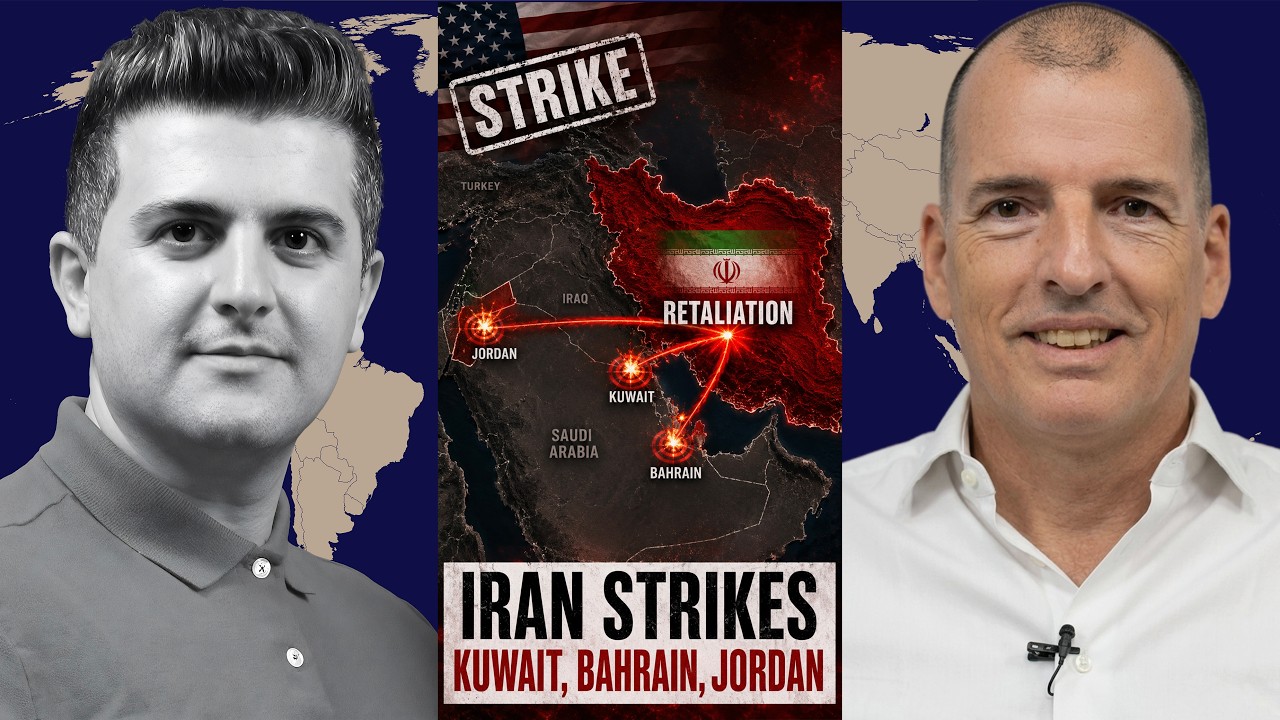
Alex Krainer: US STRIKES Iran – Iran RETALIATES Against Kuwait, Bahrain & Jordan!
"Amidst escalating US-Iran conflict and Iranian retaliation against regional US allies, this episode argues that US foreign policy is deeply controlled by an 'Anglo-Zionist conspiracy' led by the Rothschild banking dynasty, prioritizing Israeli interests over American ones."