John Mearsheimer Lays Out NEW WORLD ORDER: Mark Carney Speech, Greenland, Iran
YouTube · p0JdghstwdY
Quick Read
Summary
Takeaways
- ❖Mark Carney's speech at Davos accurately recognized Trump's threat to the 'rules-based order' and the need for middle powers to adapt.
- ❖Trump's foreign policy distinguishes between great powers (Russia, China), where he seeks accommodation, and middle/smaller powers (Canada, Denmark, Iran, Venezuela, Cuba), which he targets aggressively.
- ❖The US and Israel attempted regime change in Iran by fueling protests, but military intervention was halted due to the protests' failure and Iran's capacity to retaliate against Israel and US regional assets.
- ❖US military power has significant limitations for achieving regime change without ground troops, leading to a greater reliance on economic leverage.
- ❖US intervention in Latin America (Venezuela, Cuba) is primarily driven by an ideological fear of left-leaning governments, using economic pressure to achieve 'regime change on the cheap'.
Insights
1Mark Carney's Speech and the Fading Rules-Based Order
Mark Carney, then Prime Minister of Canada, delivered a 'brilliant speech' at Davos, acknowledging the decline of the US-Western-led 'rules-based order' and the rise of great power rivalry. Mearsheimer interprets Carney's remarks as a direct recognition of Trump's fundamental threat to this order, contrasting it with European leaders who sought to appease Trump.
Carney's speech highlighted the fading rules-based order and the choice for middle powers to combine for impact. Mearsheimer states Carney 'fully understands and quite correctly that that's a wrong way to deal with Trump.'
2Trump's Differentiated Foreign Policy: Great Powers vs. Others
Trump's foreign policy has two dimensions: he seeks to foster good relations and 'modus vivendi' with great powers like Russia and China, but acts radically and aggressively towards middle and smaller countries, including allies. He avoids 'beating up' on major adversaries, reserving hardball tactics for weaker states.
Mearsheimer explains, 'in terms of great power politics... you don't see a lot of trouble between the United States under President Trump and the Russians and the Chinese... It's with middle-sized and smaller countries where Trump is really ruffling feathers.'
3Trump as a 'Wrecking Ball' to International Institutions
President Trump is actively dismantling the existing international order by trying to wreck NATO, showing no use for the United Nations, and withdrawing from numerous international organizations. His interest in new institutions, like the 'Board of Peace,' is only if he can run them as replacements for established bodies.
Mearsheimer states, 'President Trump is taking a sledgehammer to the international order... he is I think trying to wreck NATO... He has no use for the United Nations either.' He also mentions the 'Board of Peace' as a Trump-run replacement for the UN.
4Failed US-Israeli Regime Change in Iran and Retaliatory Options
The US and Israel actively worked to topple the Iranian regime by fueling internal protests with agents. The plan was for protests to weaken the regime, allowing US military force to deliver a 'coup de grâce.' This failed when the Iranian government quelled the protests, and military commanders advised against intervention due to the lack of a decisive victory. Furthermore, Israel's Prime Minister Netanyahu urged Trump not to bomb Iran, fearing devastating retaliatory ballistic and cruise missile attacks that Israel's defenses could not withstand.
Mearsheimer details, 'this is Israel and the United States working together... to topple the regime in Tran... we played a key role in fueling those protests.' He explains Trump backed off because military commanders said 'he cannot win a decisive victory' and Netanyahu called, saying 'he does not want Trump to use military force because... the regime will launch ballistic missiles and cruise missiles at Israel and Israel cannot defend itself.'
5Limitations of US Military Power for Regime Change
The US military, despite its immense power, faces significant limitations in achieving regime change without 'boots on the ground' or substantial internal support. Air power alone cannot topple a regime, and deploying ground troops is politically undesirable for Trump. This reality forces a reliance on other methods, like fostering protests, which, if they fail, negate the utility of military strikes for regime change.
Mearsheimer states, 'All this is to say there are great limits to what you can do with military power.' He notes Trump 'doesn't invade countries and end up with boots on the ground,' and 'as long as he doesn't end up with boots on the ground, he will be pretty much free to use military force here and there... but the end result is not that significant.'
6Ideology as the Primary Driver of US Intervention in Latin America
US foreign policy in Latin America, historically and currently, is primarily driven by an ideological intolerance of left-leaning governments. While justifications like 'narco-terrorism' or 'oil' are often presented, the underlying motivation is a deep-seated fear of socialism and nationalization of resources, as seen in Venezuela and Cuba.
Mearsheimer asserts, 'the principle factor that explains American military intervention in Latin America since 1900 is ideology... our deep-seated fear of left-wing governments.' He notes that in Cuba's case, 'there's no oil issue... It's I think purely the ideological issue.'
Bottom Line
The US military's capacity for sustained, decisive action is more limited than commonly perceived, with significant resources tied up globally and a vulnerability to sophisticated missile defenses, as demonstrated by Israel's concerns regarding Iran.
This suggests a strategic vulnerability for the US and its allies, indicating that even a powerful military cannot guarantee desired outcomes against determined adversaries with asymmetric capabilities. It forces a re-evaluation of military intervention as a primary foreign policy tool.
For other nations, understanding these limitations creates opportunities to develop deterrents or resistance strategies that exploit the US's aversion to 'boots on the ground' and its allies' vulnerabilities.
Trump's 'pinprick' use of military force against weak adversaries, while avoiding large-scale invasions, allows him to project power without incurring the high costs of social engineering or long-term occupations.
This approach enables a more flexible, albeit less impactful, application of military power, but it also means that such actions are unlikely to achieve fundamental regime change or long-term strategic objectives.
Countries targeted by 'pinprick' strikes can learn to absorb these blows without escalating to full-scale conflict, effectively nullifying the strategic impact while demonstrating resilience.
Key Concepts
Great Power Politics
The idea that international relations are primarily shaped by the interactions and competition among the most powerful states, with smaller states having limited maneuver room. Mearsheimer applies this to explain Trump's differentiated approach to China/Russia versus other countries.
Limits of Military Power
The concept that military force, especially air power alone, is often insufficient to achieve complex political objectives like regime change without 'boots on the ground' or significant internal support, as demonstrated in Iran and Venezuela.
Economic Leverage as a Tool of Statecraft
The use of a nation's economic power (sanctions, control over resources, market access) to influence the behavior of other states, often more effectively than military force, especially against economically vulnerable targets.
Lessons
- Recognize that the US is increasingly relying on economic leverage and 'regime change on the cheap' rather than direct military intervention for foreign policy objectives, especially against non-great powers.
- Understand that the 'rules-based international order' is under significant strain, with major powers acting unilaterally and international institutions losing influence.
- Be aware that US foreign policy in regions like Latin America is often driven by deep-seated ideological opposition to left-leaning governments, regardless of specific resource interests.
Notable Moments
Discussion of Mark Carney's Davos speech on the decline of the rules-based order and the need for middle powers to adapt.
Highlights a significant public acknowledgment by a major global figure of the shifting geopolitical landscape and the challenges to existing international norms.
Analysis of the Greenland situation as an example of Trump's aggressive tactics against allies, threatening military force against a NATO member (Denmark).
Illustrates the extent of Trump's willingness to challenge traditional alliances and norms, even with close partners, for perceived national interest.
Detailed breakdown of the failed US-Israeli attempt at regime change in Iran, including the role of internal protests and the reasons for backing off military action.
Provides a specific, behind-the-scenes look at a major geopolitical event, revealing the complexities and limitations of foreign intervention and the influence of regional actors like Israel.
Quotes
"Trump is interested basically in wrecking NATO. Trump is not interested in having good relations with the Europeans and he has a huge amount of power and he's going to use that... to do great damage to the Western Alliance which he has little use for."
"President Trump is taking a sledgehammer to the international order... he is I think trying to wreck NATO... He has no use for the United Nations either."
"It's very important to understand that this is Israel and the United States working together... to topple the regime in Tran and... to break the country apart."
"The point is that as long as the regime in Thran is in power, it doesn't make sense to hit them with American military power or Israeli military power because the regime in Thran has retaliatory options."
"The principle factor that explains American military intervention in Latin America since 1900 is ideology... our deep-seated fear of left-wing governments."
Q&A
Recent Questions
Related Episodes

Patrick Henningsen: Hezbollah JUST Fired Back at Israel - Iran Vows to “Crush” All Attacks
"Patrick Henningsen argues that the US and Israel initiated an illegal war against Iran, driven by Trump's incompetence and Israeli influence, leading to an inevitable escalation with severe global economic repercussions."
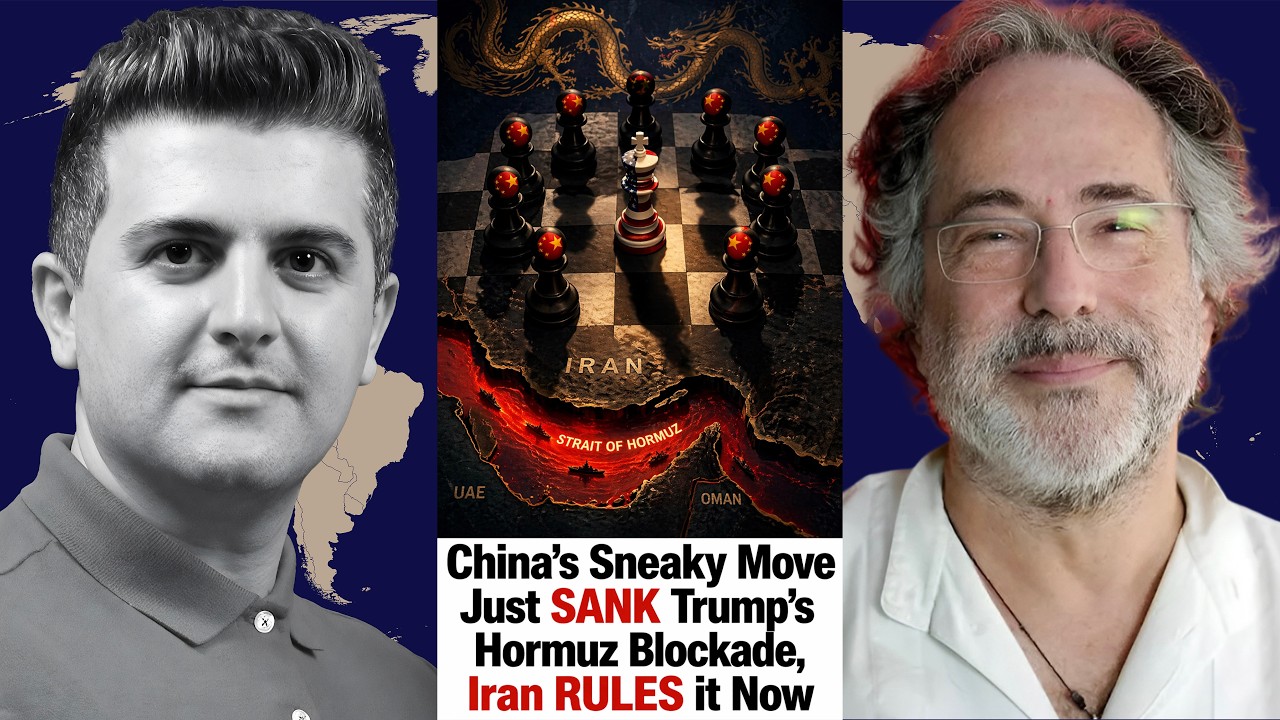
Pepe Escobar: “Total Failure”: Trump’s Blockade Just Backfired Disastrously
"Pepe Escobar argues that the US blockade against Iran, spearheaded by Donald Trump, has utterly failed and backfired, accelerating global economic chaos and challenging US geopolitical dominance."
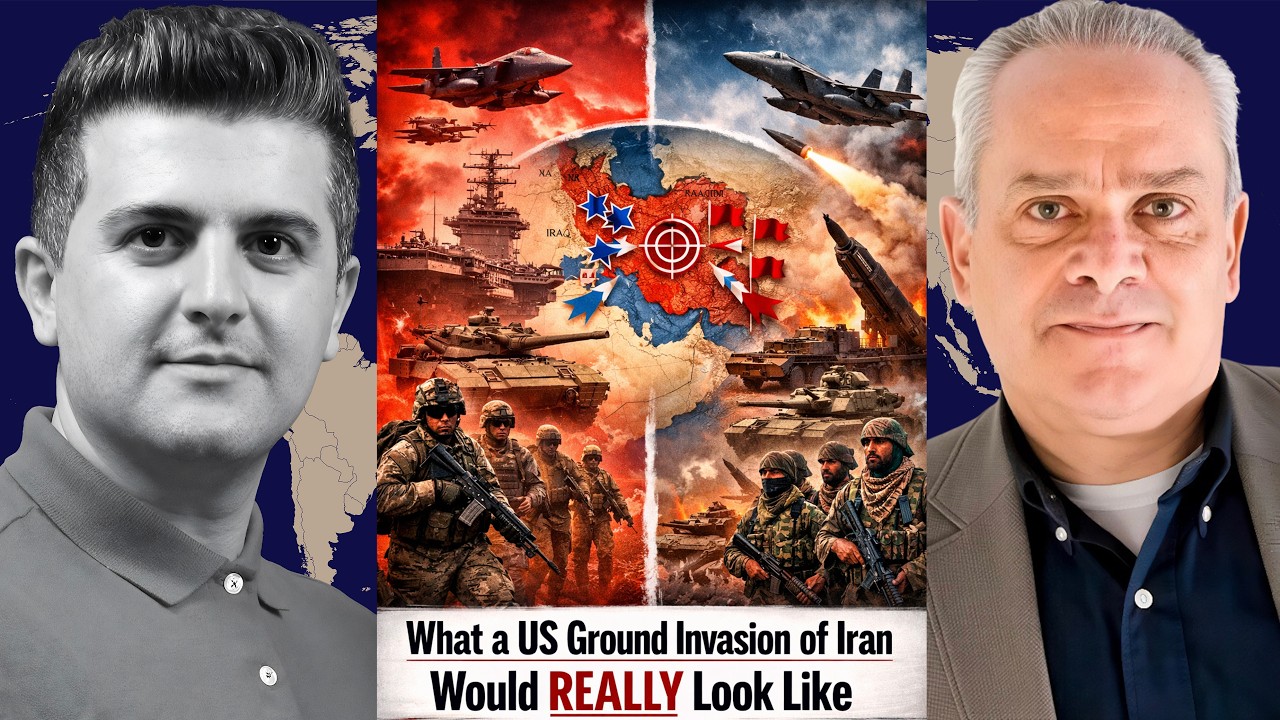
Col. Jacques Baud: What a US Ground Invasion of Iran Would REALLY Look Like
"Colonel Jacques Baud dissects the strategic futility of a US ground invasion of Iran, arguing that current troop levels are insufficient and such an action would backfire, exposing US allies and potentially leading to Iran's nuclearization."

Will Venezuela Be Trump's Vietnam?
"An expert breaks down three perilous pathways for Venezuela under potential US intervention, from a 'Panamanian model' to a 'Libyan-style civil war,' and the broader geopolitical fallout for Latin America."