“F Around And Find Out” Trump Plans For Greenland, Iran & Venezuela | John Mearsheimer x Ian Bremmer
YouTube · peQN_kqtaes
Quick Read
Summary
Takeaways
- ❖The US is dismantling its own global order, prioritizing unilateral action and economic leverage over collective security and free trade.
- ❖Trump's foreign policy is characterized by 'decapitation' (e.g., Venezuela) and 'cheap' regime change (e.g., Iran) without extensive ground troop deployments.
- ❖The perceived unreliability of the US is prompting allies (like the EU and South America) to forge new trade and defense partnerships, potentially undermining America's long-term global position.
Insights
1US Unilateralism Undermines Global Order and Alliances
Ian Bremmer argues that the United States, under a Trump administration, is actively unwinding its own global order by rejecting previous commitments to free trade, collective security, and rule of law. This move towards unilateralism, characterized by high tariffs and transactional alliances, makes the US less reliable to its allies. This unreliability is prompting other nations, such as the EU and South American economies, to form new trade and defense agreements as a hedge against US unpredictability, potentially undermining America's long-term global position.
Bremmer cites the US's use of tariffs as a primary economic tool, higher than in almost a century, and the shift from promoting global free trade architecture (). He notes the EU-Mercosur trade deal and India's efforts to form new trade partnerships as direct responses to US unilateralism ().
2Trump's 'Cheap' Regime Change Strategy
John Mearsheimer describes Trump's foreign policy as employing military force 'liberally' but in a 'light' and 'quick' manner, avoiding getting bogged down. This approach focuses on 'regime change on the cheap' or 'decapitation' (removing leaders) without deploying boots on the ground or aiming to establish liberal democracies. The Venezuela operation, where the leader was 'snatched' and a more compliant vice president installed, is cited as an example of this strategy.
Mearsheimer states Trump has used military force against seven countries, 'in a remarkably liberal way' (), and is 'deeply engaged in regime change' in Iran and Venezuela (). He emphasizes Trump's disinterest in 'using boots on the ground' or 'creating a liberal democracy' post-intervention ().
3Greenland Acquisition Driven by Strategic Necessity and Perceived Unreliability
The discussion explores Trump's persistent interest in acquiring Greenland, not merely for 'vain glory,' but due to a perceived strategic necessity. One compelling argument suggests that if Greenland is not formally part of the United States, Russia and China might not take seriously the US's commitment to defend it under NATO. This argument is strengthened by the existing perception among NATO allies that the US is becoming less reliable.
Bremmer explains that the argument for owning Greenland is that 'the Russians and the Chinese would actually take seriously that the Americans would defend Greenland if it's not a part of the United States' (). He notes this argument is 'made stronger by the fact that the United States is not as trusted or reliable by NATO allies because of precisely what Trump is doing' (). Piers Morgan adds that 'money is good enough' for the 60,000 Greenlanders to accept a deal ().
4Economic Sanctions as a Primary Driver for Iranian Protests
John Mearsheimer contends that the primary reason for the ongoing protests in Iran is the dire state of its economy, largely caused by American sanctions. He argues that without these sanctions, the protests would not be occurring, downplaying the role of the regime's human rights abuses and repressive policies as the 'major reason' for the uprisings.
Mearsheimer asserts, 'The major reason they've had enough is because of the state of the Iranian economy' () and 'We are principally responsible for driving these protests' through economic sanctions (). He claims 'Had there been no American sanctions, there would be no protest today' ().
Lessons
- Recognize that US foreign policy is shifting towards unilateralism and transactional relationships, impacting global stability and alliances.
- Understand that economic leverage and 'decapitation' operations are becoming primary tools of US influence, rather than large-scale military interventions or nation-building.
- Monitor the formation of new regional trade and defense blocs (e.g., EU-Mercosur) as indicators of allies hedging against perceived US unreliability.
Quotes
"The world's most powerful country is in the throws of a political revolution. And that is certainly how a lot of people see it."
"The United States is getting ready to uh to assault uh Danish soldiers, which is absolutely not the case. Um it is American unilateralism. Um it is utterly unnecessary for American security."
"There's a big difference between taco countries and fafo countries. Trump always chickens out and f around and find out. And Maduro thought he was more powerful than he was. He called Trump's bluff and and he's now sitting in prison in New York. He faed, right?"
"I think that Trump is a radical president both in terms of domestic politics and foreign policy."
"The idea that Venezuelans are going to tolerate uh President Trump coming in and running their country and stealing their oil uh is in my opinion not going to happen."
"I'm shocked at your rhetoric. In the past when we have talked, you have readily recognized that the Israelis are committing genocide in Gaza."
"I don't think that's the major reason that they've had enough. The major reason they've had enough is because of the state of the Iranian economy."
Q&A
Recent Questions
Related Episodes
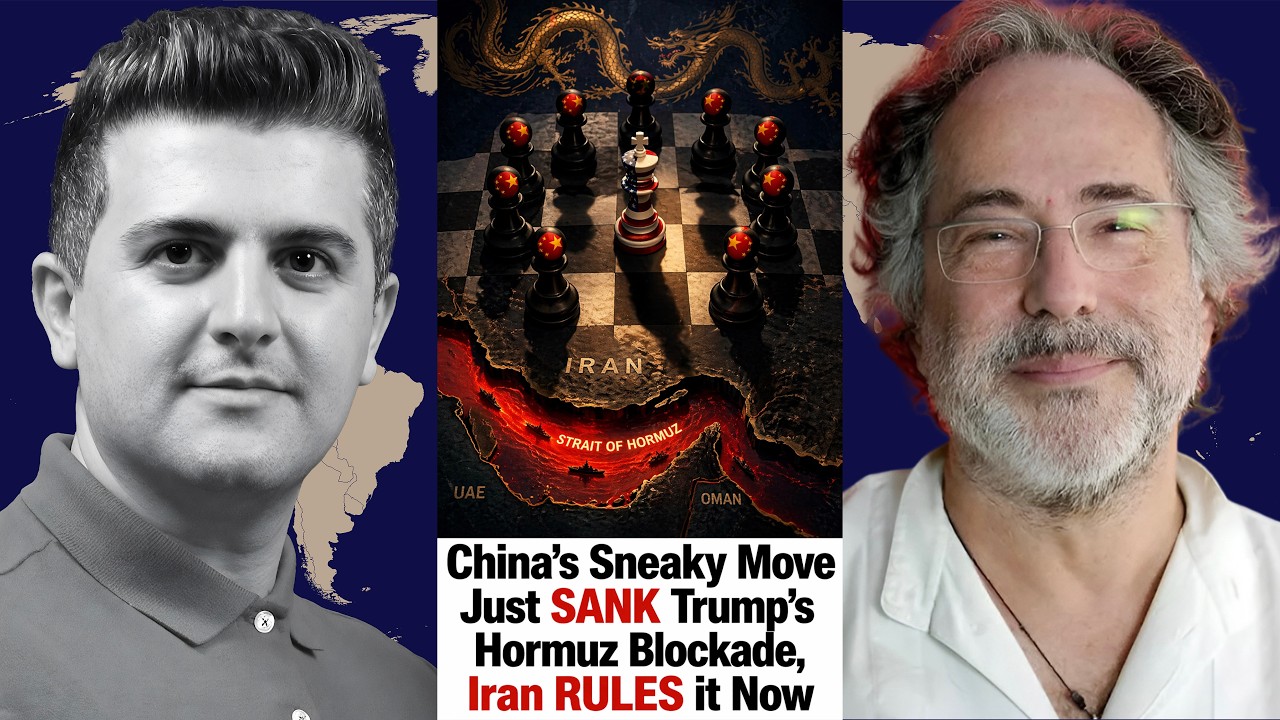
Pepe Escobar: “Total Failure”: Trump’s Blockade Just Backfired Disastrously
"Pepe Escobar argues that the US blockade against Iran, spearheaded by Donald Trump, has utterly failed and backfired, accelerating global economic chaos and challenging US geopolitical dominance."
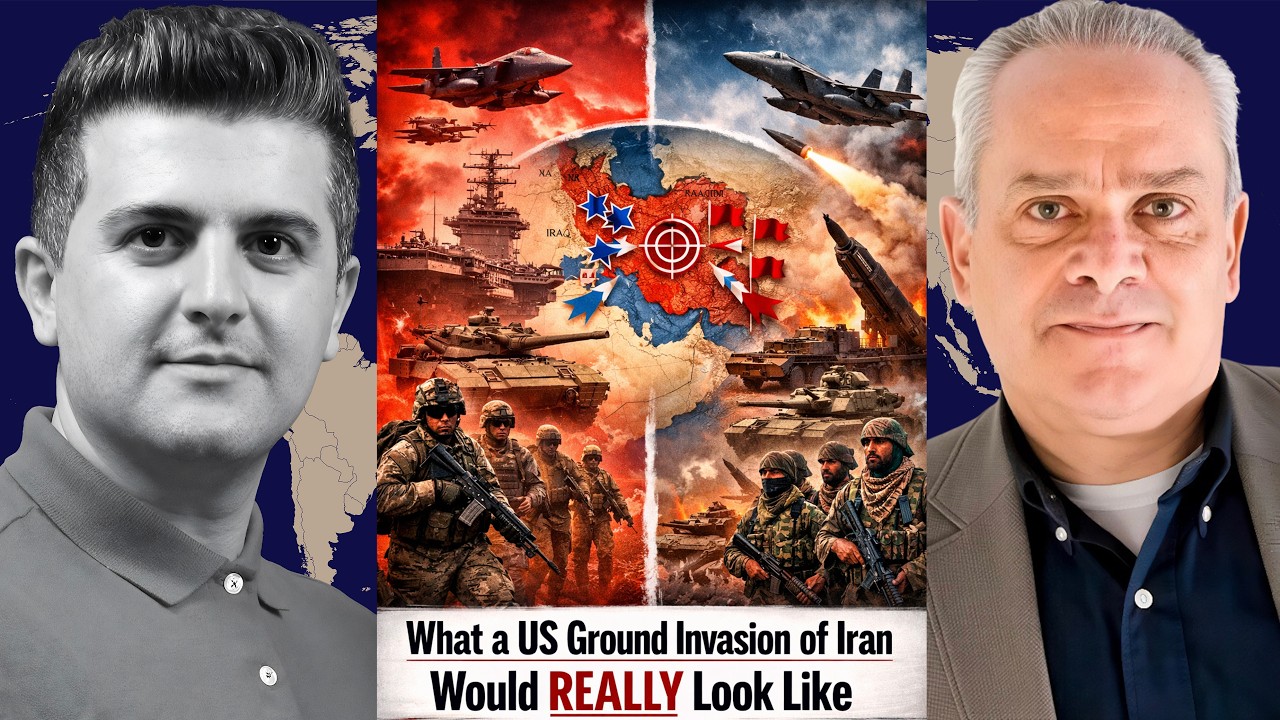
Col. Jacques Baud: What a US Ground Invasion of Iran Would REALLY Look Like
"Colonel Jacques Baud dissects the strategic futility of a US ground invasion of Iran, arguing that current troop levels are insufficient and such an action would backfire, exposing US allies and potentially leading to Iran's nuclearization."
Robby Soave GOES OFF On ANNOYING Liberal Black Woman Making Emotional Trump Deranged Arguments!
"The host dissects a heated foreign policy debate, arguing that 'left-wing' emotionalism and 'Trump derangement' prevent a rational understanding of US sanction strategies against Cuba and Iran."

Will Venezuela Be Trump's Vietnam?
"An expert breaks down three perilous pathways for Venezuela under potential US intervention, from a 'Panamanian model' to a 'Libyan-style civil war,' and the broader geopolitical fallout for Latin America."