
Paul Craig Roberts: They Sold Us Out: Trump & GOP Just Chose Israel Over America
YouTube · pqdcVcGimf4
Quick Read
Summary
Takeaways
- ❖Iran and Russia are criticized for engaging in 'tit-for-tat' responses instead of developing a decisive war doctrine to win conflicts.
- ❖Roberts asserts that Israel's 'Greater Israel' agenda is the primary driver of Middle East conflicts, with the United States acting as its instrument.
- ❖The US House Foreign Services Committee is reportedly integrating the Israeli military with the United States military, granting Israel access to US weapon systems and joint patent ownership.
- ❖Criticism of Israel in the United States is being criminalized, indicating a loss of free speech and US sovereignty to Israeli influence.
- ❖Donald Trump is characterized as a 'puppet of Netanyahu,' whose political survival depends on ending the war, conflicting with Netanyahu's need for its continuation.
- ❖Roberts predicts that without a decisive shift in strategy, Iran will follow the path of Palestine, being gradually 'devoured' by Israel over decades.
- ❖Economic adversity in the US will likely lead to increased government control and the introduction of digital currency, rather than freeing the populace from foreign influence.
- ❖The lack of decisive action by nations like Iran and Russia risks escalating regional conflicts to the point of nuclear weapon use, leading to 'Armageddon'.
Insights
1Strategic Failure of 'Tit-for-Tat' Responses
Paul Craig Roberts argues that Iran and Russia are consistently failing in their conflicts because they adopt a 'tit-for-tat' strategy instead of a decisive war doctrine aimed at winning. He states that such reactive strikes are 'irrelevant' and achieve 'nothing' against an adversary with a clear, long-term agenda.
Roberts states, 'The Iranians have failed to understand they need a doctrine on how to win the war... They're wasting their time, their efforts playing tit-for-tat with the Americans and the Israelis which is pointless.' He adds, 'What is the point of striking back? What do you achieve? Nothing.'
2Israel's 'Greater Israel' Agenda and US Subservience
Roberts asserts that Israel is driven by a 'Greater Israel' agenda, which does not permit the existence of nations like Iran. He claims the United States is being used by Israel to achieve these goals, citing the ongoing integration of US and Israeli militaries and the criminalization of criticism against Israel in the US.
Roberts states, 'the Israeli doctrine of Greater Israel does not permit the existence of Iran.' He further details, 'the United States House Foreign Services Committee is busy at work integrating the Israeli military with the United States military... it won't be long before we'll have Israeli commanders giving orders to US Marines.' He adds that Trump's program of 'preventing any criticism of Israel because it is going to be criminalized.'
3Political Interdependence and Conflicting Agendas
Roberts highlights a dynamic where both Netanyahu and Trump have political incentives related to the ongoing conflict, but their short-term needs conflict. Netanyahu needs the war to continue for political survival, while Trump needs it to end. Despite this, Roberts believes Trump is ultimately beholden to Israel.
Referring to a US official's report, Roberts discusses how 'BB needs the war to continue to stay politically alive in Israel. And Donald Trump needs the war to end to stay politically alive in the United States.' He concludes that 'Netanyahu has him' and Trump 'hasn't the strength of character' to renounce the war.
4Risk of Nuclear Escalation Due to Indecision
Roberts warns that the failure of nations like Iran and Russia to act decisively in their conflicts will inevitably lead to a widening of the war, eventually reaching a desperate point where nuclear weapons become the only perceived effective means, leading to global catastrophe.
Roberts states, 'I've been worried this whole 5 years that his [Putin's] inability to win a war means it widens, widens, widens... sooner or later it's going to get so bad, something has to be done. By then, it'll be so desperate that only desperate means would be effective, and that's nuclear weapons.'
Bottom Line
Israel's alleged role in President Kennedy's assassination was due to his opposition to Israel possessing nuclear weapons.
This claim suggests a deep, historical influence of Israel on US policy, implying that US leaders who oppose Israeli interests face extreme consequences, reinforcing the idea of Israel's total control over the US government.
Investigate historical records and declassified documents related to US-Israel nuclear policy and the Kennedy assassination to corroborate or refute this highly controversial assertion, potentially uncovering hidden aspects of US foreign policy formation.
The US House Foreign Services Committee is actively integrating the Israeli military with the US military, including joint ownership of weapon system patents without Israeli development contributions, and potentially allowing Israeli commanders to issue orders to US Marines.
This integration signifies an unprecedented level of military entanglement, effectively making US forces an extension of Israeli defense, trapping the US in Israel's regional conflicts and eroding US military sovereignty and strategic independence.
Monitor legislative developments, particularly Section 224 of the National Defense Authorization Act, and analyze its implications for US military command structure, resource allocation, and foreign policy autonomy. This could reveal specific mechanisms of influence and areas for public and political challenge.
Economic adversity in the United States will not lead to popular liberation from government or Israeli influence, but rather to increased government control, potentially through the introduction of a digital currency that eliminates financial autonomy.
This challenges the common belief that economic hardship can be a catalyst for political change or freedom. Instead, it suggests a path toward greater authoritarian control, where financial dependence on the government makes dissent impossible, further entrenching existing power structures.
Analyze government and central bank discussions around digital currencies and economic crisis responses. Identify potential legislative frameworks or technological implementations that could lead to centralized control over individual finances, and explore alternative financial systems or advocacy for privacy-preserving digital payment methods.
Key Concepts
Tit-for-Tat vs. Decisive Action
This model contrasts reactive, proportional responses ('tit-for-tat') with a proactive, strategic approach aimed at achieving a definitive victory. Roberts argues that 'tit-for-tat' strategies are inherently losing propositions against an adversary with a clear, long-term agenda, as they merely prolong conflict without resolving the underlying existential threat.
Long-Term Agenda vs. Short-Term Political Needs
This model highlights the conflict between a nation's enduring strategic objectives (e.g., Israel's 'Greater Israel' doctrine) and the immediate political requirements of its leaders (e.g., Trump's need to end a war for re-election). Roberts suggests that long-term agendas often exploit short-term political vulnerabilities, leading to outcomes that serve the agenda rather than the immediate political actor.
Lessons
- Critically evaluate geopolitical analyses that frame conflicts as 'tit-for-tat' exchanges, and instead seek to understand the underlying long-term agendas and strategic objectives of all involved parties.
- Investigate legislative efforts, such as Section 224 of the National Defense Authorization Act, that propose military integration or criminalize criticism of foreign nations, to understand their potential impact on national sovereignty and civil liberties.
- Consider how economic crises might be leveraged by governments to implement new control mechanisms, such as digital currencies, and assess the implications for individual freedom and financial autonomy.
Quotes
"The Iranians have failed to understand they need a doctrine on how to win the war."
"Israel would have zero chance of prevailing against Iran in war... Iran can nuke Israel because the Dimona nuclear plant is in Israel. All Iran has to do is hit it. In fact, they should have already done that. The war would be over."
"Trump is widely or increasingly widely understood as a two-bit punk puppet of Netanyahu."
"The United States House Foreign Services Committee is busy at work integrating the Israeli military with the United States military... it won't be long before we'll have Israeli commanders giving orders to US Marines."
"If you criticize Israel, it means you're an enemy of the United States and you'll be arrested."
"Israel is in the process of abolishing the United States Constitution through this 224 section 224 of the National Defense Authorization Act because it is going to be criminal laws if you criticize Israel."
"The Israelis have an agenda. Who else has one? That's the difference. That's the defining difference."
"The worse the economy gets, the more the government will step in with controls... If we have a really bad financial crisis, likely the government will use it to introduce a digital currency."
Q&A
Recent Questions
Related Episodes
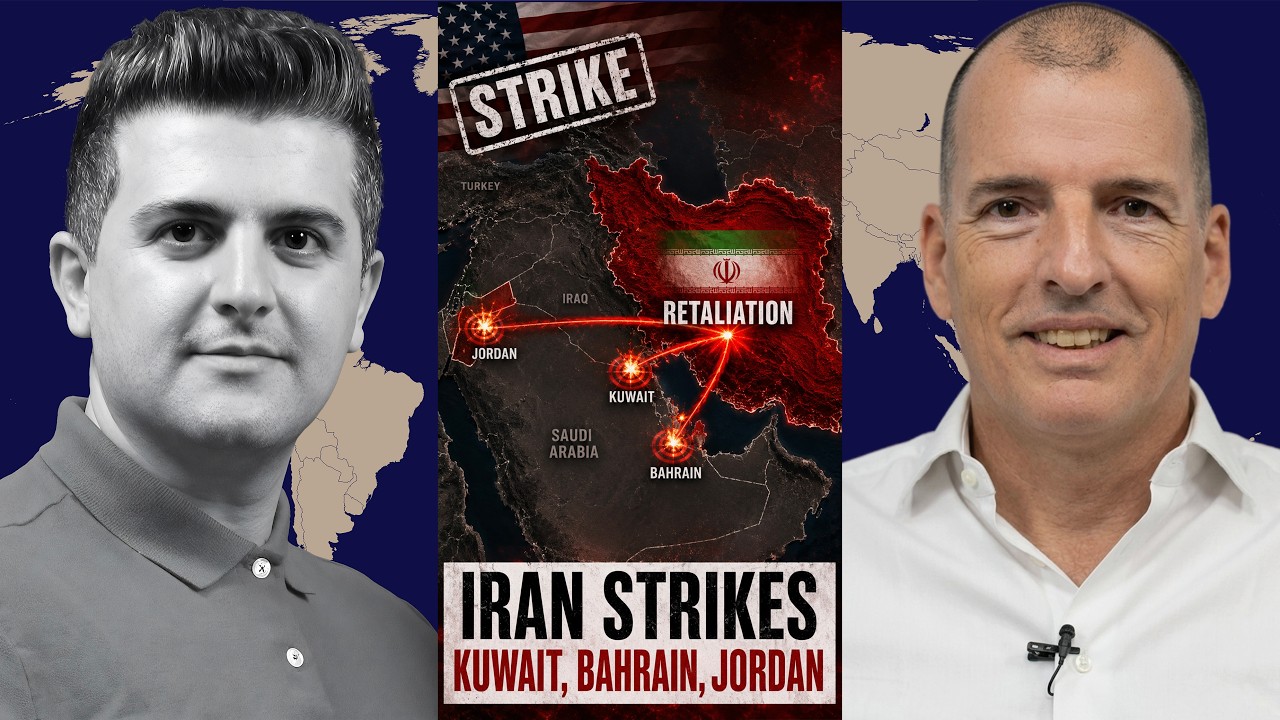
Alex Krainer: US STRIKES Iran – Iran RETALIATES Against Kuwait, Bahrain & Jordan!
"Amidst escalating US-Iran conflict and Iranian retaliation against regional US allies, this episode argues that US foreign policy is deeply controlled by an 'Anglo-Zionist conspiracy' led by the Rothschild banking dynasty, prioritizing Israeli interests over American ones."

Patrick Henningsen: Hezbollah JUST Fired Back at Israel - Iran Vows to “Crush” All Attacks
"Patrick Henningsen argues that the US and Israel initiated an illegal war against Iran, driven by Trump's incompetence and Israeli influence, leading to an inevitable escalation with severe global economic repercussions."
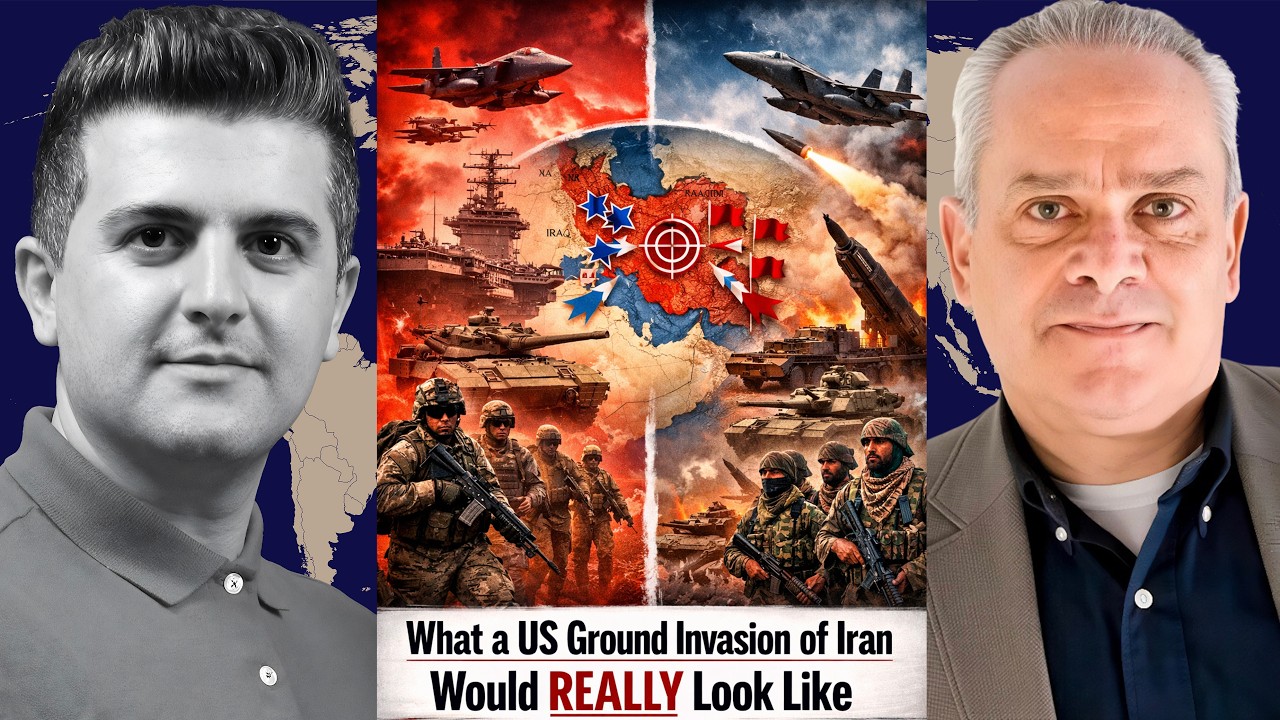
Col. Jacques Baud: What a US Ground Invasion of Iran Would REALLY Look Like
"Colonel Jacques Baud dissects the strategic futility of a US ground invasion of Iran, arguing that current troop levels are insufficient and such an action would backfire, exposing US allies and potentially leading to Iran's nuclearization."

Bibi DEMANDS Ground Troops As Marines Rushed to Iran
"Benjamin Netanyahu is pushing for US ground troops in Iran, framing air strikes as insufficient, while the US rushes Marines to the region and struggles to secure the Strait of Hormuz against surprisingly capable Iranian defenses."