
Lt. Col. Anthony Aguilar: Strait of Hormuz Traffic Plunges to Wartime Levels
YouTube · qNBja9HrZT8
Quick Read
Summary
Takeaways
- ❖Strait of Hormuz vessel traffic has dropped by 90% since the war began, from 150-200 vessels daily to 15-20, despite claims of normalcy.
- ❖The Strait of Hormuz is 'controlled' by Iran through administrative measures and designated channels, not 'closed,' and the US distant blockade also restricted traffic.
- ❖The US has betrayed key aspects of the Memorandum of Understanding (MOU) with Iran, including the release of frozen assets and cessation of hostilities.
- ❖Israel has made significant incursions into Lebanon and Syria, violating UN Security Council resolutions and the 1974 disengagement agreement.
- ❖The US is planning to build a 5,000-soldier military base in Gaza, indicating a deeper, long-term military presence in the region.
- ❖US attempts to arm the Lebanese army to fight Hezbollah mirror failed strategies in Vietnam, Iraq, and Afghanistan, risking civil war in Lebanon.
- ❖Current technical talks in Qatar between the US and Iran are not peace negotiations but focus on the technicalities of the Strait of Hormuz and frozen assets.
Insights
1Strait of Hormuz Traffic and Control Dynamics
Vessel traffic through the Strait of Hormuz has plummeted to 10% of pre-war levels, from 150-200 vessels daily to 15-20. The host presents a graph illustrating this drastic reduction. Lt. Col. Aguilar clarifies that the Strait is 'controlled' by Iran, not 'closed,' with Iran imposing restrictions and conditions on passage. He explains that a 12-nautical-mile navigable channel, maintained by Iran and Oman, is the designated route. Additionally, a US 'distant blockade' in the Gulf of Oman significantly impeded traffic, with the US disabling ships attempting to pass.
Graph showing vessel traffic drop; host's statement on 90% drop; Aguilar's analogy of border control for the Strait; mention of US distant blockade and disabling ships.
2US Betrayal of the Iran Memorandum of Understanding (MOU)
Aguilar asserts that the United States has betrayed every aspect of the MOU signed with Iran. The MOU stipulated an immediate and permanent cessation of war on all fronts (including Lebanon) and the lifting of frozen assets as preconditions for further talks on Iran's nuclear program. However, the US has continued strikes on Iran, refused to release Iran's frozen assets (which are Iran's own money, not a gift), and Israel continues its incursions, all in direct violation of the MOU's initial terms.
Host's mention of MOU terms; Aguilar's statement that the US has 'betrayed every aspect of this MOU'; specific examples of US refusal to unfreeze assets and continued military actions.
3Israeli Incursions and US Support in Lebanon and Syria
Israel has expanded its incursions into Lebanon and Syria, moving past the Golan Heights into areas like Abdin and Jamal, closer to Damascus. These actions violate UN Security Council Resolution 2006 (for Israel to leave Lebanon) and the 1974 disengagement agreement (for Israel to leave the Golan Heights). Aguilar argues that the US is supporting these Israeli actions, betraying its own allies and UN resolutions for Israel's 'colonial project' in the Middle East.
Aguilar's detailed description of Israeli incursions into Lebanon and Syria; reference to UN Security Council 2006 resolution and 1974 disengagement agreement.
4US Strategy in Lebanon: A Repeat of Failed Playbooks
The US Central Command commander met with the Lebanese army to discuss implementing a security annex, likely aimed at arming the Lebanese army to fight Hezbollah. Aguilar views this as a dangerous strategy, mirroring failed US interventions in Vietnam, Iraq, and Afghanistan, where the US attempted to pit a US-backed government against the local populace or resistance groups. He predicts this will lead to civil war in Lebanon and further entangle US troops in a conflict that does not serve US interests.
Discussion of SANCOM commander Brad Cooper's meeting with Lebanese army; Aguilar's comparison to US strategies in Vietnam, Iraq, Afghanistan, and Syria.
5US Military Base in Gaza and Regional Escalation
The United States has officially broken ground on a massive 5,000-soldier military base in Gaza. Aguilar warns this base will serve as an expeditionary hub, not just for Gaza, but also for supporting operations in Lebanon or acting as a policing force in the West Bank. This move is seen as a significant escalation, further entrenching the US military in the region for Israel's benefit, rather than pursuing diplomatic solutions.
News of the US breaking ground on a 5,000-soldier military base in Gaza.
Bottom Line
The US is using the narrative of the Strait of Hormuz being 'closed' as a pretense to strike Iran, when in reality, it is controlled, and the US itself contributed significantly to traffic restrictions via its distant blockade.
This narrative manipulation allows the US to justify military actions and portray Iran as the aggressor, diverting attention from its own violations of international agreements and its role in escalating tensions.
Analysts and policymakers should scrutinize official narratives regarding maritime chokepoints, seeking independent verification of traffic data and control mechanisms to expose potential geopolitical manipulation.
The US is actively pursuing a strategy in Lebanon to arm the Lebanese army against Hezbollah, despite Hezbollah being far better equipped and organized, and Israel maintaining its occupation zone.
This approach is a direct replication of failed US interventions in other Middle Eastern countries, destined to lead to civil war, further destabilize the region, and draw the US into another costly, protracted conflict for external interests.
International bodies and regional actors should advocate for diplomatic solutions that address the root causes of conflict (e.g., Israeli occupation) rather than supporting military strategies that exacerbate internal divisions and external proxy wars.
Q&A
Recent Questions
Related Episodes

Patrick Henningsen: Hezbollah JUST Fired Back at Israel - Iran Vows to “Crush” All Attacks
"Patrick Henningsen argues that the US and Israel initiated an illegal war against Iran, driven by Trump's incompetence and Israeli influence, leading to an inevitable escalation with severe global economic repercussions."
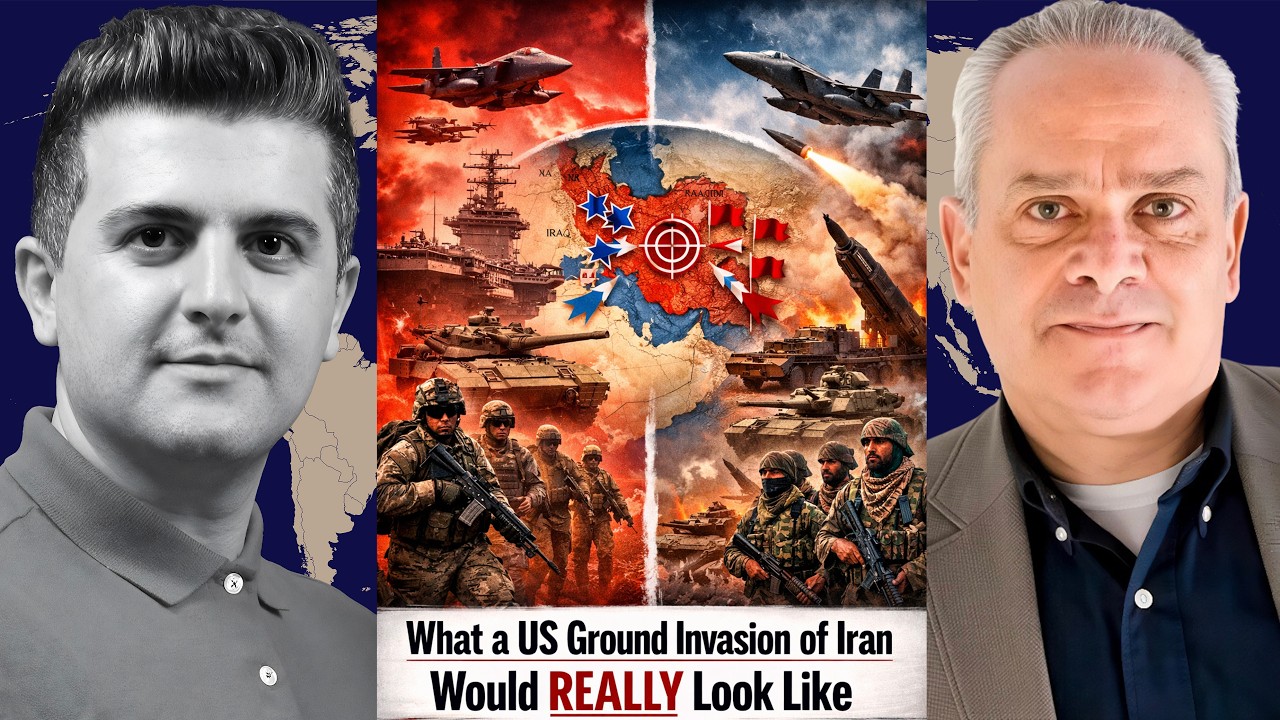
Col. Jacques Baud: What a US Ground Invasion of Iran Would REALLY Look Like
"Colonel Jacques Baud dissects the strategic futility of a US ground invasion of Iran, arguing that current troop levels are insufficient and such an action would backfire, exposing US allies and potentially leading to Iran's nuclearization."
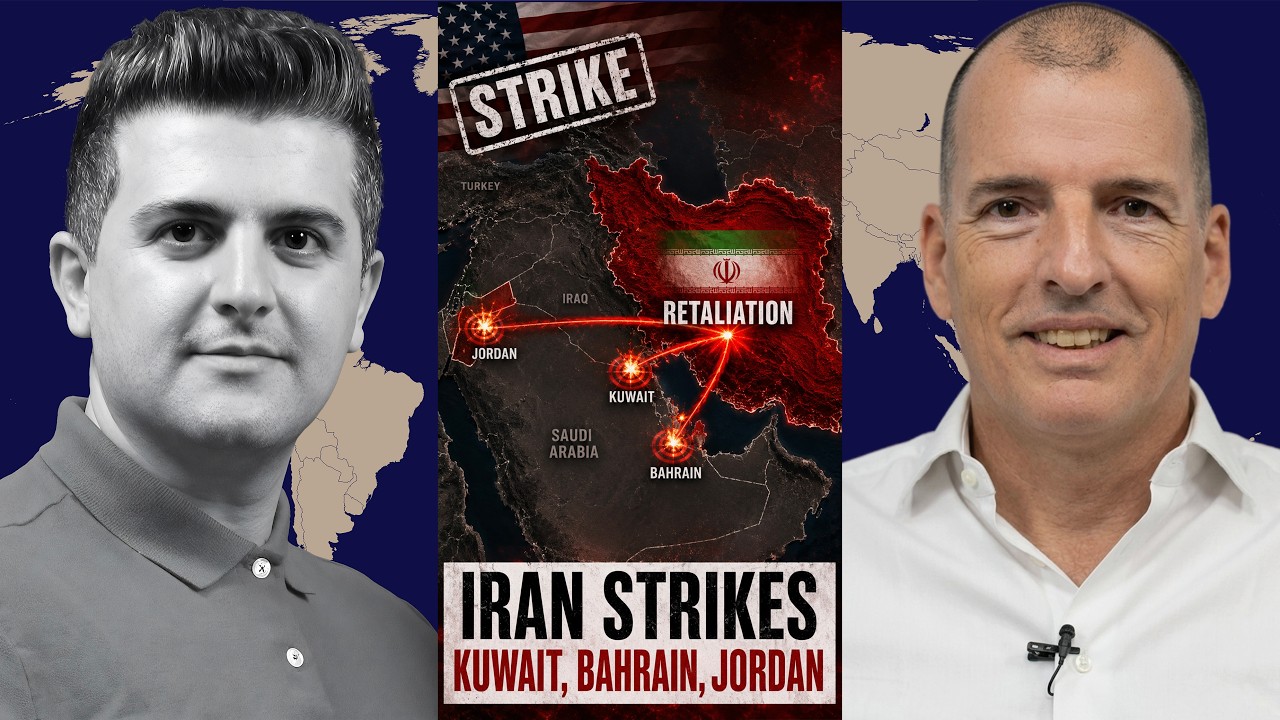
Alex Krainer: US STRIKES Iran – Iran RETALIATES Against Kuwait, Bahrain & Jordan!
"Amidst escalating US-Iran conflict and Iranian retaliation against regional US allies, this episode argues that US foreign policy is deeply controlled by an 'Anglo-Zionist conspiracy' led by the Rothschild banking dynasty, prioritizing Israeli interests over American ones."

Bibi DEMANDS Ground Troops As Marines Rushed to Iran
"Benjamin Netanyahu is pushing for US ground troops in Iran, framing air strikes as insufficient, while the US rushes Marines to the region and struggles to secure the Strait of Hormuz against surprisingly capable Iranian defenses."