BREAKING: Iran Firepower COLLAPSES; 16 Jets Down In Tehran; 3RD U.S. Carrier Nears | TBN Israel
YouTube · sV1nwoZaUY0
Quick Read
Summary
Takeaways
- ❖A third US aircraft carrier group is deploying to the Middle East, alongside B1 and B2 strategic bombers, signaling a sustained, heavy bombing phase.
- ❖The IDF and US Air Force destroyed 16 Iranian aircraft at Tehran airport and struck the sensitive Parkin complex, targeting military industries and nuclear-related facilities.
- ❖Iran has lost 70% of its missile launch capabilities, dropping from 420 to approximately 100 active launchers, and 42 Iranian naval ships were destroyed in three days.
- ❖The US is demanding unconditional surrender from Iran, aiming to install new leadership that will cooperate on oil production and secure uranium stockpiles.
- ❖The conflict has severely impacted global shipping in the Strait of Hormuz, with tanker movement down 95%, prompting US efforts to escort vessels and keep routes open.
- ❖Iran's attacks on neighboring Gulf states (Bahrain, Qatar, UAE) have backfired, creating new enemies and leading to airspace closures and civilian uncertainty.
- ❖Internal confusion and conflicting reports plague Iran's leadership succession process, with fears that declaring a new leader could mark them for assassination.
- ❖The US is pressuring Sri Lanka not to return survivors of a sunken Iranian warship, aiming to prevent their use as propaganda and explore defection options.
Insights
1Systematic Dismantling of Iranian Capabilities
The US and Israel have shifted from responsive strikes to a systematic dismantling of Iran's military, industrial, and logistical infrastructure. This includes destroying Quds force aircraft at Tehran's airport, targeting the Parkin complex (a hub for heavy military industries and nuclear-related activities), and eroding Iran's air and naval forces. The goal is to crush Iran's entire chain of capabilities, from production to maintenance, delaying its military development by months or years.
IDF destroyed 16 aircraft at Tehran airport (, ). Strikes on Parkin complex, identified with heavy military industries, warheads, engines, and nuclear program activity (, ). Iran lost 70% of its launch capabilities, from 420 to 100 active launchers (, ). US destroyed 42 Iranian ships in 3 days (, ).
2Massive US Force Projection and Strategic Objectives
The United States is deploying significant military assets, including a third aircraft carrier group to the Red Sea and B1/B2 strategic bombers, to sustain a long and decisive campaign against Iran. The explicit US objective, articulated by Trump, is to achieve Iran's unconditional surrender, replace its current leadership with one acceptable to the US, and rebuild Iran into a cooperative partner for oil production and nuclear stockpile security. This strategy includes considering limited ground forces for strategic site control.
A third US aircraft carrier is on its way to the Middle East (, , ). Four B1 bombers are in Britain ahead of dramatic strikes (, ). Trump stated Iran will take a hard hit and is the 'loser of the Middle East' (, ). Trump declared the US will work to rebuild Iran under new leadership, making it 'great, good, and strong again' (, ). Discussions include limited American ground forces for strategic purposes, such as securing nuclear materials ().
3Regional Instability and Economic Impact
The conflict has expanded beyond Iran's borders, causing significant instability in the Gulf states and impacting global economic arteries. Iranian attacks have been recorded in Bahrain, Qatar, and the UAE, leading to airspace closures and civilian uncertainty. Crucially, tanker movement in the Strait of Hormuz has plummeted by 95%, prompting US efforts to escort tankers and keep oil routes open, highlighting the severe economic ramifications of the conflict.
Directed hits and interceptions recorded in Bahrain, Qatar, and UAE (, ). UAE airspace completely closed (, ). Iranian attempt to strike Dubai airport control tower missed by meters (). Tanker movement in Strait of Hormuz fallen by 95% ().
Bottom Line
The US is actively pressuring Sri Lanka not to return Iranian warship survivors, viewing them as potential propaganda assets and exploring defection opportunities.
This indicates a multi-faceted US strategy extending beyond military strikes to information warfare and intelligence operations, aiming to undermine Iranian morale and control narratives even after naval engagements.
Intelligence agencies and geopolitical analysts should monitor such 'day after' strike management, as it reveals deeper strategic objectives and potential avenues for psychological operations or defection programs.
Iran's internal leadership succession is in disarray, with conflicting reports and fears that declaring a new leader could immediately mark them for assassination.
This deep governmental confusion and fear of exposure suggest extreme vulnerability within the Iranian regime, potentially accelerating its collapse or leading to unpredictable internal power struggles.
Foreign intelligence and diplomatic entities could leverage this internal instability to support opposition factions or influence the succession process, aligning with the US goal of a new Iranian regime.
Opportunities
Geopolitical Risk Assessment & Mitigation Services
Offer specialized consulting services to global shipping, energy, and logistics companies to assess and mitigate risks associated with Middle East conflicts, including real-time intelligence on shipping lane safety, insurance premium forecasts, and alternative supply chain strategies.
Post-Conflict Reconstruction & Infrastructure Development
Develop a framework and secure early-stage funding for a consortium focused on the reconstruction of critical infrastructure in a post-regime-change Iran, particularly in energy production (oil fields) and security (uranium stockpiles), aligning with stated US objectives.
Key Concepts
Domino Effect
The hosts describe the campaign as initiating a 'domino effect' designed to bring down Iran, Hamas, and Qatar one after the other, illustrating a cascading series of strategic actions leading to broader regional change.
Head of the Snake
The initial phase of the war is characterized as 'removing the head of the snake,' referring to the elimination of the top layer of IRGC and Ayatollah regime leadership, a common military metaphor for decapitating an enemy's command and control.
Lessons
- Monitor global oil and shipping markets closely for volatility and supply chain disruptions, particularly those related to the Strait of Hormuz and Red Sea.
- Evaluate geopolitical risk exposure for businesses operating in or reliant on the Middle East, considering the potential for prolonged conflict and regional instability.
- Stay informed on US and Israeli strategic objectives regarding Iran, including potential regime change and its implications for regional alliances and economic policies.
US-Israeli Strategy for Iranian Regime Dismantling
Achieve complete air dominance, eliminating enemy air defense systems and aircraft.
Systematically eliminate majority of missile launchers and top-layer leadership of the IRGC and Ayatollah regime.
Execute heavy bombing campaigns targeting remaining military infrastructure, facilities, weapons depots, and armored vehicles to prevent substantial resistance.
Target industrial hearts and logistical arteries (e.g., airports, military production complexes) to crush the enemy's chain of capabilities from production to maintenance.
Apply diplomatic and economic pressure, demanding unconditional surrender and fostering internal opposition, while preparing for post-conflict reconstruction and new leadership.
Notable Moments
The hosts note a significant shift in the conflict's pace and target selection, moving from hunting launchers to striking the entire Iranian system, including logistical routes and industrial hearts.
This indicates a strategic escalation aimed at long-term incapacitation of Iran's military and its ability to project power through proxies, rather than just retaliatory strikes.
The hosts highlight Iran's miscalculation in attacking its neighbors, which led to those countries publicly rising against Iran rather than pressuring the US to stop attacks.
This demonstrates a critical strategic blunder by Iran that has inadvertently strengthened regional opposition and potentially isolated Iran further, contrary to its intended outcome.
Quotes
"Iran is no longer a bully. It is the loser of the Middle East and it will be hit hard today."
"We destroyed 42 ships in 3 days. The Iranians are bad people. Look at what happened on October 7th."
"After the next leader is chosen, we will work nonstop to rebuild Iran and make it great, good, and strong again. Iran will have a bright future. Make Iran great again."
"The bottleneck is the launchers, not the missiles. You could have a 100 ballistic missiles, but if you only have a single launcher, you're only launching one at a time and you have to reload it every single time."
Q&A
Recent Questions
Related Episodes
BREAKING: U.S. Weighs INVADING Iran Oil Island; Gulf Energy Crisis Grows | TBN Israel
"As the US and Israel systematically dismantle Iran's military and leadership, the conflict escalates into an energy war, with the US considering ground invasion of Iran's critical Karag oil island to secure global oil routes."

Pentagon Prepares For EXTENDED War With Iran
"This episode dissects the geopolitical maneuvers surrounding potential US-Iran conflict, revealing strategic leaks, Netanyahu's diplomatic sabotage playbook, and the true intent behind economic sanctions."

BREAKING: Iran Threatens To END Talks; U.S. Vows Retaliation; Hezbollah Collapsing? | TBN Israel
"Iran is leveraging Hezbollah and the Strait of Hormuz to manipulate US negotiations, while Israel asserts its right to dismantle Hezbollah's eroding but still dangerous infrastructure in Lebanon, independent of international talks."
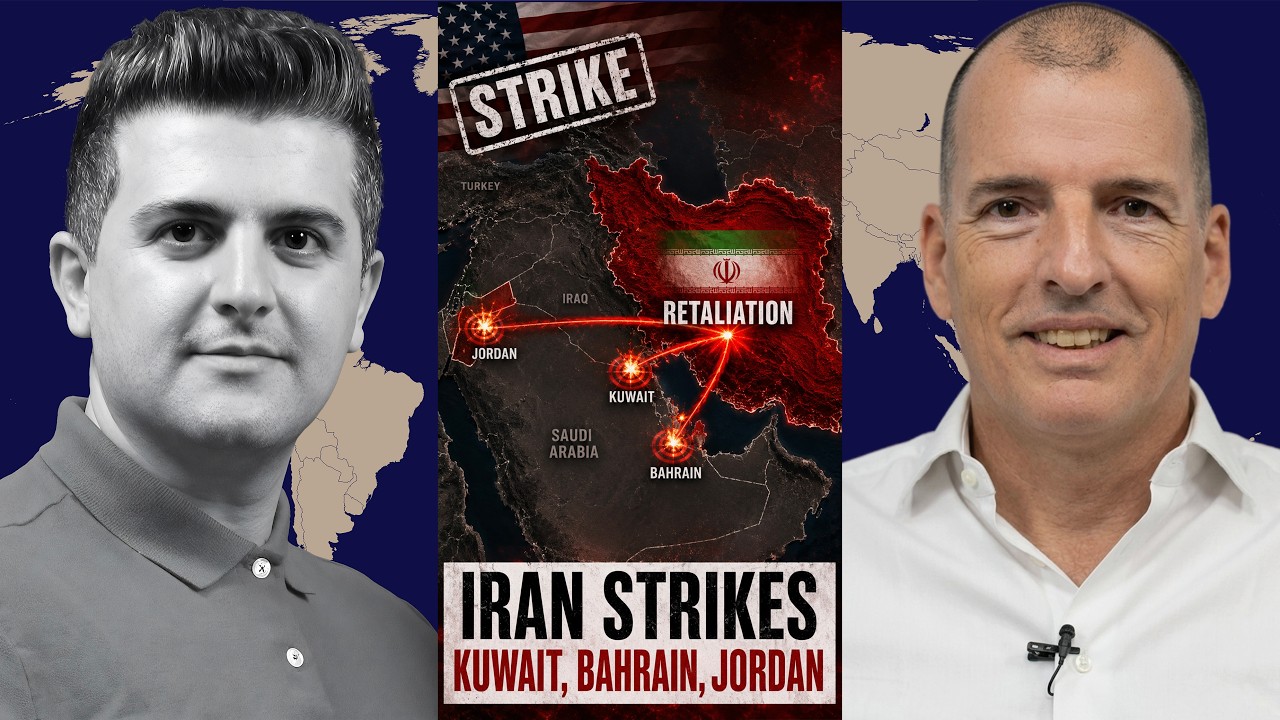
Alex Krainer: US STRIKES Iran – Iran RETALIATES Against Kuwait, Bahrain & Jordan!
"Amidst escalating US-Iran conflict and Iranian retaliation against regional US allies, this episode argues that US foreign policy is deeply controlled by an 'Anglo-Zionist conspiracy' led by the Rothschild banking dynasty, prioritizing Israeli interests over American ones."