BREAKING: Hundreds Dead In BRUTAL Regime Crackdown; U.S. Mobilizes Warplanes | TBN Israel
YouTube · s_Pr432EqY4
Quick Read
Summary
Takeaways
- ❖Over 1,000 fatalities are estimated from clashes between Iranian protesters and security forces across more than 80 hotspots.
- ❖The Iranian regime implemented an almost total information blackout and brought in mercenaries due to regular security forces' reluctance to fire on protesters.
- ❖The U.S. is moving strike aircraft near Iran and considering options from sanctions and cyberattacks to transferring satellite internet terminals to bypass the blackout.
- ❖Israel is refraining from public statements on Iran's protests to prevent the regime from diverting blame to a 'Zionist conspiracy'.
- ❖Hamas is actively rearming and rebuilding tunnel infrastructure in Gaza, refusing to disarm light weapons, which Israel considers a red line for a full withdrawal.
- ❖Efforts to establish an international stabilization force for Gaza are stalled, though Bangladesh has expressed interest.
- ❖Israel's Air Force continues to strike Hezbollah positions in southern Lebanon, targeting tunnels and weapons depots being reactivated.
- ❖The U.S. military conducted extensive airstrikes against ISIS targets in Syria, involving F-15E, A10, AC30G, MQ9 drones, and Jordanian F-16s.
Insights
1Iran's Regime Faces Unprecedented Internal Pressure and Brutal Crackdown
Hundreds of thousands of Iranians are protesting across more than 80 hotspots and over 100 cities, leading to an estimated hundreds to thousands of fatalities. The regime has responded with live fire, mass arrests (over 10,000), an internet blackout, and the deployment of mercenaries, as some regular security forces are reportedly refusing orders to fire on citizens. This widespread unrest is fueled by public rage and a sense that the regime's 'tough talk' is worthless, especially after its military humiliation against Israel.
Over 1,000 fatalities estimated (), internet dark for three days (), mercenaries brought in (), security forces refusing orders (), 10,000+ arrests (), regime's 'worthless talk' ().
2U.S. Signals Strong Deterrence and Support Options for Iranian Protesters
The U.S. is actively examining options, including military strikes, and has moved strategic assets like strike aircraft near Iranian airspace. Non-kinetic options include additional sanctions, cyberattacks, influence operations, and crucially, transferring satellite internet terminals to bypass the regime's information blackout. President Trump has declared potential 'action with a force they have not encountered' if violence continues, creating strategic uncertainty for Tehran.
Reports of strategic assets and strike aircraft movements (, ), options include military strikes (), satellite internet terminals (), Trump's warning of 'action with a force they have not encountered' ().
3Hamas Rebuilds Capabilities in Gaza, Challenging Disarmament Demands
Despite ceasefire plans, Hamas is actively working to restore its military capabilities, paying salaries to terrorists, recruiting new operatives, rebuilding damaged tunnel infrastructure, and resuming weapons production. The organization refuses to disarm its light weapons (tens of thousands of AK47s, machine guns, sniper rifles), which Israel considers a 'red line' for any full IDF withdrawal or international management framework. This indicates Hamas's intent to maintain governing and fighting capacity.
Hamas working to restore capabilities (), pays salaries, recruits operatives, restores tunnel infrastructure (), restores weapons production (), refuses to give up light weapons (), Israel's 'red line' on disarmament ().
4International Stabilization Force for Gaza Faces Significant Hurdles
Progress in establishing a temporary international stabilization force for Gaza, a key component of 'Phase B' of the ceasefire plan, has been minimal. Countries that previously expressed willingness are retracting commitments or offering only technical/medical teams, fearing direct engagement with Hamas. Bangladesh has emerged as a new potential player, expressing principal interest in joining the force after discussions with American diplomats.
No major progress in establishing force (), countries walking back commitments (), offering technical/medical teams (), Bangladesh expresses principal interest ().
Bottom Line
The Iranian regime's reliance on foreign mercenaries and the reported reluctance of its own security forces to fire on protesters suggest a deeper internal fracture and potential loyalty crisis within its repressive apparatus.
This internal weakness could accelerate the regime's collapse if protests intensify, but also risks more brutal, indiscriminate violence from less accountable foreign fighters.
International efforts to support the protests could focus on intelligence gathering on mercenary activities and publicizing internal dissent within the regime's forces to further erode morale.
The U.S. consideration of transferring satellite internet terminals to Iranian protesters represents a non-kinetic, high-impact intervention that directly counters the regime's information control strategy.
Successful implementation could empower protesters by restoring coordination and documentation capabilities, making regime repression harder to conceal and potentially accelerating the movement.
This highlights a broader opportunity for technological interventions in authoritarian states to support civil resistance movements by circumventing state-controlled communication infrastructure.
Key Concepts
Diversion Tactic
The Iranian regime consistently attempts to divert internal dissent by blaming external actors like Israel, the U.S., and Britain, framing protests as foreign-orchestrated terrorism rather than acknowledging internal issues. This tactic aims to unite the population against a perceived common enemy and justify repression.
Calculated Profile
Israel's approach to the Iranian protests involves maintaining a 'calculated profile' – expressing quiet support for freedom while avoiding overt statements that could be used by the Iranian regime to rally its base against an external 'Zionist conspiracy'. This strategy prioritizes the protesters' goals over immediate political gain.
Lessons
- Monitor the deployment of U.S. strategic assets and any announcements regarding satellite internet provision to Iran, as these could signal a significant shift in international support for the protests.
- Observe the Iranian regime's narrative around the protests, specifically how it attempts to externalize blame, to understand its propaganda strategy and internal pressures.
- Track Hamas's rearmament efforts and Israel's responses in Gaza, as the refusal to disarm light weapons is a critical red line that could trigger renewed large-scale military operations.
- Pay attention to developments regarding the international stabilization force for Gaza, particularly Bangladesh's potential involvement, as its formation is crucial for the next phase of the ceasefire plan.
Notable Moments
The host emphasizes that the current unrest in Iran is 'no longer just another wave of civil unrest. It is a collision between a public that feels it has nothing to lose and a regime that is afraid of losing control.'
This framing elevates the significance of the protests beyond typical dissent, suggesting a fundamental, existential conflict for both the Iranian populace and the ruling regime.
The podcast highlights the sadistic policy of eye injuries from metal pellets against Iranian protesters, indicating a deliberate strategy to punish presence at demonstrations, not just disperse crowds.
This detail underscores the extreme brutality and calculated cruelty of the regime's repression, designed to instill fear and permanently disable dissenters, rather than merely control them.
Quotes
"This is no longer just another wave of civil unrest. It is a collision between a public that feels it has nothing to lose and a regime that is afraid of losing control and is looking for a way to divert the attention to external issues."
"The regime needs Iranians to believe that the problems are coming from the outside because otherwise it will have to admit to making its own mistakes and its own bad decisions."
"Talk is cheap, especially in the Middle East. And right now, the worthless realale, the currency of Iran, is a great metaphor for the worthless talk coming out of this Ayatollah regime."
"Without meaningful disarmament there will be no full IDF withdrawal and no international framework will enter to manage the Gaza Strip."
Q&A
Recent Questions
Related Episodes
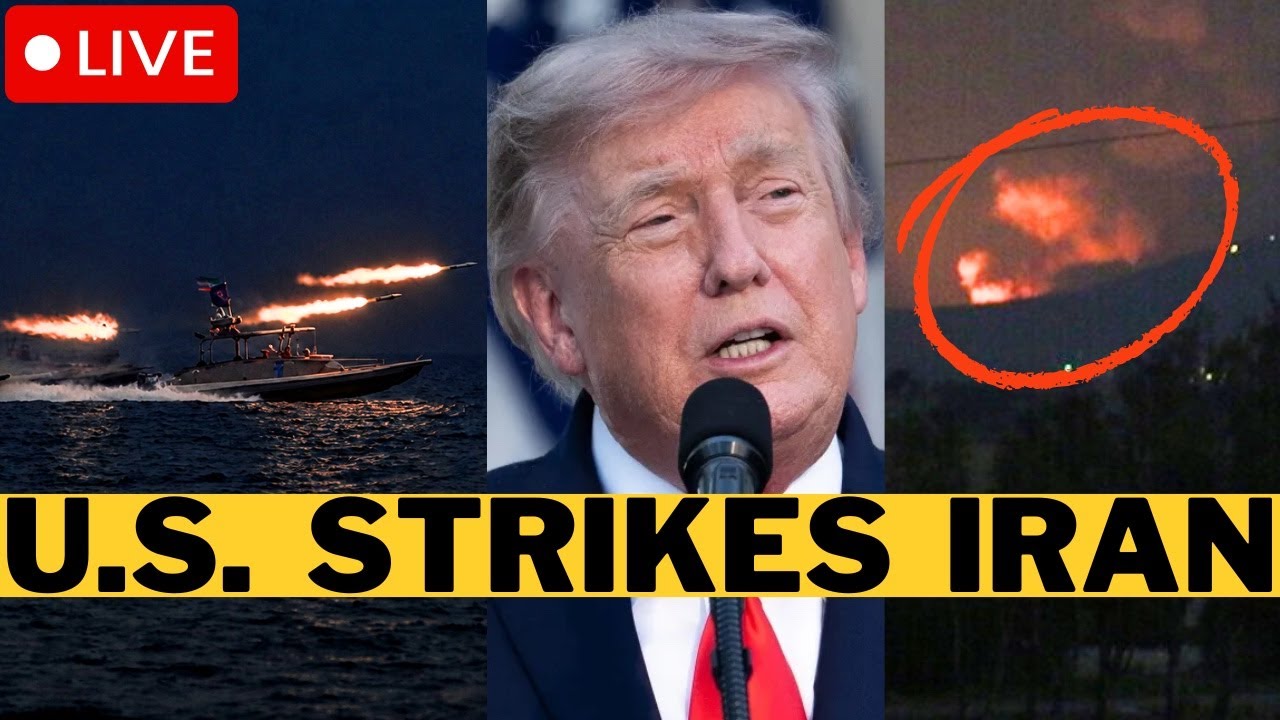
BREAKING: IRGC Break Ceasefire - U.S. Military Launch Strikes In Iran
"The US military launched retaliatory strikes against IRGC bases in Iran after the IRGC broke a ceasefire by attacking international vessels, while Hezbollah militants caused chaos in Beirut over a Lebanese-Israeli agreement."
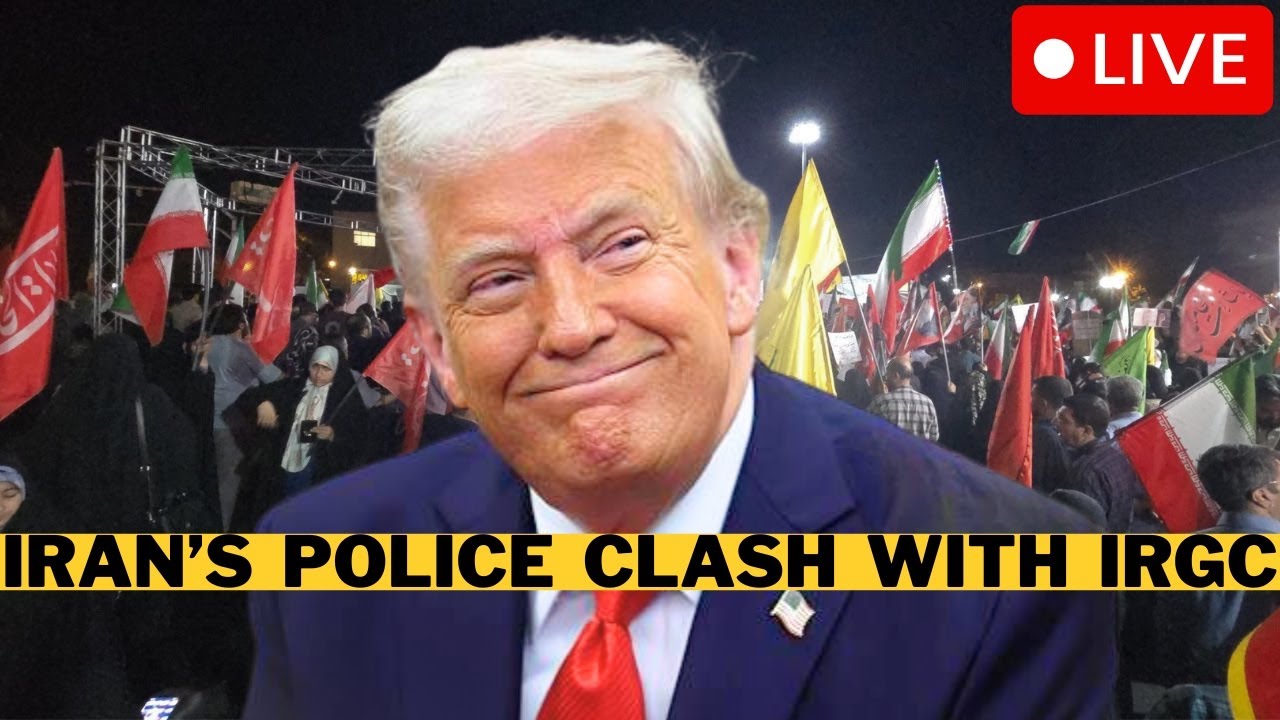
BREAKING: Protests ERUPT In Iran Over IRGC Surrendering To Trump - Infighting Clashes In Tehran
"Iran is experiencing severe internal infighting and protests as hardline IRGC elements clash with government figures over a perceived 'surrender' to the US, while mainstream Western media misrepresents the situation."

BREAKING: Downed U.S. Apache Sparks Investigation Following Intense Israel-Iran Clash | TBN Israel
"An American Apache helicopter crash near the Strait of Hormuz sparks an investigation amidst escalating Israel-Iran tensions, revealing complex US-Israel coordination and Iran's eschatological worldview driving its proxy warfare."

Col. Larry Wilkerson: Israel’s Grand Strategy Is Coming Apart – Here’s Why It Matters
"Colonel Larry Wilkerson argues that Israel's grand strategy is failing, leading to a geopolitical shift where Iran, backed by Russia and China, gains significant leverage through control of strategic chokepoints and a potential nuclear deterrent, while the US faces domestic political and economic turmoil."