
Chinese Billionaire Birth Tourism Surges As U.S. Faces Security Threats | PBD #732
YouTube · t-Nz34IOX20
Quick Read
Summary
Takeaways
- ❖Chinese billionaires are leveraging birth tourism to ensure their children gain US citizenship, with estimates of 750,000 to 1.5 million such births in the last 15 years, raising concerns about long-term loyalty and potential 'Manchurian candidates'.
- ❖Netflix and Warner Bros. Discovery executives were grilled in a Senate hearing regarding alleged promotion of transgender ideology in children's content, with data suggesting 41% of G-rated and TV-Y7 programs include LGBTQ+ elements.
- ❖The proposed Netflix-Warner Bros. Discovery merger, valued at $72 billion, faces Federal Trade Commission (FTC) scrutiny over potential market power concentration (30%+ streaming share) and price control.
- ❖Disney's new CEO, Josh Diamaro, a theme park executive, was a unanimous board pick, leading to questions about the company's strategic direction in content and streaming amid industry consolidation.
- ❖A CNN poll revealed that 85% of white, 82% of Latino, and 76% of black Americans favor photo ID to vote, indicating broad public support despite political opposition.
- ❖Trump's tariffs on manufacturing are criticized by the Wall Street Journal for not helping job growth, but guests argue the article misattributes job losses under the Biden administration and that tariffs are crucial for national security industries.
- ❖The UN faces a severe cash crisis due to non-payment of dues by member states and a rule requiring the return of unspent funds, with the US often footing the bill, leading to Trump's administration using funding as leverage for reform.
- ❖Ken Griffin and Steven Ross are bankrolling a $10 million campaign to attract CEOs and founders to South Florida, touting it as the 'only place a founder can scale' due to its pro-business environment.
- ❖California tech company D-Wave is moving its headquarters to Boca Raton, Florida, attracted by the state's tech ecosystem and offering 100 new jobs with average annual salaries of $125,000.
- ❖Trump advocates for driving housing prices up to protect homeowners' equity, while critics argue this exacerbates affordability issues and that artificially low interest rates have distorted the housing market.
- ❖The crypto hoarding strategy is unraveling, with Bitcoin's price slump causing paper losses for companies like MicroStrategy, challenging the narrative of crypto as a reliable inflation hedge and highlighting its volatility.
Insights
1Chinese Birth Tourism as Geopolitical Strategy
Chinese billionaires are intentionally using birth tourism and surrogacy in the US to ensure their children gain American citizenship. This practice is framed as a long-term geopolitical strategy to plant individuals with potential loyalty to China within the US, potentially creating 'Manchurian candidates' for future leadership roles.
Peter Schweitzer's book 'The Invisible Coup' estimates 750,000 to 1.5 million US-born children of foreign parents in the last 15 years, with Chinese elites 'weaponizing' the practice. A video game executive, Zubo, is cited as having over 100 children via surrogates.
2Media Merger Scrutiny Over Content Ideology
Netflix and Warner Bros. Discovery executives faced intense questioning in a Senate hearing regarding their proposed $72 billion merger. Senators, particularly Josh Hawley, pressed them on the alleged promotion of 'transgender ideology' and 'highly sexualized' content in children's programming, citing a report that 41% of Netflix's G-rated and TV-Y7 shows include LGBTQ+ elements.
Wall Street Journal story on Senate hearing; CWA president Penny Nance's report on Netflix content; executives denying political agenda while struggling to name conservative-appealing content.
3Disney's Leadership and Strategic Challenges
Bob Iger's reported departure and the unanimous appointment of theme park executive Josh Diamaro as the new CEO raise concerns about Disney's strategic direction. Critics argue that appointing a theme park leader during a 'streaming war' and content-driven era reflects a resistance to radical transformation and a lack of innovative content strategy.
Bob Iger's reported plan to step down, Josh Diamaro's appointment and 'risk-taker' statement, comparison to previous CEO Chapek (also from theme parks), and Disney's declining market cap from $466 billion to $350-360 billion.
4Broad Public Support for Voter ID
A CNN poll indicates overwhelming bipartisan and multi-racial support for photo ID requirements to vote. 85% of white, 82% of Latino, and 76% of black Americans favor it, contradicting political narratives that portray such laws as controversial or discriminatory.
CNN poll results cited, showing 85% white, 82% Latino, 76% black Americans in favor of photo ID to vote. Discussion of political figures like Chuck Schumer opposing voter ID as 'Jim Crow 2.0'.
5Florida's Aggressive Business Attraction Strategy
Billionaires Ken Griffin and Steven Ross are investing $10 million in a campaign to attract CEOs and founders to South Florida, promoting it as the premier location for business scaling. This initiative, coupled with companies like D-Wave moving from California, highlights Florida's success in creating a pro-business environment with high-paying jobs.
Ken Griffin (Citadel Fund founder, $51B net worth) and Steven Ross (Related Companies founder, $17B net worth) funding 'Ambition Accelerated' campaign. D-Wave moving from Palo Alto to Boca Raton, creating 100 jobs with $125,000 average salaries, and receiving $500,000 in incentives.
6Crypto's Volatility and Questionable Inflation Hedge Status
The 'crypto hoarding' strategy, where companies like MicroStrategy stockpile Bitcoin, is facing challenges as Bitcoin's price slumps. This volatility undermines the narrative that crypto serves as a reliable hedge against inflation, positioning it more as a high-risk asset susceptible to market sentiment.
Wall Street Journal report on 'crypto hoarding' unraveling. Bitcoin falling below MicroStrategy's average purchase price of $76,000. MicroStrategy's stock down 61% since Bitcoin's October 6th high. Discussion comparing crypto's volatility to NASDAQ and gold's performance as an inflation hedge.
7US Revitalization of Venezuelan Oil Industry
The US government plans to issue general licenses for companies to pump oil in Venezuela, easing sanctions to rebuild the nation's energy industry. This move is presented as a strategic win-win-win, aiming to repay debts, restart Venezuela's economy, and increase global oil supply, while also serving as a foreign policy example for other nations like Cuba.
Bloomberg story on US plans to issue licenses for firms to pump Venezuelan oil. White House statements on attracting US-tied companies to revitalize output. Discussion of Venezuela's heavy crude and Houston's refining capabilities.
Bottom Line
The 'long game' strategy of foreign powers like China, utilizing seemingly benign activities like birth tourism to cultivate long-term political influence within the US, represents a subtle yet profound national security threat that current legal frameworks struggle to address.
This challenges traditional notions of national defense, requiring a re-evaluation of citizenship laws and intelligence priorities to counter non-military forms of infiltration and influence.
Develop robust intelligence frameworks and legal reforms that can identify and mitigate long-term foreign influence campaigns that leverage existing legal loopholes, potentially through a comprehensive, bipartisan national security strategy.
The public's broad consensus on issues like voter ID (over 75% across all demographics) is often at odds with the polarized political discourse, suggesting a disconnect between the electorate's practical views and the ideological positions of political parties.
This indicates that politicians may be misjudging public sentiment or intentionally maintaining divisive narratives for political gain, potentially creating opportunities for 'reasonable' or centrist political movements.
Political strategists and candidates can identify and champion '80/20 issues' (those with broad public support) to build cross-partisan coalitions and gain significant electoral advantage by appealing to the majority's practical concerns rather than ideological extremes.
The increasing migration of high-value businesses and talent to states like Florida, driven by favorable regulatory environments and lower costs, highlights a significant economic and demographic shift within the US.
This trend exacerbates the decline of 'blue states' (e.g., California, New York) and creates new economic powerhouses, impacting national wealth distribution, political influence, and innovation hubs.
Investors should actively seek opportunities in rapidly growing, business-friendly states, particularly in emerging tech sectors, while policymakers in declining states must confront the need for fundamental reforms to retain and attract businesses.
Opportunities
Develop and market entertainment content that explicitly avoids ideological bias and appeals to a broad, family-friendly audience.
Capitalize on the perceived ideological leanings of major streaming platforms (Netflix, Disney) by offering a diverse content library that caters to mainstream values and avoids controversial social agendas, directly addressing the market gap identified by critics.
Invest in real estate and infrastructure development in rapidly growing, business-friendly states like Florida.
Leverage the influx of high-net-worth individuals, tech companies, and high-paying jobs into regions like South Florida by developing affordable housing, commercial properties, and supporting infrastructure projects. Focus on areas with streamlined permitting processes and strong civic leadership.
Establish a 'long-term hold' investment fund focused on stable, value-generating assets rather than speculative or highly leveraged plays.
Counter the 'day trading' and 'bubble behavior' seen in volatile markets like crypto by offering a fund for long-term thinkers who prioritize steady growth and fundamental value, drawing parallels to successful long-term business building.
Key Concepts
Long Game Strategy
The Chinese government and elites are depicted as employing a 'long game' strategy, exemplified by birth tourism, to cultivate future influence within the US over decades, rather than seeking immediate gains.
Fear vs. Safety Trade-off
The discussion around Palantir and the Patriot Act illustrates how fear (e.g., terrorism, foreign infiltration) is used to persuade the public to cede privacy and civil liberties in exchange for perceived safety, often leading to mission creep in government surveillance.
Market Forces vs. Ideology
The struggles of Netflix and Disney are framed as a conflict between market demand for broad entertainment and internal ideological commitments, suggesting that companies prioritizing a narrow agenda risk losing market share and requiring mergers to compensate for content deficiencies.
Executive Leverage
Trump's approach to tariffs and UN funding demonstrates the model of a strong executive using economic and financial leverage to force other nations or organizations to align with US interests, rather than relying solely on diplomatic persuasion.
Lessons
- Scrutinize the content consumed by children on streaming platforms, as a significant portion may contain ideological messaging, and utilize parental controls effectively.
- Evaluate investment opportunities in states with pro-business policies and growing populations, such as Florida, which are actively attracting high-paying jobs and capital.
- Adopt a long-term perspective in investment and business decisions, focusing on fundamental value and sustainable growth rather than chasing volatile, short-term gains.
- Advocate for clear, common-sense policies (e.g., voter ID laws) that reflect broad public consensus, rather than allowing political narratives to dictate policy debates.
Notable Moments
Josh Hawley grills Netflix and Warner Bros. Discovery executives on content ideology.
This segment highlights the increasing political scrutiny on media companies regarding their content, particularly concerning children's programming and social messaging, impacting corporate mergers and public perception.
Discussion on the 'Manchurian candidate' threat from Chinese birth tourism.
This reveals a non-traditional, long-term national security concern, challenging existing citizenship laws and intelligence frameworks, and pointing to subtle geopolitical strategies.
CNN poll showing overwhelming support for voter ID laws.
This moment exposes a significant disconnect between public opinion and political rhetoric on a key electoral issue, suggesting that political parties may be out of touch with their constituents' practical views.
Ken Griffin and Steven Ross's $10M campaign to attract CEOs to Florida.
This illustrates a powerful example of private sector leadership driving economic growth and talent migration, creating a stark contrast with states experiencing business exodus.
Quotes
"Almost half of your content for minor children promotes a transgender ideology agenda."
"The Chinese think long. They think long game. So, let's translate this for you. They see the opportunity to put senators, congressmen, and maybe even a president someday in the United States that does not have natural allegiances to the United States."
"Florida is the future. It is unequivocally the next jumping off place for American business."
"I don't want to drive housing prices down. I want to drive housing prices up for people that own their homes. And they can be assured that's what's going to happen."
"Crypto is not a hedge against anything really. It is it's a risk asset."
Q&A
Recent Questions
Related Episodes

Pepe Escobar: “Total Failure”: Trump’s Blockade Just Backfired Disastrously
"Pepe Escobar argues that the US blockade against Iran, spearheaded by Donald Trump, has utterly failed and backfired, accelerating global economic chaos and challenging US geopolitical dominance."
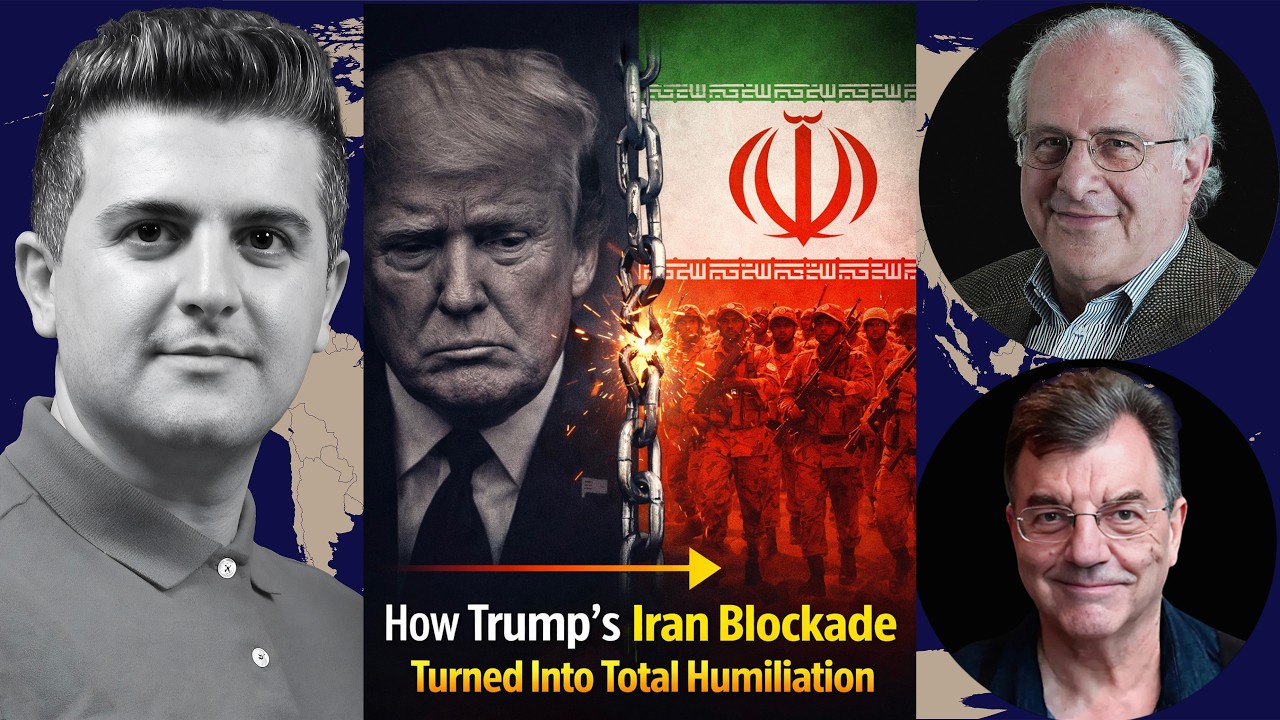
Richard Wolff & Michael Hudson: How Trump’s Iran Blockade Turned Into Total Humiliation
"Richard Wolff and Michael Hudson argue that the Trump administration's Iran blockade and 'economic fury' are illogical, self-defeating strategies that expose US weakness, accelerate global hostility, and push the world towards a financial crisis, ultimately failing to stop rising powers like China and Russia."

Joe Kent Reveals All in First Interview Since Resigning as Trump’s Counterterrorism Director
"Former Counterterrorism Director Joe Kent details how US foreign policy in the Middle East, particularly regarding Iran, is driven by Israeli interests and a 'misinformation campaign,' leading to disastrous outcomes for American interests and national security."

LIVE: Trump’s REAL MOTIVE for WAR REVEALED by Nat Sec Expert | The Weekend Show
"A national security expert and former senior government official details how Trump initiated a war with Iran without a clear plan, driven by personal narrative and external influences, leading to global instability and exposing a 'gutting of competency' within US federal agencies."