UAE Quits OPEC + Trump & King Charles | PBD #787
YouTube · uEgyXpIaeb8
Quick Read
Summary
Takeaways
- ❖The UAE's departure from OPEC is interpreted as a strategic play by the US to break the cartel's influence and foster new alliances in the Middle East, particularly against Iran.
- ❖A 2023 US law now requires two-thirds Senate approval for the US to withdraw from NATO, significantly limiting presidential authority over the alliance.
- ❖Elon Musk's assertion that AI will make retirement savings irrelevant is met with strong skepticism, with panelists calling it economically incoherent and potentially reckless advice.
Insights
1UAE's Strategic Exit from OPEC and Geopolitical Realignment
The UAE's decision to leave OPEC, effective May 1st, is seen as a significant blow to Saudi Arabia's control over global oil prices and a strategic win for the US. This move stems from OPEC's 2022 mistake of cutting supply to maintain $100/barrel oil, which led to financial losses for members like the UAE. The exit is linked to a broader US strategy to weaken OPEC, foster market-based oil production, and realign Middle Eastern alliances against Iran, potentially involving financial guarantees like a dollar swap line from the US Treasury.
UAE's stated reasons for leaving OPEC include long-term strategic and economic vision, evolving energy profile, and disagreements with Saudi Arabia over production quotas. The panel links this to a dollar swap line request and US pressure to counter Iran.
2New Law Limits Presidential Power to Withdraw from NATO
A 2023 law (Section 1258 of the National Defense Authorization Act for Fiscal 2024) now requires either two-thirds Senate support or a new Congressional law for the US to withdraw from NATO. This unprecedented measure is perceived as a direct response to former President Trump's past threats to leave the alliance, aiming to gridlock any future unilateral withdrawal attempts. The host highlights a chart showing a significant increase in NATO members meeting their 2% GDP defense spending target during Trump's presidency, suggesting his pressure was effective, but the new law now binds future presidents.
Chart showing NATO members paying 2% minimum: 3 in 2014, rising to 11 by 2020 (Trump's term), dropping under Biden, then rising to 30+ by 2025. The law requiring 2/3 Senate approval to leave NATO.
3Elon Musk's Controversial AI and Retirement Claims
Elon Musk's statements that people don't need to save for retirement because AI will create a world of abundance are widely criticized by the panel as 'economically incoherent' and 'reckless.' They argue that while AI can increase productivity and create new opportunities, it doesn't eliminate the need for economic distribution mechanisms or personal financial responsibility. The historical precedent of technological advancements (e.g., tractors) changing, rather than eliminating, work is cited, emphasizing that humans remain central to the economy.
Musk's quote: 'Don't worry about like squirreling money away for retirement in like 10 or 20 years. It won't matter.' Panelists' counter-arguments about distribution, resources, and historical precedents.
4California's Billionaire Tax and its Economic/Political Implications
California's proposed one-time 5% wealth tax on billionaires, which has garnered enough signatures for the November ballot, is expected to cause significant economic harm to the state. Critics, including Governor Gavin Newsom and Google co-founder Sergey Brin (who left the state due to such policies), argue it will drive wealthy residents and their tax contributions away. The tax is framed by some as less about revenue generation and more about a political move to reduce billionaires' influence, despite many wealthy individuals being politically aligned with the left.
Sergey Brin's departure and his comparison of the tax to Soviet Union socialism. Governor Newsom's opposition. Economist Josh Ralph's analysis on potential state revenue loss.
5Weaponization of Government Power: Kimmel and the FCC
The FCC's unprecedented move to review Disney's broadcast licenses following a controversial joke by Jimmy Kimmel about Melania Trump is seen as an alarming example of government overreach and the weaponization of regulatory bodies. While the joke itself is criticized as ill-timed and unfunny, the panel argues that the government's response plays into a narrative of authoritarianism and distracts from more significant issues of government misconduct (e.g., Twitter files, Comey indictment). They advocate for protecting free speech and avoiding tit-for-tat retaliation in politics.
Kimmel's 'expectant widow' joke (). Melania Trump's tweet calling for ABC to take a stand (). FCC's plan for early license review of Disney stations ().
6US-Iran 'Game of Chicken' Over Strait of Hormuz
The US and Iran are engaged in a high-stakes 'game of chicken' regarding the Strait of Hormuz, with Trump's administration maintaining an extended blockade to exert maximum economic pressure on Iran. The US strategy is to push the Iranian regime to the brink of collapse, betting that the economic pain (including rising gas and food prices globally) will lead to an internal uprising or a more compliant leadership, rather than negotiating with the current IRGC-controlled government. Iran, in turn, is attempting to leverage the crisis for concessions, including lifting sanctions and blockades.
Iran's demands: open Strait of Hormuz, lift blockades, discuss nuclear program later. Trump's skepticism and resolve to maintain pressure. Economic data on Iran's inflation, job losses, and currency devaluation. US gas/diesel price increases.
Bottom Line
The US strategy of economic pressure on Iran, while aiming for regime change, carries significant risks of global economic instability, particularly through rising oil and food prices, which could trigger unrest in other countries and spill over into the US economy.
This aggressive foreign policy stance prioritizes long-term geopolitical goals over short-term economic stability, potentially leading to a 'stagflation' scenario in the US and regime collapses in vulnerable nations reliant on global supply chains.
Businesses that can adapt to or profit from volatile commodity markets, or those providing solutions for food security and energy independence, may find opportunities amidst the global economic shifts.
The debate over farming subsidies in the US highlights a tension between free-market principles and political expediency, with significant government spending supporting an increasingly consolidated agricultural sector.
Eliminating subsidies could lead to cheaper food and more efficient farming through market forces, but would also accelerate the decline of smaller farms and potentially increase reliance on larger, more industrialized operations, raising questions about food system resilience.
Innovation in sustainable, efficient agriculture that can thrive without subsidies, or technologies that reduce reliance on traditional fertilizers and labor, could gain a competitive edge in a future free-market agricultural landscape.
Key Concepts
Game of Chicken
Applied to the US-Iran conflict over the Strait of Hormuz, where both sides are escalating economic pressure, betting the other will 'blink' first. The US is willing to endure short-term economic pain for long-term strategic goals, aiming for regime change in Iran rather than a negotiated settlement.
Cold War 2.0
A framework used to understand current global realignments, where the world is shifting away from post-Cold War structures towards new blocs. The UAE's move away from OPEC and potential new alliances are seen as pieces in this larger geopolitical chess game.
Luddite Fallacy (Implicit)
The panel implicitly references this by arguing that technological advancements like AI, historically, do not eliminate work but rather change its nature, increase productivity, and create new jobs and industries, rather than leading to mass unemployment and a need for universal basic income.
Lessons
- Re-evaluate your retirement savings strategy, as relying on future AI-driven abundance, as suggested by some, is considered reckless by economic experts.
- For business owners, understand that current geopolitical realignments and economic pressures (like the Strait of Hormuz blockade) can lead to significant volatility in energy and commodity prices, impacting supply chains and operational costs.
- Stay informed about legislative changes impacting government oversight and free speech, as the increasing weaponization of regulatory bodies against media figures sets concerning precedents for businesses and individuals.
Notable Moments
The host presents a chart demonstrating a significant increase in NATO members meeting their 2% GDP defense spending target during Trump's presidency, contrasting it with flatter periods under previous administrations.
This visual evidence supports the argument that Trump's aggressive stance on NATO contributions, despite his threats, led to tangible results in burden-sharing among allies, challenging the narrative that his approach was entirely detrimental to the alliance's financial health.
Sergey Brin's reported confrontation with Governor Gavin Newsom, where Brin stated he was leaving California due to the proposed billionaire tax, comparing it to Soviet Union socialism.
This personal anecdote from a prominent tech billionaire provides concrete evidence of the 'wealth flight' concerns associated with the proposed tax, highlighting the real-world impact of such policies on high-net-worth individuals and state revenue.
Quotes
"You don't need to save for retirement. You have no need for it. We got robots and all these other guys that are going to create so much economy that you'll be getting paid for the rest of your life without needing to work."
"He got the Democrats to stand and I've never been able to do that."
"Dare I say that if it wasn't for us, you'd be speaking French."
"It's not money. It's it's prestige. It's control. It's all the stuff that they don't get with their money."
"The First Amendment is there to protect idiots from the government, idiots with particularly illtimed bad jokes."
Q&A
Recent Questions
Related Episodes
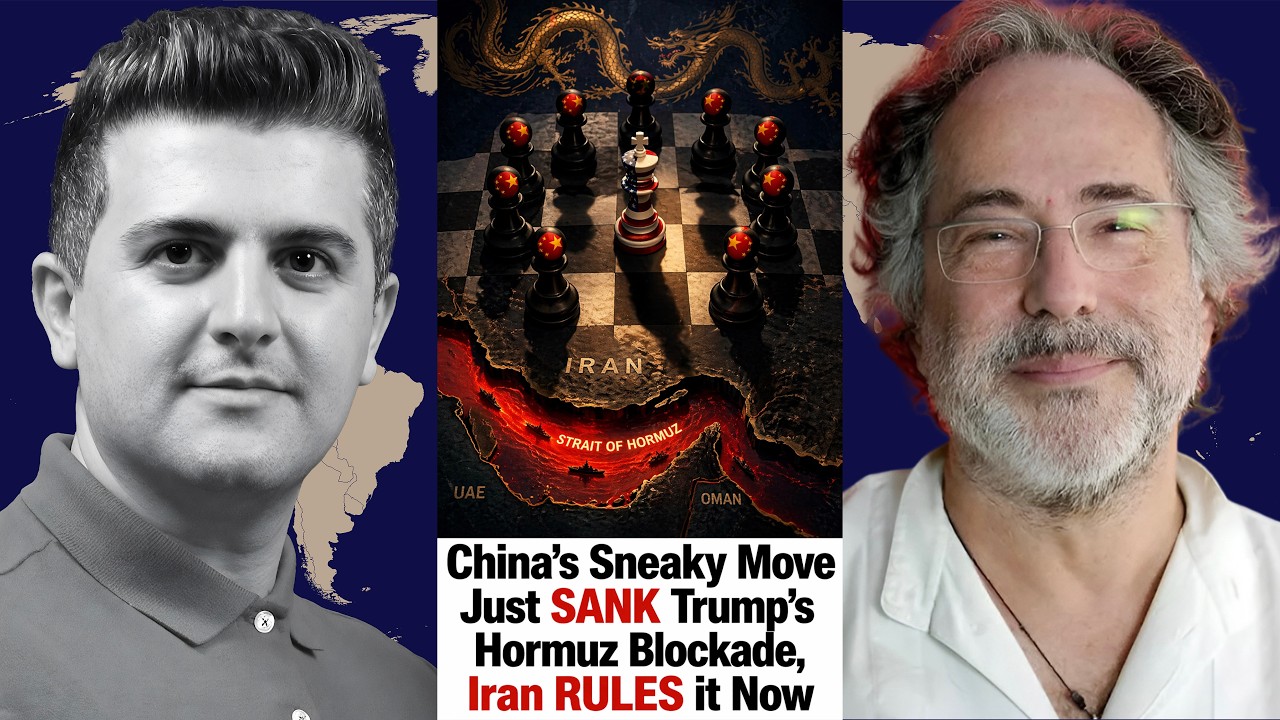
Pepe Escobar: “Total Failure”: Trump’s Blockade Just Backfired Disastrously
"Pepe Escobar argues that the US blockade against Iran, spearheaded by Donald Trump, has utterly failed and backfired, accelerating global economic chaos and challenging US geopolitical dominance."
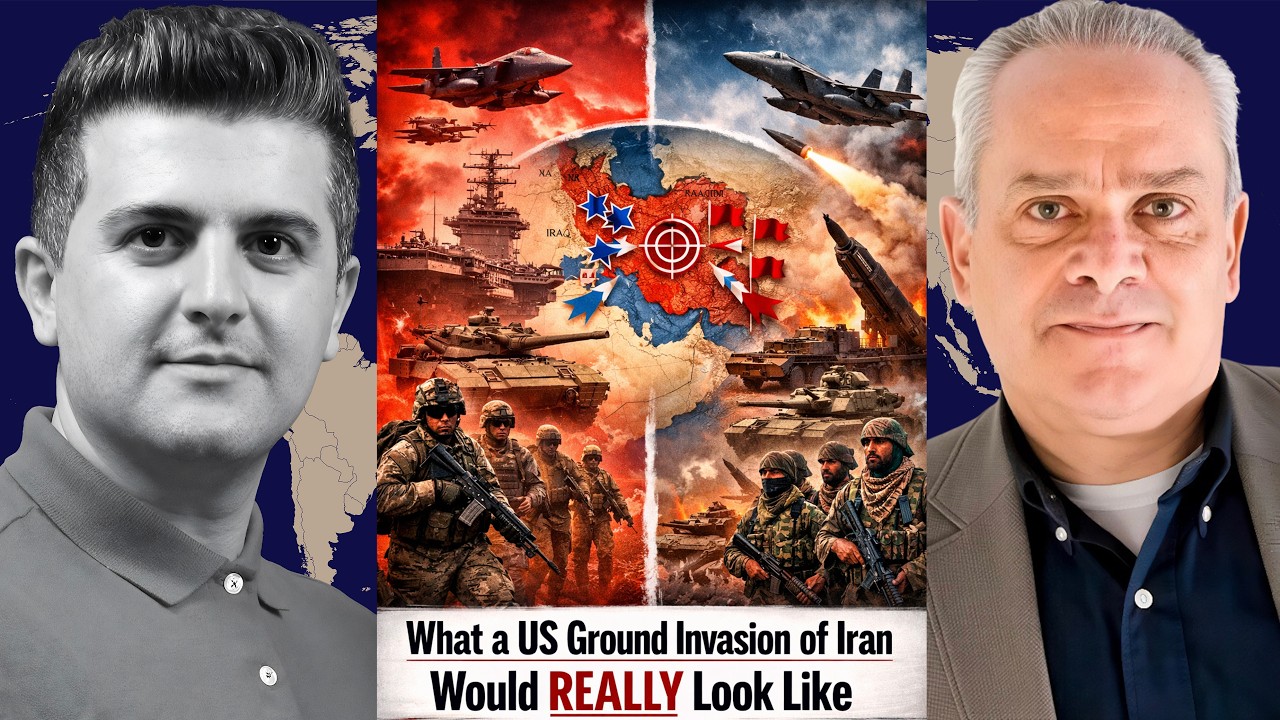
Col. Jacques Baud: What a US Ground Invasion of Iran Would REALLY Look Like
"Colonel Jacques Baud dissects the strategic futility of a US ground invasion of Iran, arguing that current troop levels are insufficient and such an action would backfire, exposing US allies and potentially leading to Iran's nuclearization."

Iran Update: Israel’s Newest Bombing Campaign, the Oncoming War With China and How to Avoid It
"Colonel Wilerson reveals how the US and Israel are actively bombing China's strategic infrastructure in Iran, escalating a covert economic war that Beijing intends to win without direct military conflict by dismantling the dollar's global dominance."

Patrick Henningsen: Hezbollah JUST Fired Back at Israel - Iran Vows to “Crush” All Attacks
"Patrick Henningsen argues that the US and Israel initiated an illegal war against Iran, driven by Trump's incompetence and Israeli influence, leading to an inevitable escalation with severe global economic repercussions."