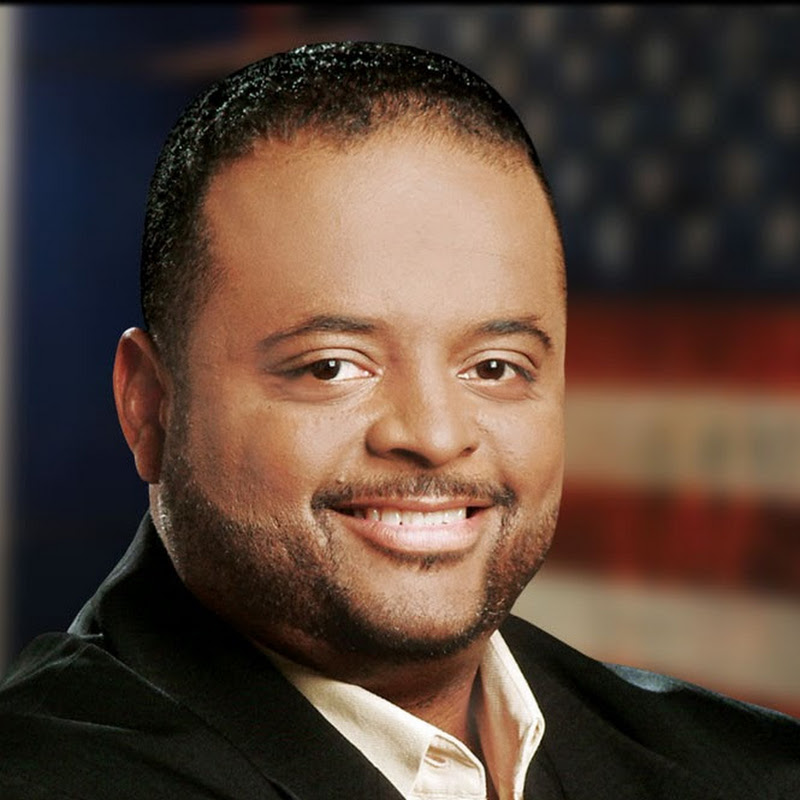
Roland gives MLK address in Dallas, Texas
YouTube · uGOJUuVXsBI
Quick Read
Summary
Takeaways
- ❖The celebration of MLK Day often sanitizes his radical message, focusing on 'dream' over his calls for economic justice and protest.
- ❖Coretta Scott King was instrumental in ensuring Black media access to MLK's funeral, highlighting the historical struggle for Black journalistic representation.
- ❖Current government actions, including pulling back on housing discrimination lawsuits and environmental justice cases, constitute a 'defunding of Black America'.
- ❖The rise of anti-DEI, anti-CRT, and anti-'woke' movements is a coordinated effort to undermine Black progress and maintain power.
- ❖Demographic shifts, particularly declining white birth rates and increasing diversity, are fueling a 'white minority resistance' and backlash against people of color.
- ❖Weak political leaders who fear 'money being canceled' enable fascism by failing to challenge abuses of power.
- ❖MLK Day should be a 'day of protest' challenging government departments, not just a 'day of service' passing out food.
- ❖Individuals must choose to actively fight for civil and economic rights, challenging injustice within their own communities and political affiliations.
Insights
1The Sanitization of MLK's Legacy
Roland Martin argues that Dr. King's message is consistently sanitized and gentrified, focusing on the 'I Have a Dream' portion of his speech while ignoring its broader context of police brutality, voting rights, and economic injustice. He highlights that the 'Mountaintop' speech is often played without acknowledging King's calls for economic boycotts and collective action against companies.
Martin states, 'You cannot sanitize and talk about, oh, he talked about content of character... first that was not the name of the speech. It was titled 'Enormously No More.' Two, it was not the marcher in Washington. It was the march in Washington for jobs and freedom.' He adds, 'You can't talk about the mountaintop part if you ignore what he talked about when he name checked companies we should be boycotting... economic withdrawal.'
2Coretta Scott King's Stand for Black Media Access
Martin recounts how Coretta Scott King directly intervened to ensure Black media (Ebony and Jet magazines) were allowed into the press pool to cover Dr. King's funeral, defying a Jim Crow-era exclusion. This act led to Moneta Sleet of Ebony winning the first Pulitzer Prize for an African American.
Martin explains, 'Even at Dr. King's funeral, there was a Jim Crow press pool. No black media was allowed... Kretta Scott King said, 'Let all of them know that if Ebony and Jet will is not allowed in that press pool, there will be no press allowed in the church to cover my husband's funeral.'
3The 'Defunding of Black America' Through Policy Rollbacks
Martin asserts that there is a 'massive effort to defund Black America' by the current administration, citing specific instances where lawsuits targeting discrimination (e.g., HOA discrimination in Dallas, withholding funds from Harris County post-Hurricane Harvey) and environmental justice cases (e.g., Cancer Alley in Louisiana, Lowndes County, Alabama sewage issues) were pulled back or overturned.
Martin states, 'There's a massive effort to defund black America.' He details, 'this administration pulled back from that lawsuit' regarding an HOA discriminating against poor people in Dallas, and 'overturned that settlement' regarding sewage issues in Lowndes County, Alabama.
4White Minority Resistance and Demographic Shifts
Martin argues that current political attacks are rooted in 'white minority resistance,' stemming from demographic shifts where people of color are becoming the majority. He points to declining white birth rates and concerns over immigration as evidence of this fear, linking it to the rise of far-right movements globally.
Martin states, 'We are living in the beginning stages of white minority resistance.' He cites polls showing lower optimism among white Americans despite higher wealth, and notes, 'around 2010, there were 10 states where the average white death rate was higher than the average white birth rate.' He concludes, 'This is about maintaining whiteness, y'all.'
5Systematic Attacks on Civil Rights Infrastructure
Martin outlines a coordinated strategy to dismantle civil rights and economic protections for Black Americans, moving from attacking Black Lives Matter, to Critical Race Theory, 'Woke' ideology, and now Diversity, Equity, and Inclusion (DEI). He warns of a Supreme Court decision (Louisiana vs. Kal) that could eliminate a third of the Congressional Black Caucus and other Black elected officials.
Martin explains the progression: '2021, we got attack BLM. 2022 is critical race theory. ...They attack Woke in 2023. They attack DEI in 2024.' He warns of the 'Louisiana versus Kal' Supreme Court case, stating, 'You are going to see onethird of the Congressional Black Caucus disappear.'
Bottom Line
The economic stability of nations like Germany over the last two decades is directly tied to immigration, countering anti-immigrant narratives that often ignore the economic necessity of population growth for GDP.
This insight reframes immigration not just as a social issue but as a fundamental economic driver, suggesting that anti-immigrant policies could severely cripple national economies by reducing the workforce and consumer base.
Advocates for immigration reform could leverage economic data on GDP and birth rates to make a compelling case for immigration as a national economic imperative, rather than solely a humanitarian or social justice issue.
The current political climate, characterized by attacks on civil rights and democratic institutions, is not 'new' but a recurring pattern in American history where periods of Black success are met with white backlash.
This historical framing provides a predictive model for understanding contemporary events, suggesting that the current challenges are part of a predictable cycle rather than isolated incidents. It implies that resistance must be sustained and historically informed.
Activists and educators can use this historical pattern to prepare for and counter future backlashes, developing long-term strategies that anticipate and mitigate the erosion of rights following periods of progress.
Key Concepts
Sanitization and Gentrification of Historical Figures
The process by which radical or challenging aspects of historical figures' messages (like MLK's calls for economic withdrawal or protest) are downplayed or ignored in mainstream narratives, replacing them with more palatable, less confrontational interpretations (e.g., focusing solely on 'I Have a Dream' without its preceding critique of systemic injustice).
White Minority Resistance
A framework posited by Roland Martin, suggesting that as demographic shifts lead to a white minority in the U.S., there is a corresponding political and social backlash aimed at maintaining power and control, manifesting in attacks on civil rights, voting rights, and programs designed to support minority communities.
The Cycle of Black Success and White Backlash
A historical pattern where periods of significant Black progress or success are consistently followed by periods of white backlash and efforts to roll back those gains, exemplified by post-Reconstruction invalidation of civil rights laws leading to Plessy v. Ferguson.
Lessons
- Transform MLK Day from a 'day of service' into a 'day of protest,' actively challenging government departments and policies that undermine civil and economic rights.
- Challenge weak political leaders who prioritize 'money being canceled' over standing up to abuses of power and corrupt practices, demanding courage and accountability.
- Engage in direct political action: phone banking, donating to campaigns, and door-to-door organizing, recognizing that personal comfort will not save the country.
- Confront injustice within your own circles, whether family, church, or country club, and demand that individuals choose between following principles of justice or supporting 'Antichrist' actions.
- Refuse to be silent or compliant in the face of 'evil forces' attacking every system; understand that silence grants freedom to those perpetrating injustice.
Notable Moments
Roland Martin recounts his experience ensuring Black media access to a Hillary Clinton press pool at the MLK Center, illustrating his long-standing commitment to Black journalism.
This personal anecdote underscores Martin's dedication to fighting for the inclusion and recognition of Black-owned media, a theme he later expands upon with the story of Coretta Scott King.
Martin describes his refusal to address Donald Trump with a title of respect during White House media lunches, citing Trump's disrespect for the office and marginalized communities.
This moment highlights Martin's personal conviction and principled stance against leaders he perceives as undermining democratic values and showing contempt for certain groups, demonstrating a 'fight on the ice' mentality.
Quotes
"If you show me a period of black success, I will show you a period of white backlash that follow it every time."
"You cannot fight fascism when you have weak folks in political office who have no guts and courage."
"Ain't nobody got a picture or a photo of Dr. King at a shelter passing out food doing stuff. If King was alive... Monday would not be a day of service. It would be a day of protest."
"We will fight until hell freezes over and then we will fight on the ice."
Q&A
Recent Questions
Related Episodes
George Floyd 6 Years Later. Redistricting War in The South. Talarico Senate Campaign
"This episode exposes the ongoing legislative battles and strategic resistance against efforts to diminish Black political power, from federal policing reform to state-level gerrymandering and calls for economic boycotts by Black athletes."

All Roads Lead To the South: Nat’l Day Of Action For Voting Rights | Mass Rally | Montgomery, AL
"A mass rally in Montgomery, Alabama, ignites 'Freedom Summer 2026' to combat the Supreme Court's decimation of Black political power and demand unprecedented voter mobilization across the South."
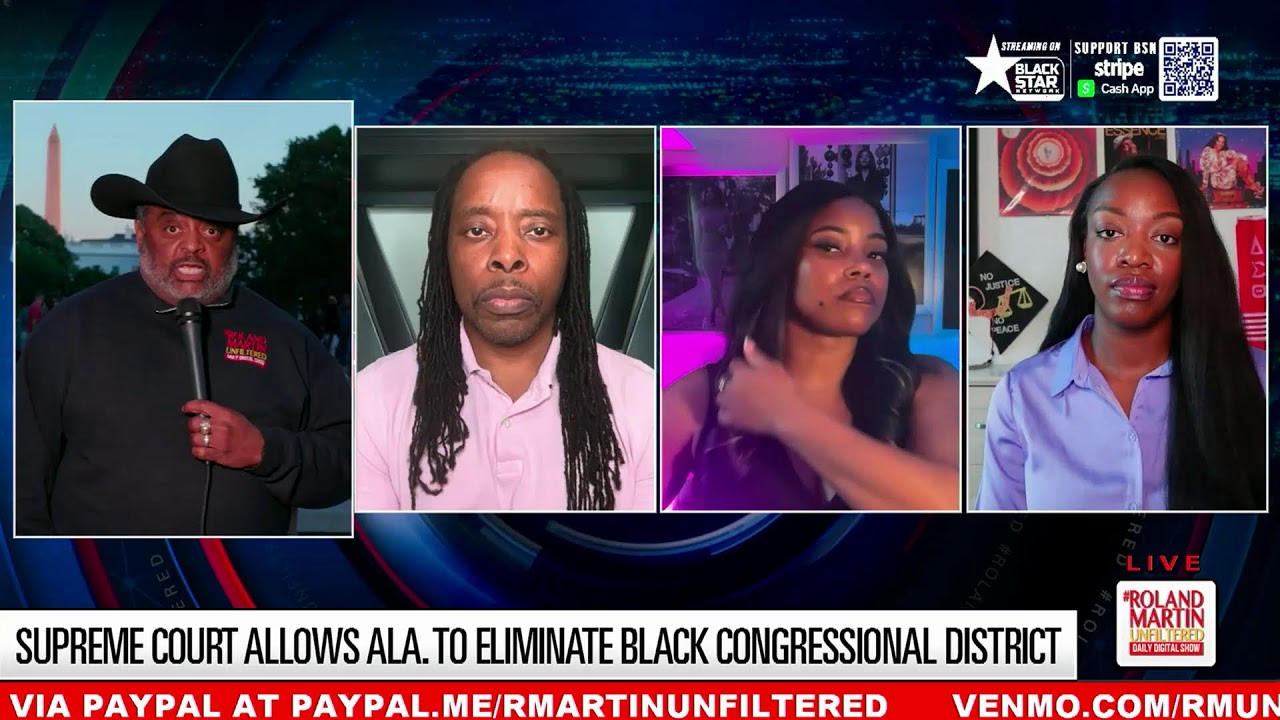
Moral Monday at BLM Plaza. Cleo Fields Sounds Alarm on Louisiana & Gary Chambers Pushes Turnout
"Activists and faith leaders gathered at Moral Monday to denounce 'policy violence' in various forms, from war and budget cuts to voter suppression and healthcare denial, urging sustained mobilization against a 'hijacked' democracy."

The Immortal Jim Crow. 'Goon Squad' Defamation Suit. Google Race Discrimination Case. #TheBreakdown
"This episode exposes the enduring grip of systemic racism through a Mississippi defamation suit, Google's racial discrimination settlement, and a deep dive into how Jim Crow's legacy still shapes Black America today."