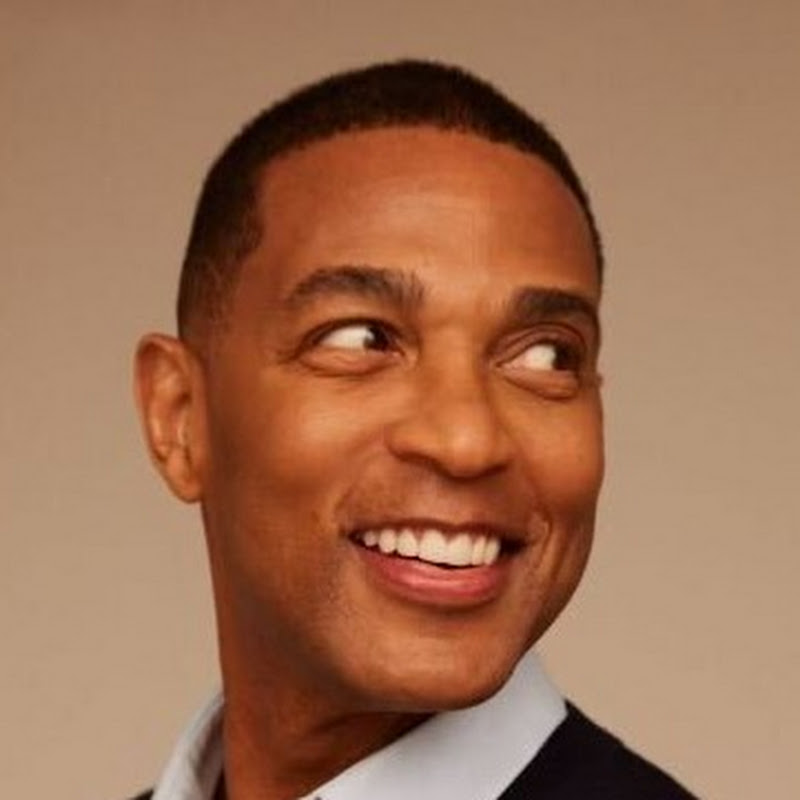
HOT TOPICS | Trump’s Wealth Soars & Celebs Show Off At Met Gala As Americans Struggle
YouTube · xGKUpX9-z7A
Quick Read
Summary
Takeaways
- ❖The Met Gala, sponsored by Jeff Bezos, is a 'Marie Antoinette moment' that is tone-deaf to widespread economic struggles.
- ❖Amazon workers face harsh conditions, including peeing in bottles due to lack of bathroom breaks, while Bezos spends millions on a party.
- ❖Modern fashion, including luxury logos on streetwear, runway walks, and voguing, originated from Black and LGBTQ+ communities who lacked the means to profit from their innovations.
- ❖Donald Trump's net worth nearly tripled to $6.5 billion, primarily from cryptocurrency ventures, while he was in office.
- ❖Wealth inequality is exacerbated by the rich profiting from the labor and resources of the lower 90% of the population.
- ❖Fame provides unique access and clout that even extreme wealth often seeks, as wealthy individuals frequently desire public recognition.
- ❖Strategic voting for a 'winnable' candidate, even if not ideal, might be necessary to combat MAGA influence in politically challenging states.
- ❖To defeat MAGA, anti-Trump forces must be more open-minded and tolerant of diverse voting strategies, prioritizing unity over internal ideological conflicts.
Insights
1Met Gala's Tone-Deafness Amidst Economic Hardship
Don Lemon argues that the Met Gala, with its extravagant displays and 'fashion is art' theme, is profoundly tone-deaf. He highlights concurrent economic struggles such as high gas prices, 17,000 job losses at Spirit Airlines, and a 72-year-old Amazon worker battling cancer on $17/hour. Jeff Bezos, who reportedly spent $10 million to sponsor the event, avoided red carpet protests where his workers' plight was highlighted, including the projection of an Amazon worker's face onto his luxury condo.
Gas prices at $4.45/gallon, Spirit Airlines job losses, 72-year-old Amazon worker Mary Hill making $17/hour, Jeff Bezos's $10 million sponsorship, and his use of a side entrance due to protests projecting Mary Hill's face on his condo.
2Black and LGBTQ+ Communities as Uncredited Fashion Innovators
Lemon provides a historical account of how significant fashion trends and runway culture originated from Black and LGBTQ+ communities, particularly in Harlem, the Bronx, Brooklyn, and Queens. He cites Dapper Dan, who put luxury logos on streetwear when high fashion ignored his community; Ann Lowe, who designed Jackie Kennedy's wedding dress; Zelda Win Valdez, who opened the first Black-owned design shop on Broadway; Carl Kani, who invented the baggy jean; Damon John with FUBU; and the ballroom scene, which invented the runway walk and voguing. These innovations were later appropriated and profited from by the mainstream luxury fashion industry without proper recognition.
Dapper Dan (Harlem, 1944), Ann Lowe (Jackie Kennedy's wedding dress, 1953), Zelda Win Valdez (first Black designer on Broadway, 1948, designed Playboy Bunny costume), Carl Kani (baggy jean), Damon John (FUBU), and the ballroom scene (Harlem/Bronx, 1960s-70s) inventing runway walk and voguing.
3Trump's Soaring Wealth and Systemic Inequality
Donald Trump's net worth reportedly increased from $2.3 billion to $6.5 billion in one year, primarily from his cryptocurrency ventures and memecoins while he was running for president. Economic analyst Steve Ratner characterized this as the 'most brazenly self-enriching administration in American history.' Lemon connects this to broader wealth inequality, arguing that the top 0.1% are accumulating wealth from the lower 90% of the population, exemplifying a 'green party' (greed is good) mentality.
Trump's net worth from $2.3 billion to $6.5 billion (Forbes), $3 billion from crypto, Steve Ratner's quote on self-enrichment, and the general observation of the top 0.1% accumulating wealth from the lower 90%.
4The Strategic Imperative of Unity Against MAGA
A caller, Sandra, explains her decision to vote for a white male candidate (James Terico) over an outspoken Black woman (Jasmine Crockett) in Texas, despite preferring Crockett, because she believes Terico is more likely to win against MAGA in a racially biased state. Lemon uses this to highlight the complex reality of political strategy, arguing that anti-MAGA forces must be willing to tolerate differing choices and unite behind winnable candidates, even if imperfect, to achieve the overarching goal of defeating authoritarianism and protecting democracy.
Caller Sandra's explanation of voting for James Terico over Jasmine Crockett due to perceived electability in a 'racist state' and her family's MAGA leanings. Lemon's subsequent commentary on the need for open-mindedness and tolerance to 'get the MAGA out.'
Bottom Line
Fame, rather than just wealth, holds a unique and often coveted power, granting access and influence that even the richest individuals often lack and desire.
This suggests that public recognition and celebrity status can be a more potent form of social capital than pure financial wealth, influencing how individuals navigate society and interact with power structures. Wealthy individuals often seek fame to gain this additional layer of influence.
Brands and political movements could leverage genuine celebrity endorsements more effectively, understanding that the 'face card' of a famous individual can open doors and sway public opinion in ways that direct financial power alone cannot.
The current political climate necessitates a pragmatic, 'enemy of my enemy is my friend' approach, where ideological purity might need to be temporarily set aside to form broader coalitions against a perceived authoritarian threat.
This challenges traditional progressive strategies that often prioritize ideal candidates and policies, suggesting that a more tolerant and inclusive approach to diverse voters and less-than-perfect candidates is crucial for electoral victory against highly organized opposition.
Political campaigns and advocacy groups could focus on unifying messages that appeal to a wider range of anti-MAGA voters, even those with differing social or economic views, by emphasizing shared democratic values and the common threat of authoritarianism, rather than alienating potential allies over internal disagreements.
Lessons
- Demand self-awareness and social responsibility from public figures and corporations, especially during times of widespread economic hardship, by calling out tone-deaf displays of opulence.
- Support arts education in public schools and emerging designers from marginalized communities, redirecting funds from extravagant events to foster the true roots of fashion and culture.
- Re-evaluate voting strategies to prioritize broad political goals (e.g., defeating authoritarianism) over ideological purity, fostering unity and tolerance among diverse anti-MAGA voters.
Reimagining the Met Gala for Social Impact
Change the Met Gala theme to 'Come as you are' or 'Creativity from Necessity,' encouraging attendees to style outfits from existing wardrobes, reflecting the origins of fashion innovation in underserved communities.
Allocate the millions spent on extravagant outfits and sponsorships to arts education in public schools and support emerging designers from communities that historically built fashion culture.
Feature and honor the uncredited Black and LGBTQ+ innovators who originated many of the fashion trends and runway styles now celebrated by luxury brands, providing them with recognition and resources.
Notable Moments
Protesters placed 300 bottles of fake urine inside the Metropolitan Museum of Art and projected an Amazon worker's face onto Jeff Bezos's condo to highlight Amazon's policy of not giving drivers bathroom breaks.
This act of protest served as a powerful, 'artistic' counter-narrative to the Met Gala's opulence, directly confronting wealth inequality and corporate labor practices in a highly visible manner.
Don Lemon recounts a personal anecdote where someone advised him against getting a 'black card' because his fame already granted him the same access (e.g., reservations, event entry) that wealth typically provides.
This illustrates the unique power and social capital of fame, suggesting it can often supersede or complement immense wealth in granting access and influence, and highlights why wealthy individuals often seek fame.
A caller named Sandra from Houston, Texas, explained her decision to vote for a white male candidate over an outspoken Black woman, despite her personal preference, because she believed it was the only way to ensure a win against MAGA in her 'racist state.'
This call sparked a critical discussion on the complexities of strategic voting, ideological compromise, and the racial dynamics influencing electoral decisions in deeply polarized regions, highlighting the pragmatic challenges faced by anti-MAGA voters.
Quotes
"I need fashion's biggest night of the year or biggest night to read the room. Read the room. Read the room."
"That was not just a protest. That was poetry. And I think that the Metropolitan or the Met Gala needs to gain some of that energy."
"Black culture is American culture. Do not get it twisted. And a lot of it invented by black women and black gays."
"Is there really a difference between the parties when it comes to money and power? Or is it just the green party? And I don't mean like green energy. I mean, green as in greed is good."
"Trump has given the red the green light. Like if you I don't know if you've ever seen the movie A Time to Kill... that's what Trump has done. Trump has exposed he has brought out the racism in this country and I hate that."
"Latino folks, you are not white. I'm sorry. And I don't care how much you um cowttow to Trump and all of that is never ever they're never going to look at you the same way."
Q&A
Recent Questions
Related Episodes

Trump DOJ REACHES NEW LOW Trying to SAVE Trump
"Professor Aziz Huck dissects the foundational principles of the rule of law, revealing how modern political partisanship and the Justice Department's 'weaponization fund' challenge core constitutional mechanisms and legal predictability."

Thomas Massie, Kevin O'Leary, & The American Psyop | The Tim Dillon Show #497
"Tim Dillon skewers American politics, corporate greed, and the unchecked rise of AI, arguing that society is being manipulated by 'psyops' and driven towards a dehumanized, hyper-efficient future."

Trump's HEATED Call + AOC's Data Center Deep Dive | PBD #804
"This episode dissects the week's most impactful events, from Trump's contentious call with Netanyahu and Elon Musk's path to trillionaire status, to the societal implications of AI-driven job displacement and AOC's unexpected political alignment on data center concerns."

"Mini" Super Tuesday Primaries. Bodycam Clears Black Teen. Haitian Heritage Month. #TheBreakdown
"This episode breaks down critical political developments, highlights the power of bodycam footage in exonerating a Black teen, celebrates Haitian heritage, showcases innovative arts education, and champions breast cancer awareness for Black women."