
'90% CHANCE' Of IRAN War As Iraq War Level Mil Equipment Deployed
YouTube · ycv6m7feEiQ
Quick Read
Summary
Takeaways
- ❖Trump officials assess a "90% chance" of war with Iran, backed by an unprecedented US military buildup in the Middle East, including two-thirds of E3 command aircraft and a third of the US Navy.
- ❖The military deployment is compared to Iraq War levels, signaling a serious intent for kinetic action, not just coercion.
- ❖Professor John Mearsheimer highlights Israel's non-negotiable demands on Iran's nuclear infrastructure, ballistic missiles, and support for proxies, which Iran will not accept, making US involvement in an Israeli-initiated conflict inevitable.
- ❖The White House press secretary avoided ruling out a strike on Iran, citing "many reasons and arguments" without detailing them, leading to host criticism of the lack of public justification.
- ❖US military bases in Syria are closing due to vulnerability, and Trump's Truth Social post hinted at attacks on "friendly countries," indicating widespread contingency planning.
- ❖The predicted war is a "Libya-style" air campaign focused on decapitation and destruction, not ground occupation, designed to avoid a "forever war" narrative but likely causing civil war and a refugee crisis.
- ❖Iran's regime is preparing for war by dispersing forces, fortifying sites, and expanding crackdowns, believing its survival is at stake.
- ❖Iranian strategists are aware of US domestic divisions and vulnerabilities (e.g., "Epstein class" narrative, potential for economic pain from Strait of Hormuz disruption).
- ❖A bipartisan War Powers Resolution is being introduced by Thomas Massie and Ro Khanna to force a congressional vote on military action, highlighting the lack of authorization for the current buildup.
Insights
1Unprecedented Military Buildup Signals Imminent War
The US has deployed military assets to the Middle East at a scale not seen since the Iraq War, including two-thirds of its E3 command and control aircraft and a third of the US Navy, which military analyst Matthew Ho describes as equipment for executing war, not just threatening it.
This is more than midnight hammer. This is Gulf War level. Like we are talking about hundreds of thousands of US assets... You have air tankers, jets, service members, naval assets, carrier strike groups, all being built up. () The US has just deployed more than twothirds of its available E3 command control aircraft to Europe and the Middle East... it is not the sort of aircraft or military equipment that you would send to just be like look at how tough we are. They're these like clunky sort of like non-impressive things but if you're actually going to go through with the thing they are absolutely essential. () Third of the US milit US Navy is now operating in and around the Persian Gulf. two aircraft carriers, air support comparisons with 1991. ()
2Israeli Demands Drive US War Posture
Israel's non-negotiable demands for Iran to dismantle its entire nuclear enrichment infrastructure, eliminate ballistic missiles capable of hitting Israel, and cease support for proxies (Houthis, Hezbollah, Hamas) are the true "red lines" driving the US posture, making a diplomatic resolution unlikely.
Israel wants zero enrichment capability... They want Iran to eliminate all the ballistic missiles it has that can hit Israel. They want Iran to give up supporting the Houthies, Hezbollah, and Hamas. And these are demands that there's no way the Iranians are going to accept. () The red lines are Israeli red lines. There's nobody cared about ballistic missiles until December when Prime Minister Netanyahu came here. This entire thing is a manufactured crisis, a war of choice on behalf of the United States. ()
3Predicted War: Libya-Style Air Campaign, Not Occupation
The anticipated US military action against Iran will likely be a "Libya-style" air campaign focused on regime decapitation, destruction of IRGC facilities and nuclear research, and potentially killing the Ayatollah, rather than a ground occupation, aiming for a swift "mission accomplished" declaration despite inevitable long-term chaos and civil war.
This is going to be Libya style is you decapitate, you destroy, and you basically just declare victory immediately, and then when civil war erupts 6 months later, oh, who could have seen any of that coming, right? () What's probably going to happen is a massive air campaign very similar to what happened with Libya, a no-fly zone, a destruction of IRGC facilities and nuclear research, maybe a killing of the Ayatollah. It'll be like a couple of weeks. Then they'll say, 'Mission accomplished.' ()
4Iran's Strategic Counter-Play and US Vulnerabilities
Iran is preparing for war by dispersing forces, fortifying sites, and expanding crackdowns, while also planning to exploit US domestic divisions, economic vulnerabilities (e.g., Strait of Hormuz disruption), and the "Epstein class" narrative to undermine public support for the war.
Iran is getting ready for war with the United States is confronting its biggest threat in decades. The regime is trying to boost its odds of survival... deploying its forces, dispersing decision-making authority, fortifying its nuclear sites, expanding its crackdowns. () The global economy will be devastated and the price of energy will go through the roof. Trump being weak and vulnerable as things are, unpopular, people opposing war in the United States... exposure of the Epstein class... he's not going to have popular support when he engages in war and when the when the pain starts kicking in. () The Iranians have a very similar capacity... They deeply exploited the cleavage in American society over the Vietnam War and they intentionally fed into that. ()
Bottom Line
The "Epstein class" narrative is being actively weaponized by Iran as a propaganda tool to delegitimize US leadership and undermine public support for a potential war.
This indicates a sophisticated understanding by Iran of US domestic political vulnerabilities and a willingness to exploit them in an information warfare campaign.
Media analysts and policymakers should monitor how external adversaries leverage domestic scandals to influence public opinion and potentially destabilize US foreign policy initiatives.
The US military, despite its advanced technology, could be vulnerable to low-cost, mass-produced drones and asymmetric tactics, a theory that will be tested in a potential Iran conflict.
This suggests a potential strategic weakness where expensive, high-tech military assets could be effectively countered by cheaper, distributed threats, impacting the cost-benefit analysis of intervention.
Defense strategists should prioritize developing countermeasures for mass drone attacks and asymmetric warfare, and re-evaluate the cost-effectiveness of high-end platforms against such threats.
Key Concepts
Boy Who Cried Wolf Dynamic
Trump's frequent threats against various countries have desensitized the American public and media to the seriousness of the current military buildup against Iran.
Asymmetric Conflict
Iran plans to exploit US domestic divisions and vulnerabilities (e.g., economic pain from oil disruption) in an asymmetric conflict, similar to how Vietnam exploited US societal cleavages.
Lessons
- Advocate for congressional oversight and a vote on any military action against Iran, as proposed by the War Powers Resolution, to ensure democratic accountability.
- Educate the public on the scale of US military deployments and the potential for conflict with Iran, countering the media's perceived "lack of attention."
- Scrutinize official justifications for military intervention, especially when specific arguments for war are not publicly articulated, and question the influence of external actors on US foreign policy.
Countering Unauthorized Military Action Against Iran
Introduce War Powers Resolution: Members of Congress (like Thomas Massie and Ro Khanna) introduce and push for a vote on a War Powers Resolution to terminate unauthorized US military hostilities against Iran.
Force Congressional Debate and Vote: Utilize procedural mechanisms (e.g., motion to discharge) to compel a debate and vote in Congress on any deployment of US troops into harm's way against Iran.
Public Awareness Campaign: Inform the American public about the scale of military buildup and the lack of congressional authorization for potential conflict, mobilizing anti-war sentiment.
Notable Moments
The Secretary of Defense was seen engaging in a "beachside brunch" and "cold plunges" with Dr. Oz amidst a massive military buildup for a potential war with Iran.
This moment is framed by the hosts as a stark illustration of the administration's perceived detachment and lack of seriousness regarding the gravity of the impending conflict, and how non-essential the Secretary is seen to be in the planning.
Quotes
"Trump officials say there is a 90% chance we are going to war with Iran as an insane amount of firepower is moved into the region."
"This is more than midnight hammer. This is Gulf War level. Like we are talking about hundreds of thousands of US assets... Some not seen since the Iraq war and the Gulf War before that."
"Israel wants zero enrichment capability... They want Iran to eliminate all the ballistic missiles it has that can hit Israel... these are demands that there's no way the Iranians are going to accept."
"The red lines are Israeli red lines. There's nobody cared about ballistic missiles until December when Prime Minister Netanyahu came here. This entire thing is a manufactured crisis, a war of choice on behalf of the United States."
"This is going to be Libya style is you decapitate, you destroy, and you basically just declare victory immediately, and then when civil war erupts 6 months later, oh, who could have seen any of that coming, right?"
"The global economy will be devastated and the price of energy will go through the roof."
"This island of corruption [Epstein's island] is only one example. There is much more of this. Just as this was not apparent and then became exposed, there are many other things that will soon come to light."
Q&A
Recent Questions
Related Episodes

Trump BEGS For HUMILIATING CEASEFIRE With Iran
"As US-Iran tensions escalate, the hosts dissect Trump's contradictory public statements on a potential ceasefire, expose the dubious nature of peace proposals, and reveal critical military and political developments that signal a deepening conflict."
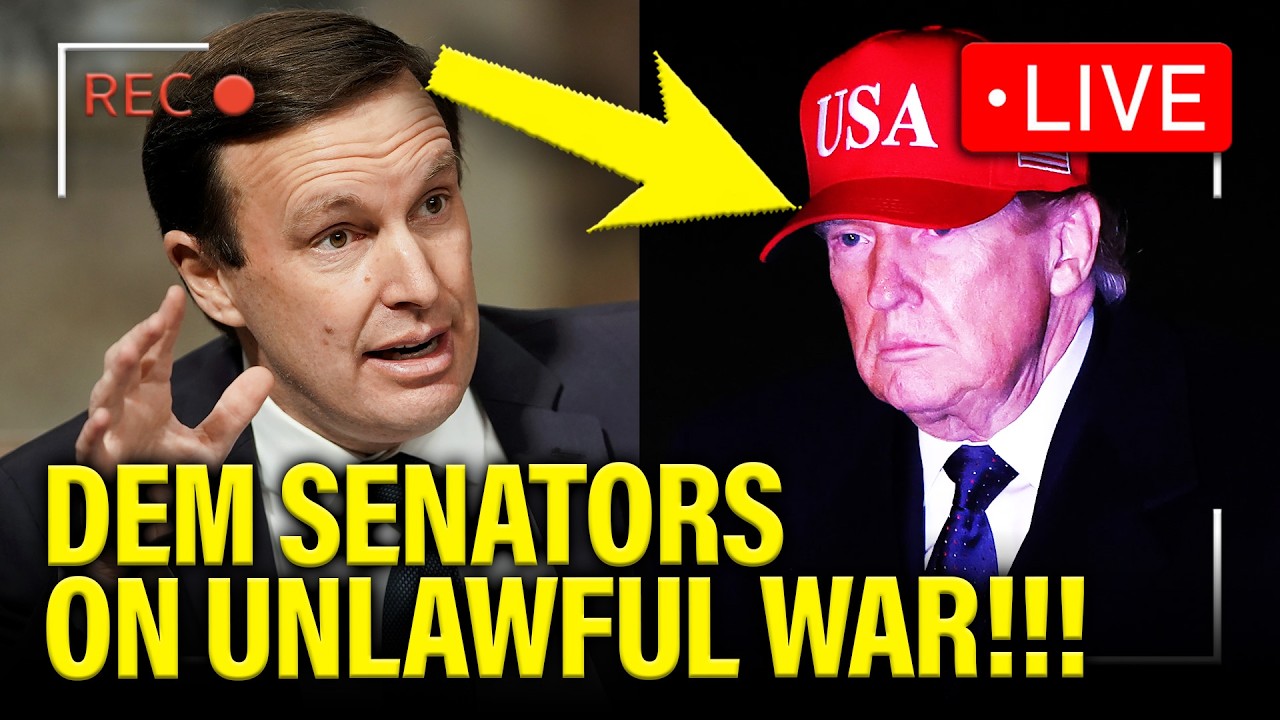
LIVE: DEM SENATORS ADDRESS UNLAWFUL WAR!!
"Democratic Senators, joined by VoteVets, forcefully condemn the administration's 'unlawful war' in Iran, citing constitutional overreach, devastating human and economic costs, and a deliberate lack of transparency and congressional oversight."

Sen. Kaine Forces Vote on Iran War Powers Resolution
"Senator Tim Kaine details his persistent, decade-long fight to compel Congress to vote on acts of war, specifically highlighting his current War Powers Resolution concerning Iran and the historical reluctance of legislators to take a definitive stance on military engagements."

Col. Jacques Baud: Middle East on Fire — Is This the Start of Something Bigger?
"Colonel Jacques Baud dissects the escalating conflict between the US, Israel, and Iran, arguing that Western misunderstanding of Iranian culture and strategic duplicity have forced Iran into a position of necessary escalation, ultimately degrading the West's own strategic posture."