
Trump SCREWED on World Stage as LEADERS ABANDON HIM!!!
YouTube · yy3mSYOnn2I
Quick Read
Summary
Takeaways
- ❖Donald Trump has repeatedly threatened US withdrawal from NATO, escalating long-standing skepticism towards the alliance.
- ❖The immediate trigger for Trump's anger is NATO allies' refusal to join a US-Israeled military campaign against Iran or assist in securing the Strait of Hormuz.
- ❖NATO's Article 5, which mandates collective defense, was not triggered by the Iran conflict, as it requires an attack on a member state.
- ❖Trump labels NATO a "paper tiger" and claims the US disproportionately protects Europe without reciprocal support, despite NATO's historical support for US operations.
- ❖NATO members have agreed to significantly increase defense spending, with some targets reaching 5% of GDP, partly in response to US pressure.
- ❖European leaders, including UK Prime Minister Kier Stalmer and Alexander Stub, reaffirm NATO's importance while rejecting participation in the Iran conflict.
- ❖US legislation passed in 2024 requires a two-thirds Senate majority or congressional approval for formal NATO withdrawal, but a president can still weaken the alliance through other means.
- ❖A diminished US role in NATO could alter the balance of power, embolden Russia, and necessitate greater strategic autonomy for European nations.
Insights
1Trump's Unilateralism and NATO's Article 5 Misinterpretation
Donald Trump's frustration with NATO stems from his expectation that allies should join US-initiated conflicts, specifically the Iran campaign, even without an Article 5 trigger. Article 5, the core of NATO, states an attack on one member is an attack on all, and was only invoked after 9/11. Trump's unilateral decision to engage Iran without consulting allies, then demanding their support, fundamentally misinterprets NATO's collective defense mandate.
Trump's immediate anger has been triggered by the refusal of European allies to join the Iran conflict or assist in securing the Strait of Hormuz. Yet NATO's charter does not require member states to participate in wars initiated by one country, particularly when there's been no attack, triggering Article 5.
2Legislative Hurdles vs. De Facto Weakening of NATO
While formal US withdrawal from NATO is legislatively challenging, requiring a two-thirds Senate majority or congressional approval, a president can still significantly undermine the alliance. This can be achieved by reducing US troop deployments, withdrawing personnel from NATO command structures, or limiting the US response to allied threats, effectively eroding NATO's effectiveness without a formal exit.
Legislation passed in 2024 requires either a two-thirds majority in the Senate or congressional approval to exit the alliance... experts caution that a president could still weaken the alliance without formally leaving it. scenarios in which the US reduces troop deployments, withdraws personnel from NATO command structures, or limits its response to allied threats.
3The Geopolitical Repercussions of a Weakened NATO
A diminished US role in NATO carries significant geopolitical implications. It would alter the balance of power, particularly in relation to Russia, potentially emboldening Moscow and increasing instability in Eastern Europe. This shift also forces European nations to consider developing a more independent security framework, as the US's nuclear deterrent and military presence currently far exceed European capabilities.
A diminished US role could therefore alter the balance of power, particularly in relation to Russia... A weakened alliance could embolden Moscow and increase the risk of further instability in Eastern Europe. At the same time, some analysts argue that Europe may be forced to adapt. Calls for greater strategic autonomy have grown louder.
Bottom Line
The Iran conflict, initiated by the US and Israel without NATO consultation, inadvertently served as a 'stress test' for the alliance, exposing its limits regarding non-Article 5 engagements and members' willingness to act unilaterally.
This event highlights that while NATO is robust for collective defense against direct attacks, its cohesion fractures when a major member initiates conflicts outside the alliance's core mandate, creating a precedent for selective engagement.
European defense industries and policymakers have an opportunity to accelerate initiatives for strategic autonomy and develop independent military capabilities, reducing reliance on US leadership for non-Article 5 scenarios.
Lessons
- Monitor shifts in US foreign policy and rhetoric regarding NATO, as even non-formal actions can significantly impact alliance effectiveness and global stability.
- Assess the implications of a potentially weakened NATO for regional security dynamics, particularly in Eastern Europe and the Middle East, and adjust geopolitical risk assessments accordingly.
- Evaluate the growing calls for European strategic autonomy as a potential driver for increased European defense spending and independent military development, creating new market opportunities or competitive landscapes.
Quotes
"I've always said 25 years ago, and I was somebody that wasn't a politician, but I was always involved in politics and I understood politics. I said 25 years ago that NATO's a paper tiger, but more importantly that we'll come to their rescue, but they will never come to ours."
"NATO's charter does not require member states to participate in wars initiated by one country, particularly when there's been no attack, triggering Article 5."
"NATO provides not only conventional military strength, but also a nuclear deterrent with the US offering a protective umbrella that far exceeds the capabilities of European powers."
Q&A
Recent Questions
Related Episodes

🚨 LEFTISTS ARE F*CKING SEETHING 😂😂😂
"The host aggressively celebrates perceived 'wins' for the right-wing, from global conflicts and domestic politics to cultural shifts, framing them as a 'humiliation' for the 'leftist world order' and a testament to Donald Trump's influence."

Iran Update: Israel’s Newest Bombing Campaign, the Oncoming War With China and How to Avoid It
"Colonel Wilerson reveals how the US and Israel are actively bombing China's strategic infrastructure in Iran, escalating a covert economic war that Beijing intends to win without direct military conflict by dismantling the dollar's global dominance."
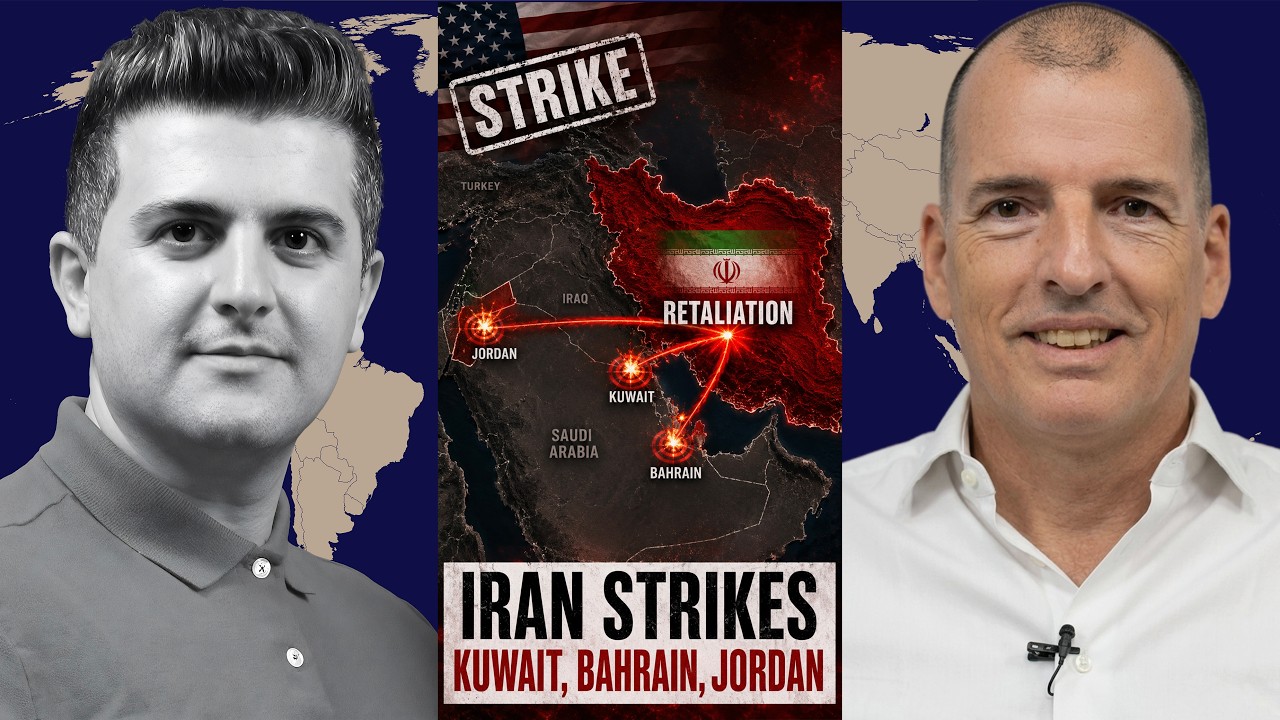
Alex Krainer: US STRIKES Iran – Iran RETALIATES Against Kuwait, Bahrain & Jordan!
"Amidst escalating US-Iran conflict and Iranian retaliation against regional US allies, this episode argues that US foreign policy is deeply controlled by an 'Anglo-Zionist conspiracy' led by the Rothschild banking dynasty, prioritizing Israeli interests over American ones."

LIVE: Trump HIDES FROM PUBLIC as US SOLDIER KILLED!!! 6/2/2026
"The host exposes alleged government cover-ups regarding military casualties, Trump's unexplained public absence, and questionable political appointments, arguing these reflect a 'regime of loser babies' and a failing foreign policy."