
‘BLOW THEM UP!’: Trump PANICS As Iran BOMBS US SHIP & MAYHEM IS UNLEASHED!! | The Kyle Kulinski Show
YouTube · znWqOlnfqiw
Quick Read
Summary
Takeaways
- ❖Iran has reportedly struck US Navy patrol boats and a South Korean vessel in the Strait of Hormuz after issuing warnings, a claim the US government denies.
- ❖Iranian drone attacks hit UAE oil export facilities in Fujairah, causing Brent crude oil prices to surge above $119 a barrel and contributing to global fuel shortages.
- ❖A CNN investigation revealed that Iranian strikes damaged at least 16 US military installations across eight countries, rendering some 'virtually unusable' and destroying critical assets like E3 Century aircraft, radomes, and radar systems.
- ❖Iran's military effectiveness is attributed to advanced technology and the acquisition of high-resolution Chinese satellite imagery, enabling precise targeting of US bases.
- ❖Trump's administration is criticized for authorizing $8.6 billion in emergency arms sales to Middle East partners while simultaneously claiming hostilities with Iran were 'terminated,' demonstrating contradictory policy.
- ❖Trump publicly bragged about US military actions resembling 'piracy,' including seizing oil from ships, and openly discussed plans to 'take over' Cuba after 'finishing' Iran, which the host frames as advocating for war crimes.
- ❖Israel has quietly expanded its control over Gaza, now occupying nearly two-thirds of the territory, and has caused widespread destruction in South Lebanon using American bombs.
- ❖China invoked its blocking statute for the first time, ordering Chinese firms not to comply with US sanctions targeting Chinese oil refineries for purchasing Iranian oil, signaling a 'decoupling moment' and the erosion of US unipolar global trade control.
Insights
1Escalation in the Strait of Hormuz and Economic Impact
Iran's IRGC-affiliated FARS news agency reported that a US Navy patrol boat was struck by two missiles after ignoring warnings in the Strait of Hormuz. This was followed by reports of Iran striking the Fujairah oil export zone, the UAE's only oil export outlet, with a drone attack. These actions led to Brent crude oil surging above $119 a barrel, exacerbating existing global fuel shortages and astronomical prices.
US Navy patrol boat struck by two missiles; Iran's Tasnim News shares footage of warning shots; UAE residents advised to seek shelter; Iran struck Fujera oil export zone; Brent crude oil surges above $119 a barrel; South Korean vessel reportedly hit.
2Extensive Damage to US Military Bases in the Middle East
A CNN investigation uncovered 'unprecedented destruction' at 16 US military installations across eight countries in the Middle East due to Iranian missile and drone barrages. Key targets included multi-million dollar aircraft like the Boeing E3 Century, critical communications equipment (radomes), and highly sophisticated radar systems, which are described as the US's 'most limited resource' in the region. This damage has rendered some bases 'virtually unusable' and exposed US facilities as 'sitting targets.'
CNN report on Camp Arifjan, Kuwait, and other bases; US source stating 'never seen anything like this'; destruction of Boeing E3 Century, radomes, and radar systems; congressional aid describing radar systems as 'most limited resource'.
3Iran's Enhanced Targeting Capabilities
Iran's ability to inflict significant damage on US military targets is attributed to its advanced technology and the secret acquisition of a Chinese satellite (TE01B) in 2024. This satellite provides Iran with high-resolution imagery almost as detailed as US capabilities, marking the first time America has faced an adversary with such advanced satellite intelligence.
Financial Times report on Tehran acquiring Chinese satellite TE01B; comparison of satellite image quality; 'first time America has fought an adversary with satellites' of this quality.
4Israel's Continued Expansion and Atrocities During 'Ceasefire'
Despite a nominal ceasefire, Israel has quietly expanded its control in Gaza, with new maps showing its forces now control nearly two-thirds of the territory. This expansion has created difficult humanitarian realities for civilians caught between lines, with aid groups hesitant to operate. The host also highlights the destruction of towns in Lebanon using American bombs and condemns Israeli officials for celebrating death penalty laws exclusively targeting Palestinians.
Reuters report on new maps showing Israel controls nearly 2/3 of Gaza; Palestinian researchers' analysis; reports of aid worker deaths and civilian casualties; images of destruction in Bent Jabel, Lebanon; Israeli minister Idamar Bengavir celebrating death penalty law with a noose-decorated cake.
5Trump's Contradictory Statements and Imperialist Rhetoric
Trump is criticized for making wildly contradictory statements regarding the war with Iran, simultaneously claiming hostilities were 'terminated' while also stating, 'we're in a war' and considering options to 'blast the hell out of them.' He also publicly bragged about US military actions that he likened to 'piracy,' such as seizing oil from ships, and declared intentions to 'take over' Cuba after 'finishing' Iran, which the host views as open advocacy for war crimes.
Trump's statements on May 1st ('Hostilities terminated' vs. 'we're in a war'); Trump's comments about 'blasting the hell out of them'; Trump's speech about shooting ships, boarding them, and stealing oil ('We're like pirates'); Trump's speech about 'taking over' Cuba after Iran.
6China's Challenge to US Sanctions and Unipolar World Order
China's Ministry of Commerce invoked its 2021 blocking rules for the first time, ordering Chinese firms not to comply with US sanctions targeting five independent Chinese oil refineries for purchasing Iranian oil. This action is seen as a significant 'decoupling moment' where China asserts its right to trade independently, challenging the US's 'arbitrary rules and laws' and signaling the complete breakdown of the unipolar world order.
China's Ministry of Commerce activating blocking rules; order for Chinese firms not to comply with US sanctions; Beijing calling US measures 'unjustified and improper use of extraterritorial law'.
Quotes
"If they misbehave, if they do something bad, but uh right now, we'll see. But, you know, it's it's a possibility that could happen."
"Do we want to go and just blast the hell out of them and finish them forever, or do we want to try and make a deal? Those are the options."
"We can reveal that strikes damaged at least 16 US installations across eight countries. According to our analysis and sourcing, that's the majority of American military positions in the region, and some of them are virtually unusable."
"Our radar systems, they said, are our mostive and our most limited resource in the region."
"This is the first time America has fought an adversary with satellites that capture high-res imagery almost as detailed as its own."
"Turn your ship around. Evacuate your engine room immediately. And you see all these guys running out of there. Now they're five miles away in one shot into the engine room. Blew up the engine room. The ship stopped. The ship, they used tugboats. And then we landed on top of it. On top of everything else, we then land on top of it. And we took over the ship. We took over the cargo, took over the oil. It's a very profitable business. Who would have thought we were doing that? We're like pirates. We're sort of like pirates."
"We'll finish one first. I like to finish a job. On the way back from what we'll do on the way back from Iran, we'll have one of our big maybe the USS Abraham Lincoln aircraft carrier, the biggest in the world. We'll have that come in, stop about 100 yards offshore, and they'll say, 'Thank you very much. We give up.'"
Q&A
Recent Questions
Related Episodes

Patrick Henningsen: Hezbollah JUST Fired Back at Israel - Iran Vows to “Crush” All Attacks
"Patrick Henningsen argues that the US and Israel initiated an illegal war against Iran, driven by Trump's incompetence and Israeli influence, leading to an inevitable escalation with severe global economic repercussions."
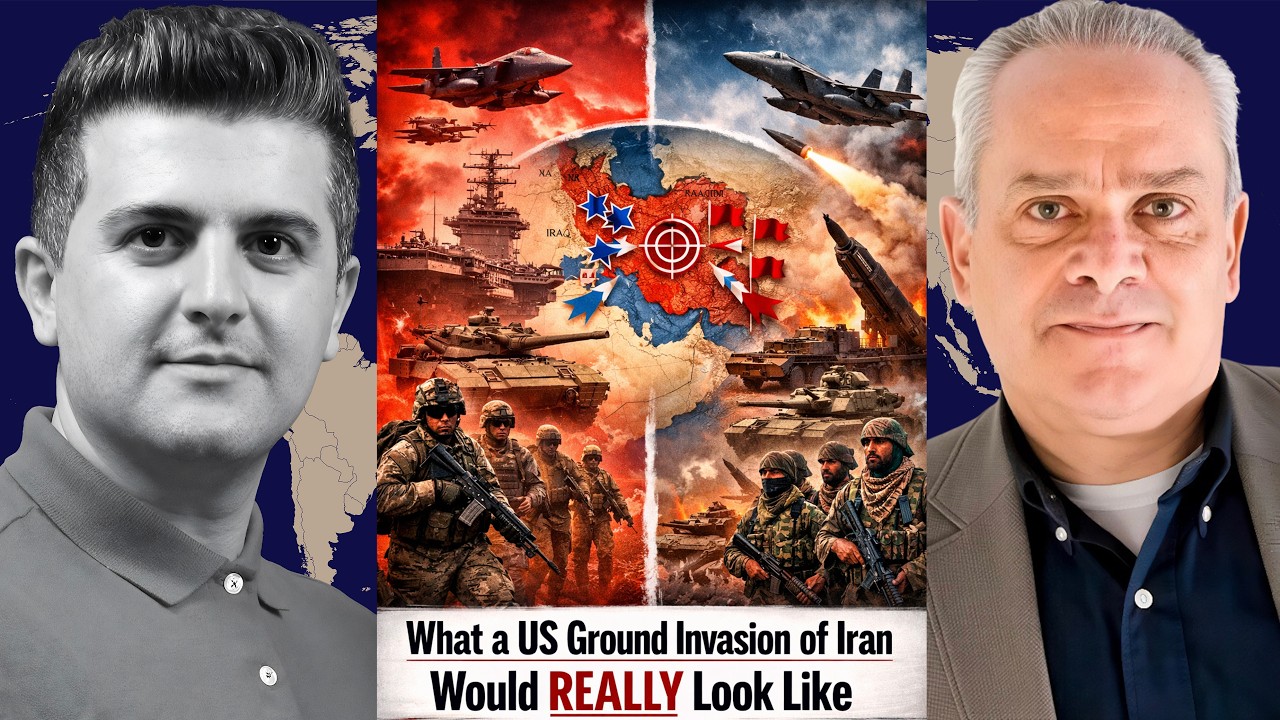
Col. Jacques Baud: What a US Ground Invasion of Iran Would REALLY Look Like
"Colonel Jacques Baud dissects the strategic futility of a US ground invasion of Iran, arguing that current troop levels are insufficient and such an action would backfire, exposing US allies and potentially leading to Iran's nuclearization."

Bibi DEMANDS Ground Troops As Marines Rushed to Iran
"Benjamin Netanyahu is pushing for US ground troops in Iran, framing air strikes as insufficient, while the US rushes Marines to the region and struggles to secure the Strait of Hormuz against surprisingly capable Iranian defenses."
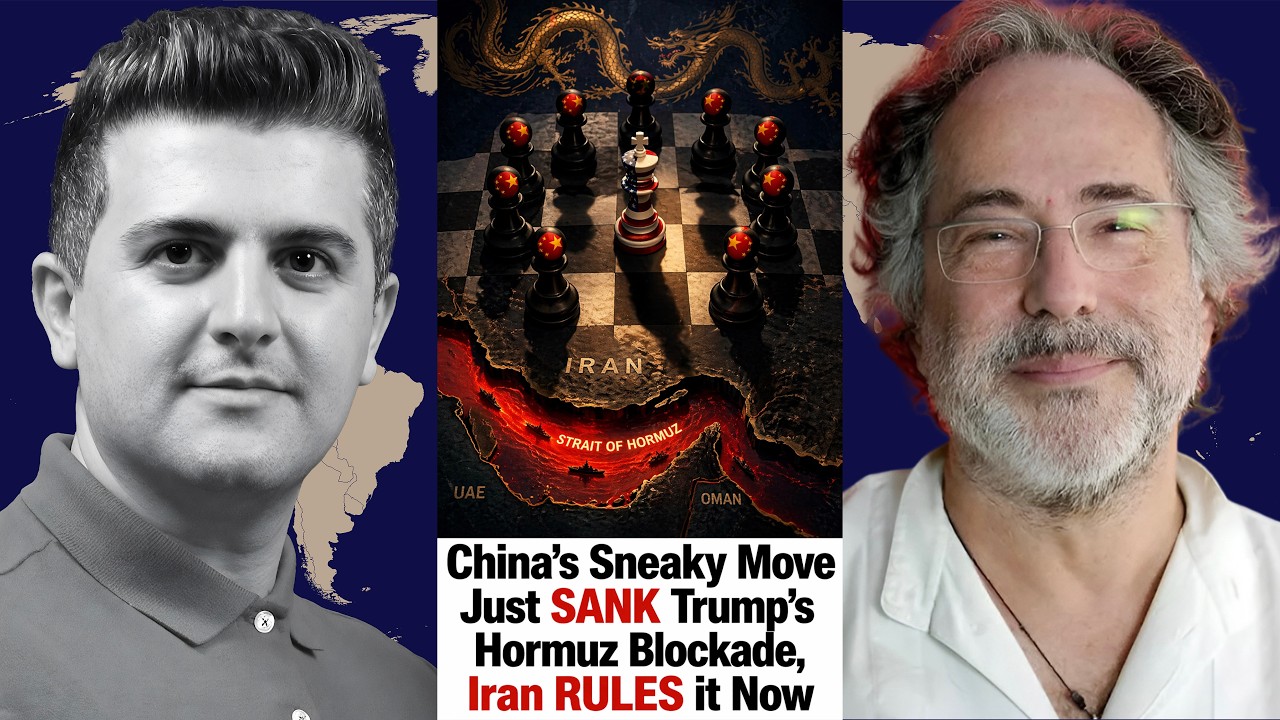
Pepe Escobar: “Total Failure”: Trump’s Blockade Just Backfired Disastrously
"Pepe Escobar argues that the US blockade against Iran, spearheaded by Donald Trump, has utterly failed and backfired, accelerating global economic chaos and challenging US geopolitical dominance."