BREAKING: U.S. Special Forces ARRIVE; Trump Eyes Iranian Oil; Hormuz Pressure Grows | TBN Israel
YouTube · zuzfw1687Xs
Quick Read
Summary
Takeaways
- ❖US Special Forces, including Rangers and Navy Seals, have deployed to the Middle East, indicating preparation for potential ground operations in Iran.
- ❖Israeli and US air forces have conducted over 140 strikes in 24 hours against Iranian weapons, missile, and nuclear-related facilities, causing widespread power outages in Tehran.
- ❖Former President Trump is reportedly considering military action to seize Iranian oil, including Karag Island, and remove 400 kilograms of enriched uranium from buried sites.
- ❖Iran is economically collapsing but its hardliners are pushing for nuclear weapons, while simultaneously restricting traffic through the Strait of Hormuz, driving up oil prices.
- ❖Diplomatic efforts to de-escalate the conflict are stalled, with Iran rejecting key US demands regarding its missile program and support for proxies.
- ❖The IDF has established a new 'dynamic security zone' up to 8 kilometers deep in Southern Lebanon to counter Hezbollah, shifting the threat away from Israeli civilian communities.
- ❖Israel is deliberately avoiding opening a third front against Houthi forces in Yemen, prioritizing operations against Iran and Hezbollah in Lebanon to prevent dispersed efforts.
- ❖A deadline of April 6 has been set for a diplomatic breakthrough, after which American threats could transition from statements to direct military action.
Insights
1US Special Forces Deployment and Ground Operation Options
Hundreds of US elite troops, including Rangers and Navy Seals, have arrived in the Middle East, indicating Washington's preparation for real ground operation options. Three main possibilities are on the table: securing the Strait of Hormuz, taking control of Karag Island (Iran's main oil export terminal), and a complex ground action to remove 400 kilograms of enriched uranium from buried sites in Iran.
Today special forces of the United States military arrived to the Middle East... Rangers and to the Navy Seals who arrived into our neighborhood (). The Wall Street Journal reported that the United States president is considering owning a complex ground operation on Iranian territory to remove about 400 kilograms of fossil material buried at sites that were bombed last June ().
2Intensified Air Strikes and Economic Pressure on Iran
The Israeli and US air forces have conducted over 140 strikes in four waves within 24 hours, targeting Iran's missile array, weapons production, and research facilities. These strikes have caused widespread power outages in Tehran and other areas, impacting economic infrastructure and creating psychological pressure on the regime.
Our air force carried out more than 140 strikes in four waves of attacks, most of them against Iran's missile array (). Widespread power outages hit parts of Iran, including the capital, Tehran, after the series of Israeli and US strikes ().
3Trump's Threat to Seize Iranian Oil and Karag Island
Former President Trump has explicitly stated his intention to take control of Iranian oil and is not ruling out the seizure of Karag Island, Iran's primary oil export terminal. This threat, coupled with Iran's restriction of traffic through the Strait of Hormuz, has caused global oil prices to jump significantly.
Trump is threatening again to take control of Iranian oil and is not even ruling out the seizure of Karak Island (). The president said that the United States may take control of Karag Island as it did in Venezuela and thereby control the Iranian oil ().
4Iran's Nuclear Ambitions and Hardliner Influence
Despite being under severe economic and military pressure, Iran's hardliners within the Revolutionary Guards are pushing the regime to accelerate its nuclear weapons program. Iranian state television is airing voices advocating for the development of nuclear weapons, signaling a shift from previous claims of peaceful purposes.
Right now the most extreme people that the revolutionary guards have to offer are the ones in control and their calls are pushing the regime to try to break through to a nuclear bomb (). Iranian television is already airing voices saying we have entered a new phase. Iran will be recognized as a superpower and we must develop or possess nuclear weapons ().
5IDF's New 'Dynamic Security Zone' in Southern Lebanon
The IDF is changing its fighting policy in the north, creating a 'dynamic security zone' up to 8 kilometers deep inside Southern Lebanon. This strategy aims to push Hezbollah away from the border, destroy terror infrastructure, and shift the threat from Israeli civilian communities to maneuvering combat forces.
The IDF is creating on the ground a dynamic security zone up to 8 kilometers deep inside Lebanon with the goal of pushing away, destroying terror infrastructures and shifting the threat from the communities of the north to the maneuvering forces on the ground in case of an attack bybala ().
6Stalled Diplomacy and Looming US Deadline
Diplomatic talks involving regional powers (Pakistan, Saudi Arabia, Turkey, Egypt) to achieve a ceasefire and reopen the Strait of Hormuz are stalled. Iran's demands, including immunity for Hezbollah and Houthis and no discussion of its missile program, are unacceptable to other parties. Washington has set an April 6 deadline for a breakthrough, after which military action is likely.
Everyone is currently saying that it appears that Iran is not interested in peace talks or ceasefire (). Over all of it sits a clear deadline, April 6. If there is no breakthrough by then, the American threat moves from statements to action ().
Lessons
- Monitor global oil prices and energy market reactions, as the Strait of Hormuz situation and potential US actions on Iranian oil could cause further volatility.
- Stay informed on diplomatic efforts and the approaching April 6 deadline, as a lack of breakthrough could trigger significant military escalation in the Middle East.
- Support organizations providing aid and truth from Israel, and engage in prayer for wisdom for leaders and safety for forces in the region, as encouraged by the podcast hosts.
Notable Moments
US Special Forces (Rangers, Navy Seals) arrive in the Middle East.
This signifies a major escalation, indicating Washington is preparing for direct ground operations rather than just air strikes or diplomatic pressure.
Widespread power outages reported in Tehran after Israeli and US strikes.
This demonstrates the effectiveness of the strikes in impacting Iran's critical infrastructure and creating internal instability, hitting the regime's projected image of control.
Trump's explicit threat to seize Iranian oil and Karag Island.
This is a direct economic and territorial threat that could fundamentally alter Iran's revenue streams and control over its most vital export terminal, with significant global economic repercussions.
Iranian hardliners openly pushing for nuclear weapons development on state TV.
This marks a clear departure from previous claims of a peaceful nuclear program, indicating a heightened existential fear within the regime and a direct challenge to international non-proliferation efforts.
IDF establishes a 'dynamic security zone' 8km deep in Southern Lebanon.
This represents a significant shift in Israeli military strategy on its northern front, moving from static defense to an offensive posture designed to proactively counter Hezbollah threats within Lebanese territory.
April 6 deadline set for diplomatic breakthrough with Iran.
This creates a clear temporal pressure point, suggesting that if diplomacy fails by this date, the US is prepared to move from threats to concrete military action, potentially escalating the conflict dramatically.
Quotes
"Trump is threatening again to take control of Iranian oil and is not even ruling out the seizure of Karak Island."
"The US has built up a substantial amount of both special forces and quick response units within the region that can immediately kick into action in Iran around Iran in the region."
"When President Trump has the assets on the ground and has threatened to take action, he has previously taken action. There's no reason to think it's going to end differently this time."
"When a regime trying to project control is forced to explain to its own public why whole districts are sitting in darkness during wartime, that is no longer just an electricity problem. It is a hit to the sovereignty and to the governance."
"A regime that feels it is being hit from outside and that the old order no longer protects it may see the nuclear option as its final life insurance policy."
"Washington is building layered pressure right now. One layer is a window for a deal. Another is a credible military threat. A third is crushing economic pressure. And over all of it sits a clear deadline, April 6."
Q&A
Recent Questions
Related Episodes

Patrick Henningsen: Hezbollah JUST Fired Back at Israel - Iran Vows to “Crush” All Attacks
"Patrick Henningsen argues that the US and Israel initiated an illegal war against Iran, driven by Trump's incompetence and Israeli influence, leading to an inevitable escalation with severe global economic repercussions."

BREAKING: Iran Threatens To END Talks; U.S. Vows Retaliation; Hezbollah Collapsing? | TBN Israel
"Iran is leveraging Hezbollah and the Strait of Hormuz to manipulate US negotiations, while Israel asserts its right to dismantle Hezbollah's eroding but still dangerous infrastructure in Lebanon, independent of international talks."
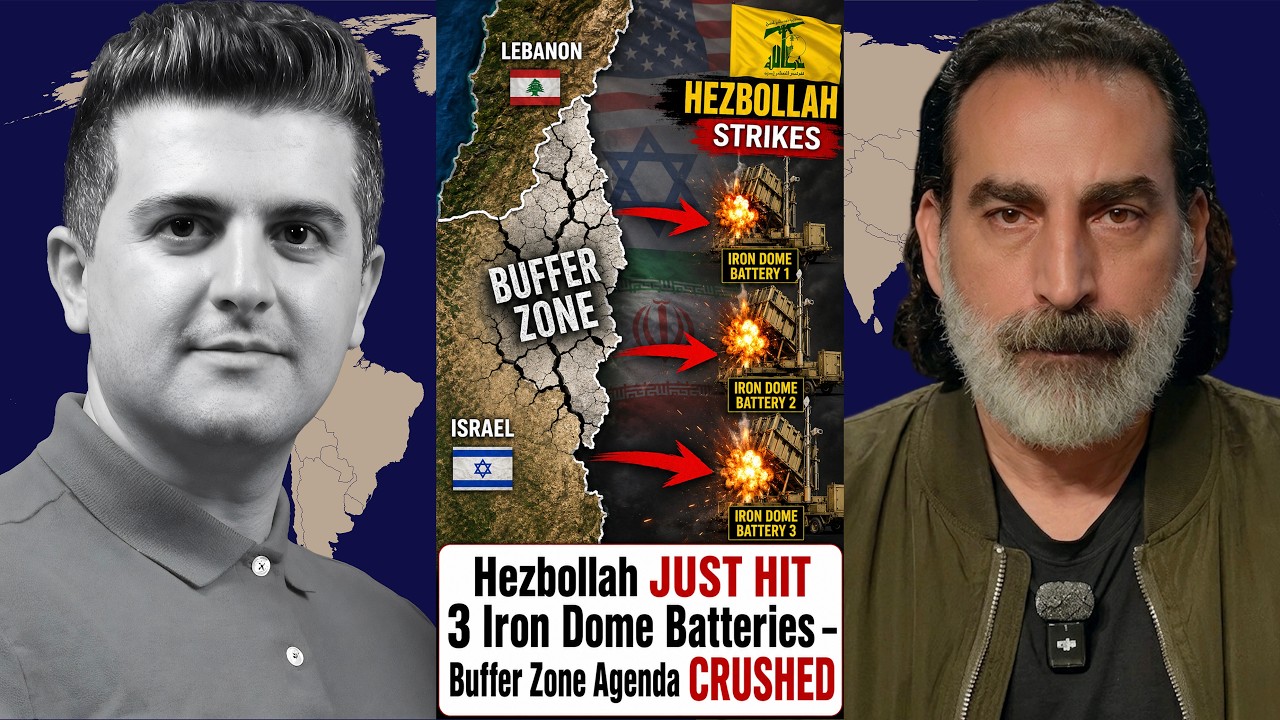
Laith Marouf: Hezbollah JUST HIT 3 Iron Dome Batteries – Buffer Zone Agenda CRUSHED
"Laith Marouf details Hezbollah's advanced drone warfare capabilities and intelligence gathering, asserting their strategic dominance over Israeli forces in southern Lebanon and northern Palestine."
BREAKING: U.S.-Iran Talks COLLAPSE; Hormuz Standoff Deepens; Hezbollah Fire | TBN Israel
"US-Iran negotiations in Islamabad collapsed over the nuclear issue and control of the Strait of Hormuz, leading to heightened tensions and a potential US naval blockade strategy."