Alex Krainer: Venezuela Goes Trap & With Greenland NATO Faces Collapse
YouTube · 0bktWLaEbhY
Quick Read
Summary
Takeaways
- ❖The 'abduction' of Venezuelan President Nicolás Maduro was likely an agreed-upon deal, with Maduro potentially entering a witness protection program due to his knowledge of international election rigging and illicit networks.
- ❖Venezuela is implicated in a global network involving Dominion voting systems and Smartmatic software, with servers allegedly run from or software created in Venezuela.
- ❖Canada plays a significant role in drug (fentanyl, methamphetamines) and human trafficking into the US, with super labs in British Columbia and extensive money laundering through institutions like TD Bank.
- ❖Canadian legal frameworks, specifically the 'Stitchcom rule,' are seen as protecting criminals by requiring authorities to inform suspects of investigations, hindering US efforts.
- ❖Unregulated offshore financial centers, particularly 14 created by the UK in the Caribbean, hold trillions and are central to global money laundering, enjoying complete legal immunity.
- ❖Alex Krainer suggests Trump's aggressive actions, including interest in Greenland and Canada, are a covert attack on this globalist financial and criminal system, akin to an 'undercover cop' operation.
- ❖Conventional explanations for US actions, such as securing Venezuelan oil to attack Iran or assassinating Putin, are dismissed as illogical and unrealistic.
- ❖NATO is perceived as 'breaking apart,' with Trump's moves on Greenland and Canada potentially signaling a shift away from traditional alliances and international law.
- ❖Public trust in official narratives is eroding globally, making it harder for governments to implement policies like mass vaccination or war, forcing them to respond to popular demands.
Insights
1Maduro's 'Abduction' as an Agreed Deal
The guest posits that the 'abduction' of Venezuelan President Nicolás Maduro was likely not a forced capture but an agreed-upon deal. Maduro's demeanor in post-event photos (smiling, hugging DEA officials, giving victory signs) and the lack of a broader regime change in Venezuela suggest he went voluntarily, possibly into a witness protection program. This is because he likely possesses critical evidence regarding international election rigging and illicit networks, making him a target if he remained in power.
Maduro's smiling and 'thumbs up' photos with DEA officials; no broader regime change in Venezuela; comparison to past US actions where leaders were killed (Gaddafi, Yanukovich, Assad attempts); Trump's prior statements about being 'very close to a deal' with Venezuelans. (, , , )
2Venezuela's Link to Global Election Rigging
Venezuela is identified as a key node in an international network responsible for election irregularities, particularly involving Dominion voting systems and Smartmatic software. Some servers for these systems were allegedly run from Venezuela, or the software was developed there. This connection suggests a deeper, systemic issue beyond national borders.
Discussion of Dominion voting system and Smartmatic software, with servers allegedly run from Venezuela or software created there; Serbia also highlighted for its role in election rigging. (, )
3Canada's Role in a '21st-Century Opium War'
Canada is described as a major hub for drug and human trafficking into the United States. Super labs in British Columbia produce fentanyl and methamphetamines, which are smuggled across the border. Money laundering operations, notably involving TD Bank, funnel illicit cash back into Canada. The Canadian legal system, specifically the 'Stitchcom rule,' is criticized for creating a 'crime permissive legal environment' that hinders US investigations by requiring authorities to inform suspects after 90 days.
Globe and Mail editorial asking 'Is Venezuela's fate a warning to Canada?'; David Asher (former US State Department official) interview; bust of a large fentanyl synthesizing lab in British Columbia; TD Bank's involvement in money laundering; Cullen Commission report (2022); 'Stitchcom rule' requiring notification of suspects. (, , , , , , , )
4Global Offshore Financial Centers and Legal Immunity
Fourteen unregulated offshore financial centers, primarily established by the United Kingdom in the Caribbean since the 1960s, are central to global money laundering and illicit financial flows. These centers operate outside international law, are untransparent, and are in private hands, making the trace of ownership for illicit funds virtually impossible to follow. Moreover, 76 documented international organizations, including banks and health bodies, enjoy complete legal immunity, making them untouchable by national law enforcement.
14 UK-created offshore financial centers in the Caribbean, unregulated and untransparent; 50-75 trillion dollars in these centers; Victor Ianov's (Russian anti-drug official) 2014 speech on the Western financial system's reliance on drug networks; 76 international organizations with complete legal immunity. (, , , )
5Trump's Covert Strategy Against Globalist Networks
The guest suggests that Trump's seemingly 'thuggish' and 'gangster-style' actions, which often generate outrage and confusion, might be a deliberate strategy to covertly target and dismantle the globalist financial and criminal networks. Using the 'undercover cop' analogy, Krainer argues that Trump might be hiding his true intentions, operating in ways that appear contradictory to his stated goals, to infiltrate and expose these legally immune organizations.
Trump's actions seem 'thuggish' and 'gangster style'; his statements are 'calculated to generate emotional outrage' as a distraction; the 'undercover cop' analogy to explain his potentially 'dirty' appearance while working to dismantle a mob. (, , )
Bottom Line
The US is currently experiencing a '21st-century opium war' where it is being flooded with illegal drugs and migrants from neighboring countries like Canada and Mexico, enabled by legally immune financial systems and permissive legal environments.
This framing redefines national security threats, suggesting that economic and social subversion, rather than conventional military conflict, is the primary challenge. It implies that traditional law enforcement and international legal frameworks are inadequate to combat these modern threats.
Develop new national security doctrines and cross-border enforcement strategies that can bypass or reform existing legal immunities and address non-state actors operating within seemingly legitimate financial and political structures. This could involve leveraging unconventional tactics or forming new international alliances focused on dismantling these specific criminal networks.
Trump's seemingly contradictory or 'madman' actions, such as the Venezuela 'abduction' or interest in Greenland, might be part of a sophisticated, covert strategy to dismantle globalist financial and criminal networks that operate with legal immunity.
This perspective suggests that official narratives and public outrage might be misdirected, potentially serving as a smokescreen for a deeper, more strategic operation. It implies that the true targets are not nation-states but rather supranational entities and financial oligarchies.
For analysts, this highlights the need to look beyond surface-level events and consider '5D chess' scenarios in geopolitics. For policymakers, it suggests that alliances and diplomatic approaches might be shifting in ways not immediately apparent, potentially leading to a new world order where traditional 'rules-based order' is intentionally disrupted to create a more equitable one.
Key Concepts
The Undercover Cop Analogy
This model suggests that a leader (e.g., Trump) might engage in outwardly 'dirty' or controversial actions to gain the trust of a powerful criminal organization (e.g., globalist financial networks). From the outside, the leader appears corrupt or misguided, but their true intent is to infiltrate, gather intelligence, and ultimately dismantle the organization from within. Observers are cautioned against premature judgment, as removing the 'undercover cop' could inadvertently cement the criminal entity's power.
21st-Century Opium War
This model draws a parallel between the historical Opium Wars that destabilized China and current challenges faced by the United States. It posits that the US is under attack from illicit networks flooding its borders with illegal drugs (like fentanyl from Canadian labs) and migrants, leading to societal decay. The 'war' is fought not with conventional armies but through economic and social subversion, enabled by legally immune financial systems and permissive legal environments in neighboring countries.
Lessons
- Critically question official narratives and media portrayals of geopolitical events, especially those involving controversial figures like Donald Trump, and consider alternative, less obvious explanations.
- Investigate the role of offshore financial centers and international organizations with legal immunity, understanding how they facilitate illicit activities and undermine national sovereignty.
- Recognize the potential for 'undercover' or unconventional strategies in high-stakes geopolitics, where leaders might appear to act against their stated interests to achieve a deeper, covert objective.
Quotes
"So, whatever it is that Trump is doing could be different than what what everybody's talking about, you know. So, it's going to have something to do with oil because oil is obviously going to be the great attractor that's going to incentivize a lot of people with with in in powerful positions in the United States because, you know, they want their that oil."
"I I really think that this was a deal between Maduro and Donald Trump because also look at what happens. Maduro comes to the United States. Does he look like somebody who just got downgraded from president of Venezuela to a prisoner? He doesn't. He's smiling. He's hugging with the with the DEA officials. He's wishing them happy new year. He's showing thumbs up, victory signs."
"I try to ignore Trump's antics and I try to understand what is it that they might be doing because, you know, uh there's a possibility that Trump is um a madman. Okay, that's a possibility. uh there's a possibility that somehow somebody got to him and that he's doing the bidding of these uh globalists around the world... and then there's a possibility that he is uh delivering as promised but in ways that we cannot um understand and keep track of."
"If crime doesn't pay a lot of it would would disappear. But it's the money laundering banks that make sure that it pays and it's a huge source of funds for them."
"And so at a given moment in time, your insider cup is going to look dirty as sin to everybody observing from the outside. But if you take him out, you've just cemented your slavery to this mob, right? He's your only hope of salvation."
Q&A
Recent Questions
Related Episodes

Patrick Henningsen: Hezbollah JUST Fired Back at Israel - Iran Vows to “Crush” All Attacks
"Patrick Henningsen argues that the US and Israel initiated an illegal war against Iran, driven by Trump's incompetence and Israeli influence, leading to an inevitable escalation with severe global economic repercussions."

Col. Jacques Baud: The World Is Entering a Lawless Era
"Colonel Jacques Baud details his personal experience with arbitrary EU sanctions and argues that the world has shifted from a law-based international order to a dangerous, rules-based system dictated by powerful actors, exemplified by US actions in Venezuela and the EU's 'teenager decision-making'."

Will Venezuela Be Trump's Vietnam?
"An expert breaks down three perilous pathways for Venezuela under potential US intervention, from a 'Panamanian model' to a 'Libyan-style civil war,' and the broader geopolitical fallout for Latin America."
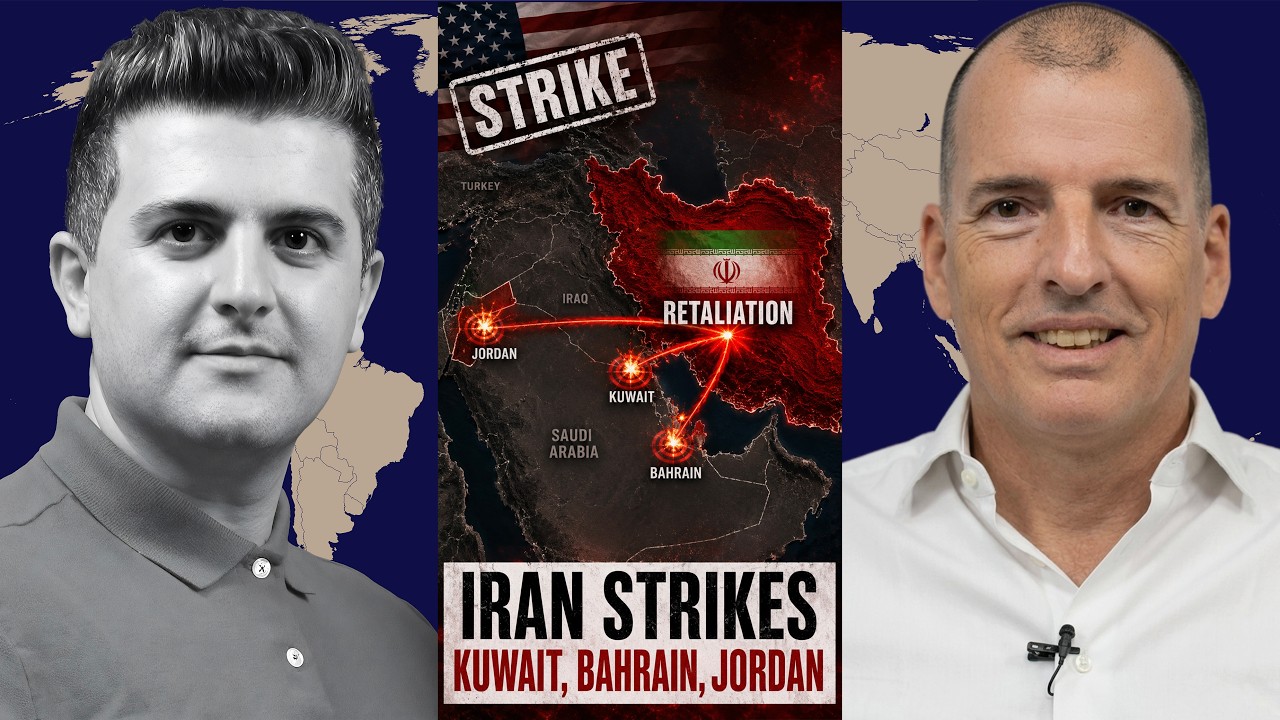
Alex Krainer: US STRIKES Iran – Iran RETALIATES Against Kuwait, Bahrain & Jordan!
"Amidst escalating US-Iran conflict and Iranian retaliation against regional US allies, this episode argues that US foreign policy is deeply controlled by an 'Anglo-Zionist conspiracy' led by the Rothschild banking dynasty, prioritizing Israeli interests over American ones."