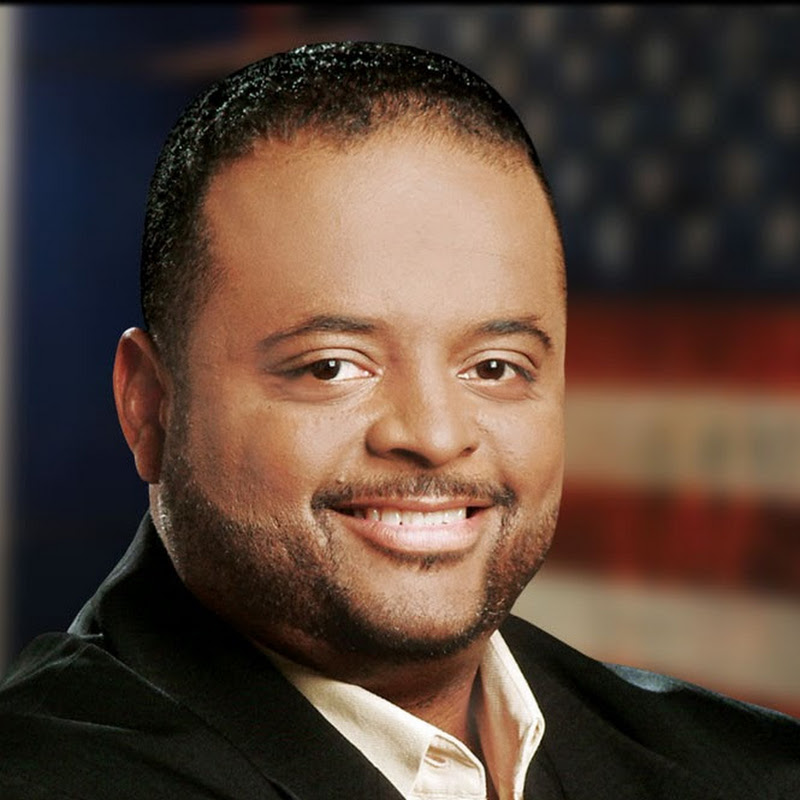
"Black Out Loud": Roland, Geoff Bennett Dissect The Revolutionary Era of ’90s Black TV Comedy
YouTube · LAhBzxTKzDs
Quick Read
Summary
Takeaways
- ❖The '90s saw a 'perfect storm' of economic prosperity, a growing Black middle class, and network strategies (especially Fox's) that intentionally courted Black audiences.
- ❖Black comedy's lineage traces from minstrelsy and vaudeville through figures like Redd Foxx, Richard Pryor, and Eddie Murphy, culminating in the '90s boom.
- ❖Shows like 'In Living Color' were instrumental in creating new talent pipelines for Black comedians and actors, bypassing traditional routes like SNL.
- ❖Fox Broadcasting's initial success and ability to acquire NFL rights were directly fueled by the high viewership of its Black-led sitcoms.
- ❖'In Living Color's' counter-programming during the Super Bowl halftime show in the early '990s directly led to the modern superstar-driven halftime spectacle.
- ❖Black sitcoms like 'A Different World' and 'Living Single' inspired generations, with characters like Maxine Shaw influencing high-powered Black women in law and politics.
- ❖Hollywood often 'flips' Black success for white audiences, as seen with 'Living Single' preceding 'Friends,' and networks building on Black viewership before pivoting.
- ❖Despite massive success and top ratings, Black actors from '90s sitcoms often found no 'safety net' or follow-up opportunities in Hollywood, unlike their white counterparts.
- ❖The 'black tax' means advertisers and networks value white eyeballs more, leading to lower pay for Black talent and shows, and a perception that 'black shows' are niche.
- ❖Authentic and specific Black stories, when given agency and support, consistently achieve universal appeal and mass-market success, yet Hollywood often treats these as 'one-offs' that need re-proving.
Insights
1Fox Broadcasting's Foundation on Black Audiences
Fox Broadcasting Network's early success and ability to compete with the 'big three' (ABC, CBS, NBC) was strategically built on attracting Black audiences. By offering subversive content like 'Married with Children' (initially 'Not the Cosby Show') and then investing heavily in Black-led sitcoms like 'In Living Color' and 'Martin,' Fox leveraged high Black viewership to gain ratings and profits, eventually enabling them to acquire major assets like NFL rights.
Barry Diller, who launched Fox, stated their first pilot was 'Not the Cosby Show.' Roland Martin emphasized Fox's ownership of local stations fed by Black sitcom reruns and the Nielsen data showing Black people watch more TV. The guest noted Fox was 'built really around black audiences' and this led to NFL rights.
2The Transformative Impact of 'In Living Color' on Pop Culture
'In Living Color' not only created a new talent pipeline for sketch comedy outside of SNL, launching careers for Jim Carrey, Jamie Foxx, and Jennifer Lopez, but also directly influenced major cultural events. Its live counter-programming during the Super Bowl halftime show in the early 1990s, which siphoned over 20 million viewers from the game, forced CBS to book superstar acts like Michael Jackson the following year, permanently changing the nature of the Super Bowl halftime spectacle.
Keenen Ivory Wayans created a separate talent pipeline for 'In Living Color' (). The show's live Super Bowl counter-programming pulled 'more than 20 million viewers,' leading CBS to book Michael Jackson the next year, establishing the superstar halftime show format ().
3Debbie Allen's Pivotal Role in 'A Different World's' Authenticity and Legacy
The success and cultural resonance of 'A Different World' were largely due to Debbie Allen taking over as showrunner in its second season. She reimagined the show to be more specific and authentic to the HBCU experience, adding details like hot sauce on cafeteria tables and allowing actors to bring their real lives to the script. Allen also ensured actors like Kadeem Hardison and Jasmine Guy gained behind-the-scenes experience in directing and writing, creating a lasting legacy of Black talent development.
Felicia Rashad suggested Debbie Allen to Bill Cosby to fix the spin-off. Debbie Allen 'reimagined that entire show,' adding details like 'hot sauce on these tables' in the fictional HBCU hangout. Sinbad confirmed she allowed actors to 'bring their real lives to the script.' Darryl Bell stated she had actors write directing experience into their contracts.
4The 'Black Tax' and Lack of Post-Show Opportunities for Black Actors
Despite the massive popularity and financial success of '90s Black sitcoms, many Black actors faced a 'black tax' in Hollywood, leading to a lack of follow-up opportunities once their shows ended. Unlike white actors who often transitioned to new projects, Black actors like Erika Alexander and Tichina Arnold (who went a decade between major roles) were frequently typecast or simply not offered new work, highlighting systemic industry bias where Black success was not seen as transferable or indicative of broader market appeal.
Erika Alexander stated 'Hollywood was not ready to absorb them once the shows ended' and she had to audition against younger actresses (). Roland Martin explains advertisers 'do not covet black eyeballs, they covet white eyeballs,' leading to unequal pay (). Tichina Arnold went '10 years between Martin ending and Everybody Hates Chris' (). Karyn Parsons (Hilary Banks) was typecast and told 'people only see you as Hilary Banks' ().
Bottom Line
The '90s Black TV comedy era, while revolutionary, created a 'cultural void' in the early 2000s when networks pivoted away from Black-led programming, leaving a generation without the shared cultural reference points that defined the '90s.
This pivot demonstrates the fragility of representation when driven by transient network strategies rather than sustained commitment, impacting cultural cohesion and the development of new Black talent pipelines.
Modern content creators and platforms can learn from this by prioritizing long-term investment in diverse narratives and creators, ensuring that current representation doesn't become another 'one-off' era, and actively building sustainable career paths for talent beyond a single hit show.
The perception of a show as 'black' by Black audiences versus its actual content and production can significantly impact its industry reception and legacy, leading to a 'black tax' even for highly successful shows.
Shows like 'Family Matters,' despite being entirely Black in cast and family structure, were not embraced by Black audiences as 'black shows' in the same way as 'Martin' or 'A Different World' because they lacked the specific cultural infusion (e.g., Black art, music, nuanced social commentary) that signaled 'for us, by us.' This distinction often led to less critical respect and fewer opportunities for its talent.
Creators aiming for both broad appeal and deep cultural resonance must intentionally infuse their work with authentic cultural markers, ensuring their 'blackness' is not just superficial but deeply embedded in the narrative and production, to overcome the 'black tax' and secure a lasting legacy within and beyond the community.
Key Concepts
The Black Tax
This model describes the systemic devaluation of Black talent, content, and media within the entertainment industry (and other fields). Despite generating significant viewership and profit, Black-led projects and talent receive less pay, fewer opportunities, and less critical recognition compared to their white counterparts, due to advertisers coveting 'white eyeballs' and decision-makers viewing Black success as niche or a 'one-off'.
Industry Talent Pipeline Creation
This refers to the strategic development of new pathways for talent when existing industry structures are exclusionary. Keenen Ivory Wayans, for example, created an entirely new talent pipeline for 'In Living Color' outside of the established 'Saturday Night Live' system, bringing in diverse actors, writers, and choreographers who became industry legends.
Notable Moments
Geoff Bennett's personal motivation for writing the book stemmed from observing his 13-year-old son's media consumption habits, realizing his son lacked the shared cultural reference points that '90s Black TV provided for his own generation.
This highlights the unique communal experience fostered by '90s Black television, where shows created widespread cultural touchstones and influenced youth behavior (e.g., Kriss Kross on 'In Living Color' leading to kids wearing clothes backwards).
The revelation that Redd Foxx and Malcolm X were childhood friends, running the streets of New York together, with Malcolm X known as 'Detroit Red' and Foxx as 'Chicago Red.'
This 'wow moment' for the author underscores the unexpected cross-pollination between seemingly disparate figures in civil rights and comedy, revealing deeper historical connections in the struggle for Black advancement and cultural expression.
Quotes
"What was so interesting about the '90s is you have the Clinton economy, you have the end of the Cold War, you have a growing black middle class. And so, for the first time you had networks and you had advertisers who were looking at black audiences and not just counting them for Nielsen purposes, for ratings purposes, but were actually courting them."
"That In Living Color special during the Super Bowl in the 1990s, early 1990s, pulled away more than 20 million viewers. Most of whom did not go back to the Super Bowl. They stayed with In In Living Color. And the next year, CBS booked Michael Jackson for the half halftime Super Bowl show."
"Advertisers do not covet black eyeballs, they covet white eyeballs."
"The more specific and authentic you are, the more universal you become."
"You likely won't in your career have an opportunity like this where you are on a hit show. So, she had them write into their contract that they would have experience directing."
"The moment you say black movie, Hollywood instantly Oh, black tax. Black tax comes."
Q&A
Recent Questions
Related Episodes
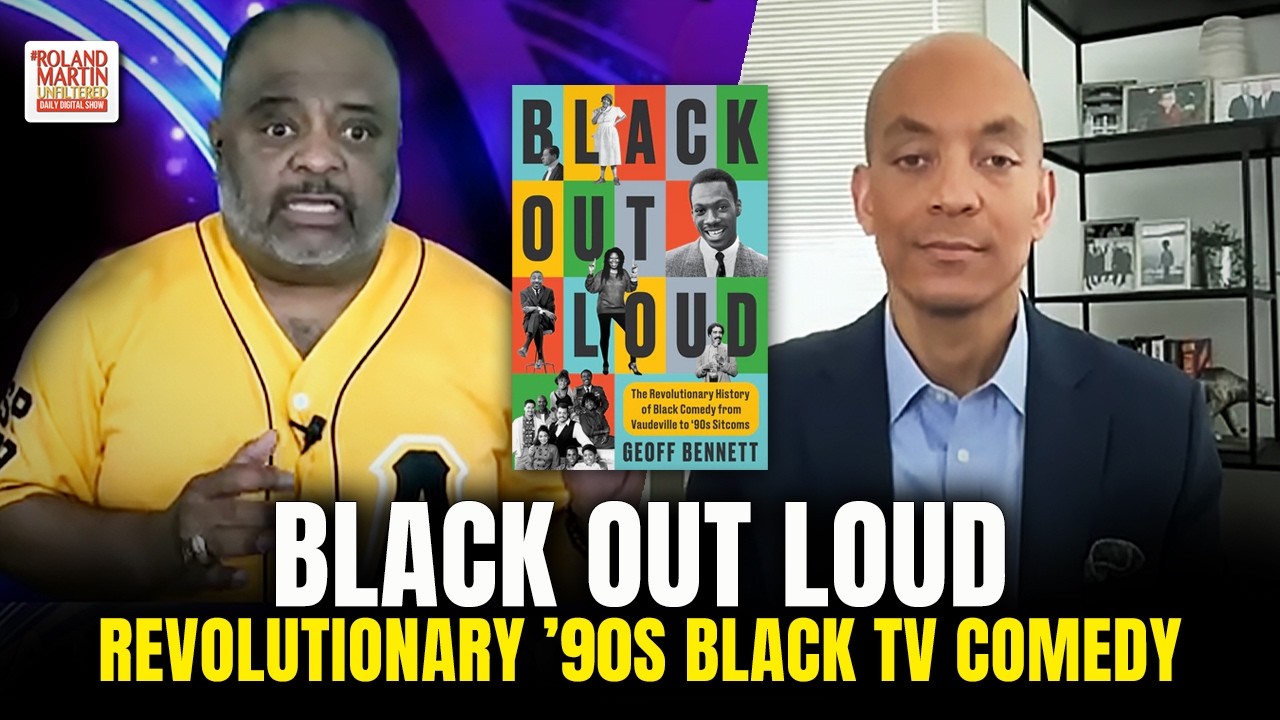
"Black Out Loud": Roland, Geoff Bennett Dissect The Revolutionary Era of ’90s Black TV Comedy
"The 1990s marked a revolutionary era for Black TV comedy, driven by a unique confluence of economic, cultural, and industry factors that reshaped television and created lasting cultural impact, despite persistent systemic inequities like the 'black tax'."

Roland, Geoff Bennett Talk "Black Out Loud" and the Revolutionary Era of ’90s Black TV Comedy
"This episode dissects the revolutionary 1990s era of Black TV comedy, revealing how it reshaped network television, influenced culture, and exposed the enduring 'black tax' in Hollywood."
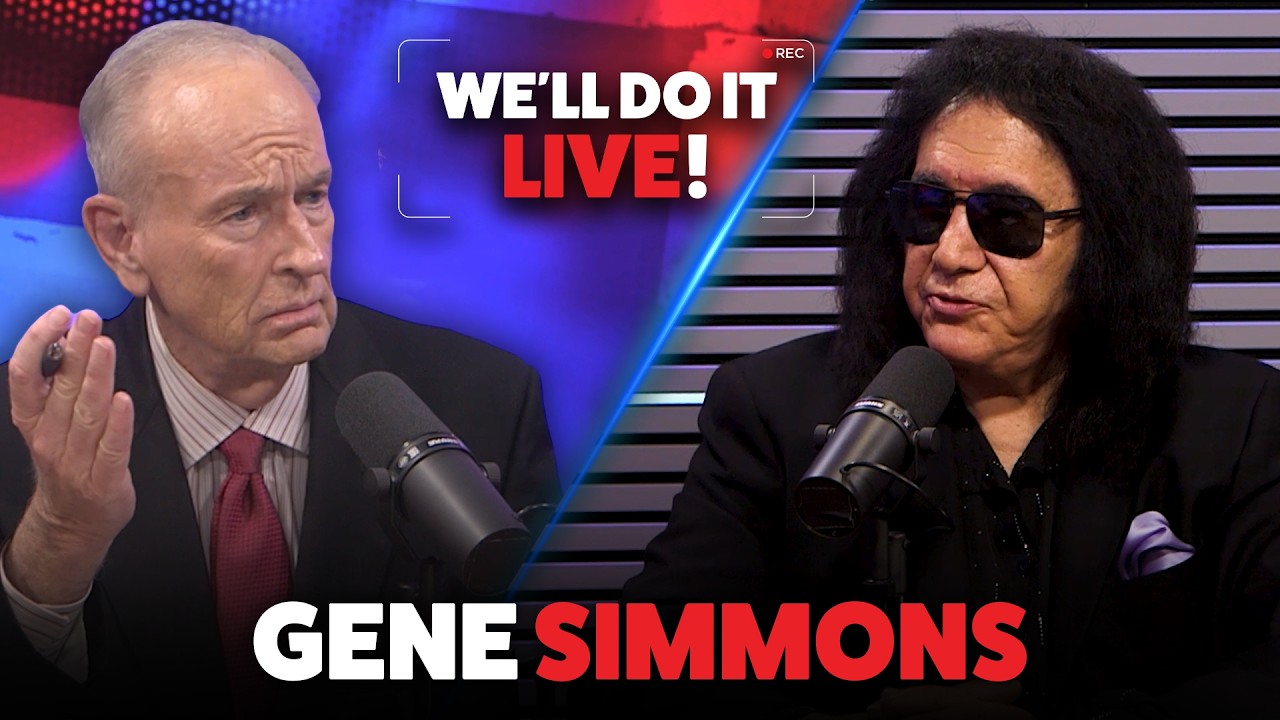
We'll Do It LIVE! — Gene Simmons
"Gene Simmons shares his mother's harrowing Holocaust survival story, his deep-seated patriotism, and the capitalist principles that fueled KISS's unprecedented success, all while advocating for civility and individual thought in a polarized world."

Can't Think Straight! Ft. Hayley Kiyoko || LGBTQ+ Reddit Stories || Two Hot Takes Podcast
"Hayley Kiyoko joins the hosts to dissect real-life LGBTQ+ Reddit stories, highlighting the critical need for representation, the complexities of coming out, and the importance of self-respect in relationships."