
Trump STILL BOMBING Boats Even AFTER Maduro Kidnapping
YouTube · TBqeA77SQtg
Quick Read
Summary
Takeaways
- ❖US Southcom executed three lethal kinetic strikes on February 16th, killing 11 alleged narco-terrorists on three vessels in the Eastern Pacific and Caribbean.
- ❖These strikes are part of a broader pattern of at least 42 boat strikes and 144 deaths, according to the hosts.
- ❖The hosts question the intelligence, noting the Coast Guard (with direct observation) is wrong 'one out of three times' in identifying drug boats.
- ❖The US's legal justification for these strikes was based on the premise that Venezuela, under Maduro, was at war with the US through narco-trafficking by groups like 'Trenagua'.
- ❖With Maduro's 'kidnapping' and Trump's subsequent praise for Deli Rodriguez (the new Venezuelan leader) as an ally, the hosts argue the original legal basis for the strikes has 'completely evaporated'.
- ❖The hosts conclude that continuing these strikes is 'utterly completely totally criminal' and 'a crime against humanity' given the changed geopolitical context and lack of a valid war justification.
Insights
1US Military Conducts Lethal Strikes on Alleged Narco-Trafficking Vessels
US Southcom, under General Francis Donovan, directed Joint Task Force Southern Spear to conduct three lethal kinetic strikes on February 16th, targeting vessels allegedly operated by 'designated terrorist organizations' involved in narco-trafficking. These strikes killed 11 male individuals across three boats in the Eastern Pacific and Caribbean.
Video released by Southcom on February 16th, detailing three strikes, 11 fatalities, and no US military harm.
2Questionable Intelligence and Lack of Due Process in Strikes
The hosts express skepticism about the intelligence used to justify these lethal strikes, noting the official statement only mentioned vessels 'transiting along known narco-trafficking routes' and 'engaged in narco-trafficking operations.' They point out that the US Coast Guard, with closer observation, is wrong about one-third of the time in identifying drug boats, suggesting drone strikes from afar are even less reliable. They criticize the lack of trials and the direct killing of individuals based on unverified intelligence.
Hosts' interpretation of Southcom's statement; comparison to Rand Paul's data on Coast Guard accuracy; observation that 'they aren't putting anybody on trial. They're just blowing them up.'
3Original Legal Justification for Strikes Has Evaporated
The US government's initial legal argument for these lethal strikes was that narco-trafficking, allegedly organized by the Maduro regime and groups like 'Trenagua,' constituted an act of war by Venezuela against the United States. However, with Maduro now 'kidnapped' and Trump publicly praising Deli Rodriguez, the new Venezuelan leader, as an ally doing a 'tremendous job' on behalf of the US, the hosts argue that this 'war' justification is entirely gone.
The US's historical claim of 'Trenagua' being a terrorist organization run by Maduro at war with the US; Trump's recent statements on Deli Rodriguez and Venezuela.
4Continued Strikes are 'Criminal' Without Justification
Given the changed political landscape where Venezuela is no longer framed as an adversary at war with the US, the hosts conclude that the continued lethal strikes are 'utterly completely totally criminal' and 'a crime against humanity.' They argue that without the 'act of war' justification, the US is simply executing alleged narco-traffickers or potentially innocent people without trial, and the money would now be going to US allies or a US-controlled Venezuela.
Hosts' strong condemnation of the strikes post-Maduro's 'kidnapping'; the argument that the 'legal justification... has completely evaporated.'
Lessons
- Question official justifications for military actions, especially when they involve lethal force against non-state actors or in contexts where geopolitical alliances shift.
- Demand greater transparency and independent verification of intelligence claims used to authorize extrajudicial killings, particularly when due process is bypassed.
- Consider the broader implications of normalizing military strikes as a primary method of drug interdiction, and its potential impact on international law and human rights.
Notable Moments
Discussion of the 'normalized' abuse of the term in the first Trump term, applied here to the normalization of governments blowing up boats with drones.
Highlights the hosts' concern that such lethal actions become accepted without critical scrutiny, despite being 'a crime against humanity.'
The hosts' detailed breakdown of why the 'Trenagua' group and its alleged connection to Maduro as an act of war is a weak premise, even before Maduro's 'kidnapping'.
Underscores the hosts' view that the legal justification was flawed from the outset, not just after recent events.
Quotes
"If you don't cover these like and you just kind of acknowledge that it's just normal that one government is sending drones into the sky and just blowing up boats, like it is a crime against humanity."
"If the Coast Guard, which has been doing this for decades and and can do it from the sea, is getting it wrong one out of three times, why do we think that Pete Hexath doing it as a video game is going to get it right 100% of the time?"
"Your legal justification that you have put forward for these strikes has completely evaporated. It was it never made any sense to begin with to be clear, but now it has zero basis."
Q&A
Recent Questions
Related Episodes

Patrick Henningsen: Hezbollah JUST Fired Back at Israel - Iran Vows to “Crush” All Attacks
"Patrick Henningsen argues that the US and Israel initiated an illegal war against Iran, driven by Trump's incompetence and Israeli influence, leading to an inevitable escalation with severe global economic repercussions."
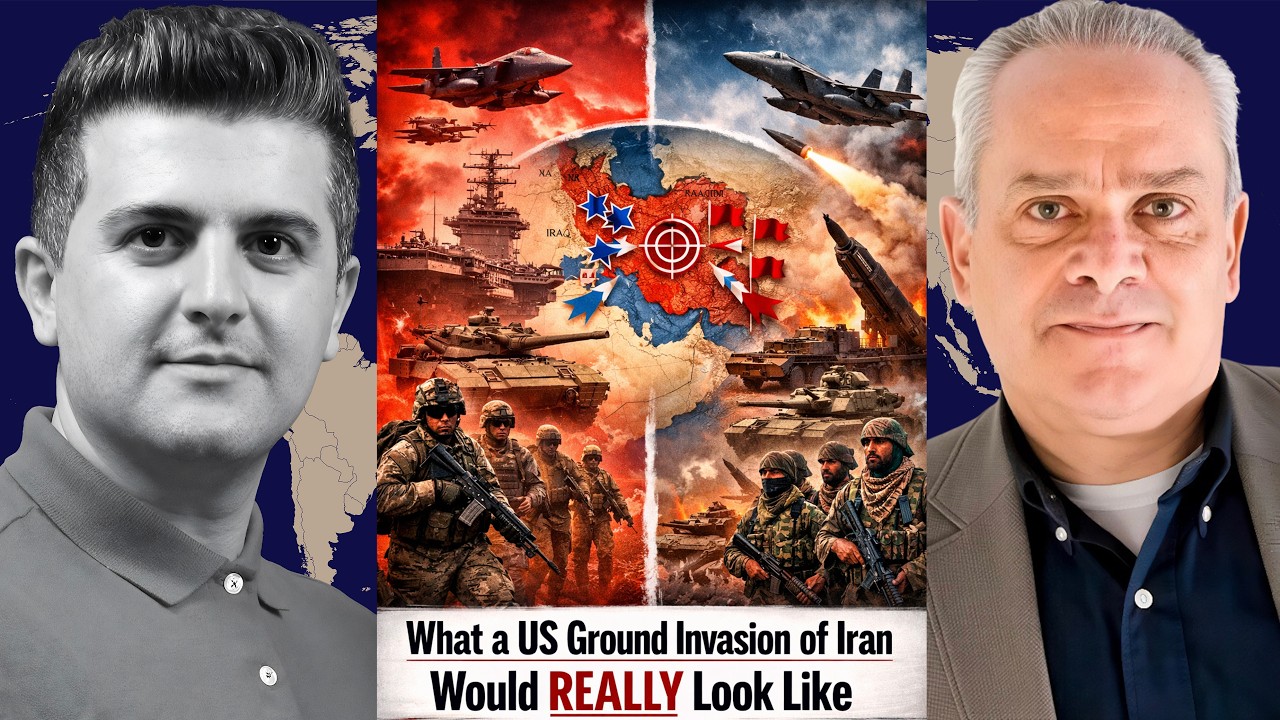
Col. Jacques Baud: What a US Ground Invasion of Iran Would REALLY Look Like
"Colonel Jacques Baud dissects the strategic futility of a US ground invasion of Iran, arguing that current troop levels are insufficient and such an action would backfire, exposing US allies and potentially leading to Iran's nuclearization."

Col. Jacques Baud: The World Is Entering a Lawless Era
"Colonel Jacques Baud details his personal experience with arbitrary EU sanctions and argues that the world has shifted from a law-based international order to a dangerous, rules-based system dictated by powerful actors, exemplified by US actions in Venezuela and the EU's 'teenager decision-making'."

Will Venezuela Be Trump's Vietnam?
"An expert breaks down three perilous pathways for Venezuela under potential US intervention, from a 'Panamanian model' to a 'Libyan-style civil war,' and the broader geopolitical fallout for Latin America."