Why Did Jackie Robinson Join McCarthyist Campaign Against Paul Robeson?
YouTube · WlR4Juq_D_E
Quick Read
Summary
Takeaways
- ❖Paul Robeson, a multi-talented global figure, was a primary target of McCarthyist tactics, leading to his blacklisting and passport revocation.
- ❖Jackie Robinson's 1949 testimony against Robeson before HUAC was not voluntary but a result of pressure from Branch Rickey to affirm Black American loyalty.
- ❖Branch Rickey's motivation for integrating baseball was influenced by progressive political and labor pressure in Brooklyn, not solely moral conviction.
- ❖Robinson later regretted his testimony against Robeson, viewing it as a detriment to his legacy.
- ❖The systematic erasure of Paul Robeson from history, despite his immense accomplishments, serves as a stark warning about the power of political suppression.
- ❖Current assaults on education, civil liberties, and demands for loyalty echo the McCarthy era's playbook, making historical understanding vital.
Insights
1Paul Robeson's Eradication from History
Paul Robeson, a globally famous actor, singer, athlete, and scholar (Columbia-educated lawyer, NFL player, Broadway pioneer), was systematically targeted and blacklisted by the U.S. government. The FBI, CIA, Department of State, and other agencies compiled tens of thousands of documents, leading to his appearance before HUAC in 1949. His passport was revoked in 1950, effectively making him a prisoner in his own country for eight years. This concerted effort led to his near-total erasure from public memory, contrasting sharply with Jackie Robinson's enduring legacy.
Robeson was the son of an escaped slave, world-famous by 1936. He integrated Broadway in 1943, played in the NFL, and was an All-American in college football. He was tracked by the FBI, CIA, and other agencies, leading to his blacklisting and passport revocation from 1950 for eight years. (, , , , )
2Jackie Robinson's Compelled Testimony Against Robeson
Jackie Robinson, celebrated for integrating major league baseball, was hailed as a national hero in 1949 for testifying against Paul Robeson before HUAC. However, this testimony was not voluntary. Robinson felt obligated to Branch Rickey, the Brooklyn Dodgers president, who pressured him to testify to demonstrate that African Americans were loyal to the United States following Robeson's controversial speech in Paris.
Robinson was hailed as a national hero for testifying against Robeson in 1949. He 'felt compelled by his employer, Branch Rickey... to testify against Roberson to show that African-Americans were loyal to the United States.' (, , )
3Branch Rickey's Mixed Motivations for Baseball Integration
While Branch Rickey is often portrayed as having a purely moral compass for integrating baseball, his decision was also significantly influenced by external political pressure. Brooklyn, a highly progressive labor area, exerted strong left-wing pressure on the Dodgers to integrate, making Rickey's move a strategic response to a powerful social movement, not solely an act of moral conviction.
Branch Rickey's public version of integration often highlights his moral compass, but 'the biggest reason' was pressure from 'huge labor area, really progressive, very strong left-wing progressive politics' in Brooklyn, pushing the Dodgers to integrate. (, , , )
4Robinson's Later Regret Over Robeson Testimony
Jackie Robinson never wanted to testify against Paul Robeson and later deeply regretted his involvement. His widow, Rachel Robinson (still alive at 103), believed that Jackie would have wanted to retract this testimony more than any other action in his public life, alongside his support for Richard Nixon in 1960. The testimony was followed by violent riots in Peekskill, New York, further complicating his legacy.
Robinson 'never wanted to testify in the first place.' His widow, Rachel Robinson, 'believed that there was nothing that Jackie would have wanted to take back more' than his testimony against Robeson and his support for Nixon. Two bloody riots in Peekkill, New York, followed his testimony. (, , , )
5Historical Parallels Between McCarthyism and Today
The tactics of the McCarthy era, including the assault on education, civil liberties, and the demand for loyalty, are strikingly similar to current political trends. The ease with which a figure as prominent as Paul Robeson was silenced and erased serves as a warning about the fragility of historical memory and the potential for political forces to control narratives and suppress dissent in contemporary society.
The author notes 'what is past is prologue' and 'how similar the times were between the 1940s and the Paul Roberson McCarthy era and what is happening today in terms of the assault on education and higher education, the assault on civil liberties, the forcing of loyalty, all of this playbook, the closing of the borders.' (, , , , )
Lessons
- Critically examine widely accepted historical narratives, especially those that simplify motivations or erase prominent figures, to uncover the full context and complexities.
- Recognize and challenge patterns of political pressure and demands for loyalty that echo historical eras of suppression, particularly when they target education or civil liberties.
- Actively seek out and support efforts to restore marginalized or erased historical figures and their contributions, understanding that history is often written to serve specific agendas.
Notable Moments
Paul Robeson's passport revocation in 1950, effectively making him a prisoner in the U.S. for eight years.
This act symbolizes the extreme measures taken by the government to silence dissent and control the movement of individuals deemed politically undesirable, demonstrating the severity of McCarthyist repression.
The two bloody riots in Peekskill, New York, that followed Jackie Robinson's testimony against Paul Robeson.
These riots highlight the immediate, violent societal fallout from the political polarization and anti-communist hysteria of the era, directly impacting the lives and legacies of those involved.
Quotes
"What is past is prologue. So much of working on this book of Paul Roberson, who of course was a victim and the center of a lot of the McCarthyist tactics that we see today facing off against Jackie Robinson who really did feel compelled by his employer by Branch Ricky... to testify against Roberson to show that African-Americans were loyal to the United States."
"His widow, Rachel Robinson, who by the way is still alive at 103 today, believed that there was nothing that Jackie would have wanted to take back more between that and his support of Richard Nixon in 1960, that these were the two pieces of advice that that Rachel Robinson felt that that did not help Jackie and haven't helped his legacy."
"History writes people out of the story and it's our job to write them back in."
Q&A
Recent Questions
Related Episodes
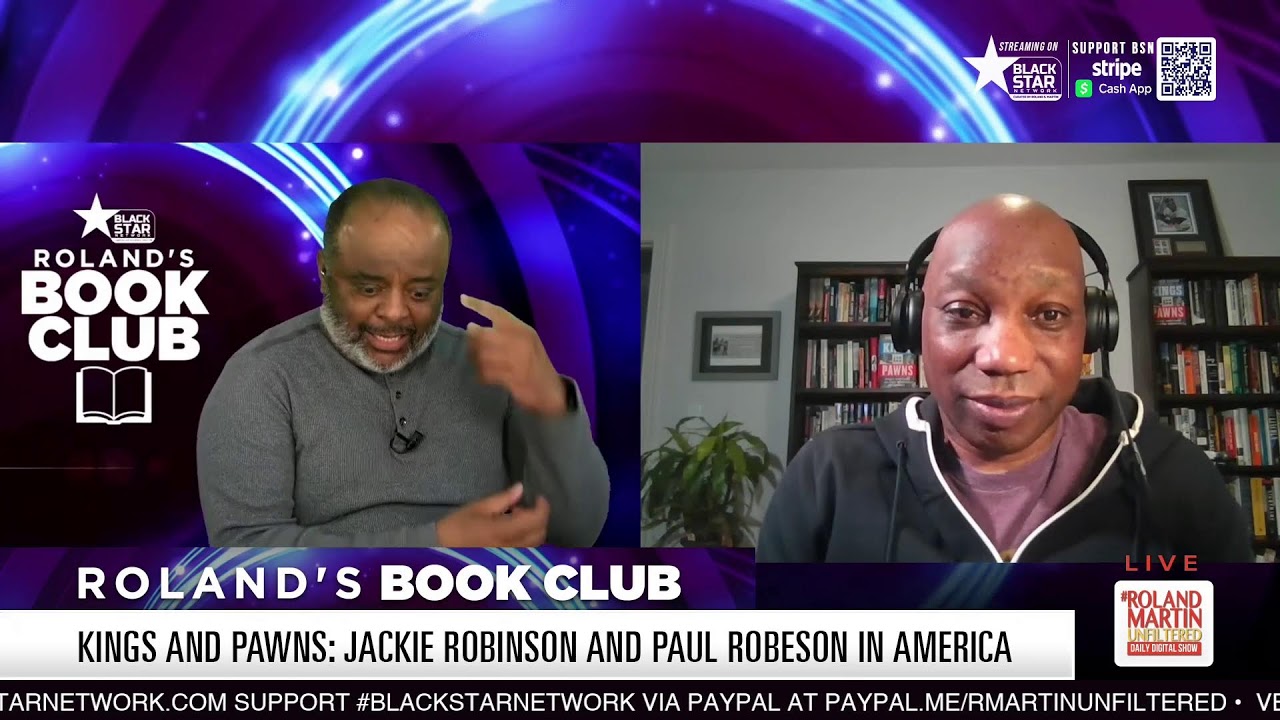
Roland, Howard Bryant talk "Kings and Pawns: Jackie Robinson and Paul Robeson in America"
"This episode uncovers the deliberate erasure of Paul Robeson from American history and the calculated use of Jackie Robinson to counter his influence, revealing a complex narrative of race, politics, and power during the Cold War."

Roland, Howard Bryant talk "Kings and Pawns: Jackie Robinson and Paul Robeson in America"
"Howard Bryant's book "Kings and Pawns" uncovers the intentional erasure of Paul Robeson from American history and re-examines Branch Rickey's complex, self-serving motives behind Jackie Robinson's integration of baseball."
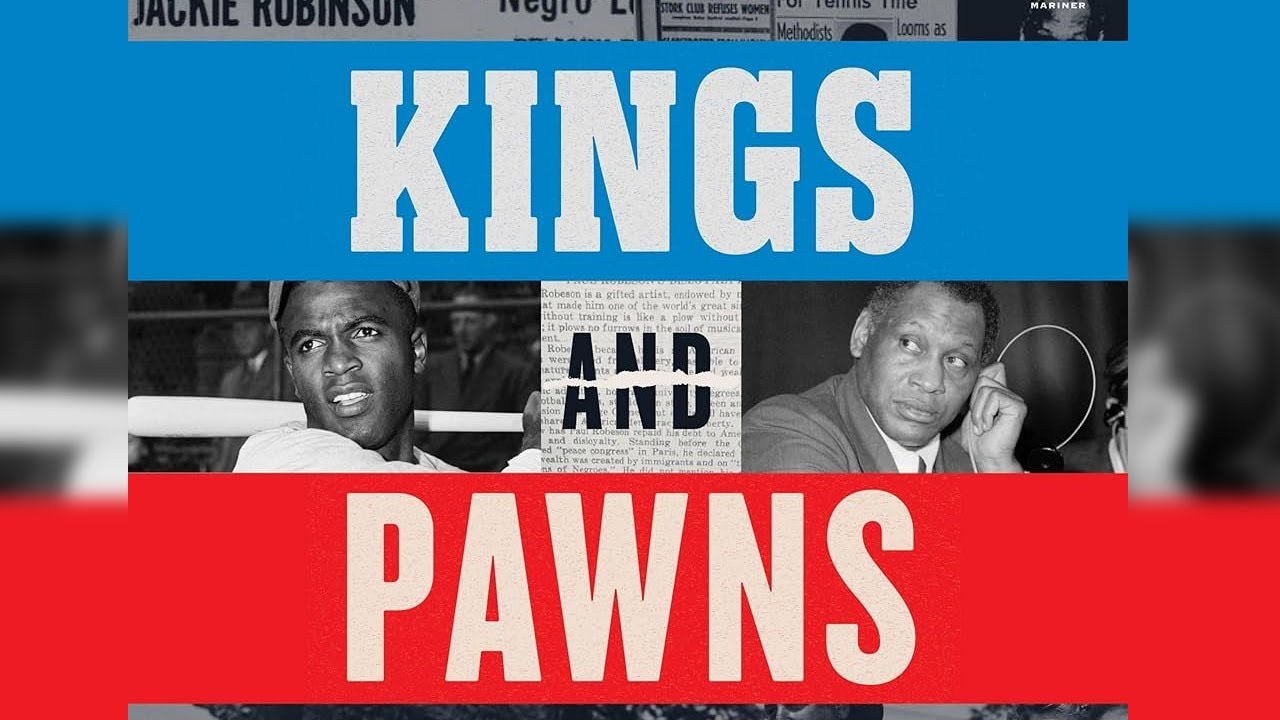
Roland, Howard Bryant talk "Kings and Pawns: Jackie Robinson and Paul Robeson in America"
"Howard Bryant's book "Kings and Pawns" recontextualizes the intertwined legacies of Jackie Robinson and Paul Robeson, revealing how white power structures intentionally erased Robeson and manipulated Robinson during the Cold War to control the narrative of Black American progress."
Jackie Robinson Day. Toledo Police Slam Black Teen. Rev. Otis Moss, III on Faith & Power
"Roland Martin Unfiltered dissects the systemic issues of police brutality, voter suppression, and political hypocrisy, urging Black communities to actively engage in politics while commemorating Jackie Robinson's complex legacy."