Roland speaks at Columbus Educ. Assoc. MLK Dinner
YouTube · Y4kYF1FnkO4
Quick Read
Summary
Takeaways
- ❖MLK Day celebrations often misrepresent history by solely focusing on Dr. King, neglecting the crucial roles of women and the broader movement.
- ❖Coretta Scott King was instrumental in driving Dr. King's positions, including his stance on the Vietnam War, and fought against institutional racism in media coverage.
- ❖Younger generations are criticized for being 'tired' while older generations carried the burden of activism for decades.
- ❖Social media is a communication tool, not an organizing and mobilizing tool; real change requires 'boots on the ground'.
- ❖Current attacks on voting rights, housing, and education funding are direct echoes of Jim Crow laws and the post-Reconstruction era.
- ❖White women have historically benefited significantly from civil rights legislation like the 1964 Civil Rights Act and Title IX, and are urged to actively fight against present-day attacks on civil rights.
- ❖Politicians who seek votes but fail to represent the people's interests must be directly challenged and held accountable.
- ❖Dr. King's 'Mountaintop' sermon also included calls for economic boycotts and collective action to bring about systemic change.
Insights
1Reclaiming the Narrative of the Civil Rights Movement
Martin argues that MLK Day and Black History Month often reduce the Civil Rights Movement to Dr. King alone, erasing the critical contributions of women like Coretta Scott King and Joanne Robinson. He highlights Coretta Scott King's role in influencing Dr. King's political stances and her insistence on black media access at his funeral, demonstrating her active leadership.
Coretta Scott King traveled the country, sang for the movement, and raised hundreds of thousands of dollars. She insisted Ebony and Jet magazines be allowed into the all-white press pool at Dr. King's funeral (, ). Joanne Robinson organized the Montgomery bus boycott ().
2Critique of Generational Complacency and Inaction
Martin directly challenges the younger generations' claims of being 'tired' from activism, contrasting it with the lifelong commitment of his 78-year-old parents. He asserts that social media is insufficient for organizing and that many have benefited from past struggles without contributing to current ones, creating a 'gap' in leadership.
He questions how someone '28 and tired' can justify inaction when his 78-year-old parents still work campaigns and serve as precinct judges (, ). He states, 'Social media is a communication tool. It is not an organizing and mobilizing tool' ().
3Historical Parallels and the Persistence of Jim Crow Laws
He draws direct connections between current political attacks on voting rights, education funding, and housing discrimination to the Jim Crow era and the post-Reconstruction period. Martin emphasizes that decisions made decades or centuries ago continue to impact contemporary society, citing examples like felony disenfranchisement laws in Virginia and home appraisal discrimination.
Felony disenfranchisement in Virginia, rooted in a racist early 1900s law, is only now being overturned (). Studies show over $100 billion has been kept from black families due to home appraisal discrimination by white adjusters (). Hitler studied American Jim Crow laws to implement discrimination in Germany ().
4The Strategic Importance of Economic Withdrawal and Collective Action
Martin reminds the audience that Dr. King's 'Mountaintop' sermon was not just about hope but also a detailed plan for economic boycotts and collective action. He advocates for leveraging the collective economic power of the Black community to force systemic change, rather than just celebrating King's 'glossy' image.
In his 43-minute 'Mountaintop' sermon, King 'name checked companies we should boycott economically' and said 'we can practice economic withdrawal to bring this country to its knees' ().
5Challenging Power and Holding Leaders Accountable
Martin calls for direct confrontation of complacent or corrupt leaders, whether in city hall, school boards, or corporations. He stresses that elected officials hold 'the people's seat' and must be responsive to their constituents, not just big business.
He states, 'We got to be willing to look some folk in the eye who keep coming asking for us or our vote and then we don't see them until the next election' (). He advises telling unresponsive officials, 'you do not own that seat. That is the people's seat' ().
Bottom Line
White women have been the primary beneficiaries of affirmative action and civil rights legislation, yet often remain silent on current attacks against these rights.
This insight reframes the narrative around civil rights benefits, highlighting that legal protections intended for marginalized groups have broadly uplifted other demographics. Their silence is framed as self-sabotage, as the same forces attacking Black rights will eventually target women's rights.
Mobilize white women by demonstrating their historical and ongoing stake in civil rights protections, urging them to become vocal allies and active participants in defending these rights, recognizing that 'when they attack us, they attacking you' (37:50).
The federal government currently employs individuals who openly admit to white supremacist or Nazi ideologies.
This reveals a deeply concerning level of institutional penetration by extremist views, indicating that discriminatory policies and actions are not just accidental but potentially driven by ideologically aligned personnel within government agencies like ICE.
Demand transparency and accountability in federal hiring and retention, exposing and removing individuals with extremist views to prevent the enactment of discriminatory policies from within government structures.
Opportunities
Collective Organizational Pressure Campaign
Black fraternities, sororities (D9), and other community groups (Prince Hall Masons, Eastern Star) should coordinate monthly 'descents' on city hall, county commissioners, and school boards with a unified agenda. Large, visible groups (200-500 members) appearing en masse will force political leaders to address their demands.
Church-Based Community Tutoring Network
Every church should establish a free tutoring program for K-12 children in their 0.1-0.5 mile radius. Retired educators within the congregation can volunteer one day a week, utilizing existing church facilities (pews, light, heat, Wi-Fi). This addresses educational disparities and serves as community outreach.
Key Concepts
The Black Bank of Justice: Deposits vs. Withdrawals
This model posits that many individuals, particularly younger generations, have made 'withdrawals' by benefiting from the past struggles and sacrifices of civil rights activists, but have failed to make 'deposits' by actively contributing to ongoing efforts for justice. It calls for active participation to replenish the 'bank' for future generations.
Rest Time is Over
This model challenges the notion of societal or generational fatigue in the face of ongoing injustice. It asserts that continuous vigilance and action are necessary, rejecting the idea that any group, especially younger ones, can afford to 'rest' when fundamental rights and systemic issues remain unresolved.
Lessons
- Refocus MLK Day celebrations from individual admiration to active engagement in the ongoing fight for justice, studying King's full message including economic boycotts.
- Leverage the collective power of Black organizations (D9, churches) to directly challenge local political leaders and corporations on issues like education funding, voting rights, and police accountability.
- Demand accountability from elected officials by reminding them they hold 'the people's seat' and must prioritize community interests over big business, even if it requires political courage.
Community Power Mobilization Playbook
**Assess Local Power Structures:** Identify key decision-makers in city hall, county commissions, school boards, and major local corporations.
**Form a United Front:** Coordinate across Black fraternities, sororities (D9), Prince Hall Masons, Eastern Star, and local churches to develop a shared agenda for change.
**Execute Coordinated Pressure Campaigns:** Schedule monthly 'descents' on targeted institutions (e.g., City Hall one month, School Board the next) with large, visible groups to present demands and demonstrate collective power.
**Establish Accountability Metrics:** For annual MLK dinners or similar events, present an 'annual report' detailing accomplishments and challenges from the previous year, holding political leaders accountable for specific actions or inactions.
**Implement Grassroots Educational Support:** Churches should map their local communities (0.1-0.5 mile radius) and establish free K-12 tutoring centers using existing facilities and retired educators, addressing educational disparities directly.
Notable Moments
Roland Martin's 'Rest Time is Over' call to action.
This moment encapsulates the central theme of the speech, directly challenging audience complacency and setting a tone of urgency for immediate, sustained action against injustice.
The anecdote about Coretta Scott King forcing black media into Dr. King's funeral press pool.
This powerfully illustrates institutional racism even at a pivotal historical event and highlights Coretta Scott King's often-underestimated courage and strategic importance in fighting for Black representation.
His direct challenge to preachers to stand up and commit their churches to tutoring.
This is a highly specific, actionable call that leverages existing community resources (churches, retired educators) to address a critical issue (education) in a tangible way, demonstrating how faith institutions can be centers of practical activism.
Quotes
"You don't remember what people say. You don't always remember what people do, but you remember how people make you feel."
"If you actually do any substantial reading on Dr. King, you will realize that a number of the positions that he took actually were at the assistance, insistence of her [Coretta Scott King]."
"Social media is a communication tool. It is not an organizing and mobilizing tool."
"We are living in an age in this country where $350 billion dollars is being spent every single year on advertising and black-owned meat is getting 0.5 to 1% of that money."
"Ain't nobody benefited more than white women from affirmative action in the United States."
"Don't just play the mountaintop part and skip over the boycott part."
"We will fight until hell freezes over and then we will fight on the ice."
Q&A
Recent Questions
Related Episodes
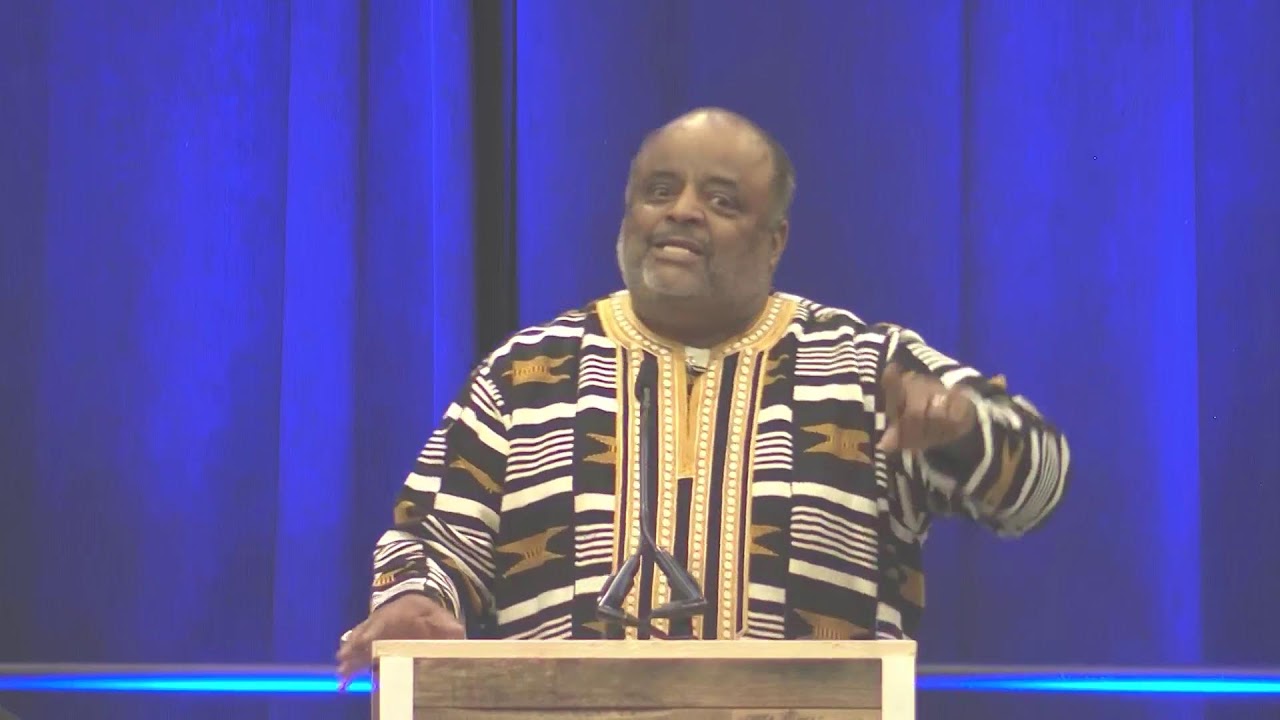
Roland speaks at Columbus Educ. Assoc. MLK Dinner
"Roland Martin challenges the audience at an MLK dinner to move beyond passive celebration and engage in active, sustained political and economic struggle, emphasizing that 'rest time is over' for those seeking real societal change."

The Immortal Jim Crow. 'Goon Squad' Defamation Suit. Google Race Discrimination Case. #TheBreakdown
"This episode exposes the enduring grip of systemic racism through a Mississippi defamation suit, Google's racial discrimination settlement, and a deep dive into how Jim Crow's legacy still shapes Black America today."

Contested Primary Elections. Facebook Marketplace Shooting. Hey Black Girl Affirmations#TheBreakdown
"This episode explores a Georgia lawsuit challenging a new election law, highlights a community-driven real estate project building Black wealth, and features initiatives empowering Black women and girls."

All Roads Lead To the South: Nat’l Day Of Action For Voting Rights | Mass Rally | Montgomery, AL
"A mass rally in Montgomery, Alabama, ignites 'Freedom Summer 2026' to combat the Supreme Court's decimation of Black political power and demand unprecedented voter mobilization across the South."