Exclusive: Former American & Iranian Negotiators on Ceasefire Talks & How War Could End
YouTube · Z7NfMCeZcbc
Quick Read
Summary
Takeaways
- ❖The US war against Iran is framed as 'unlawful, unjustified, and unnecessary' by former US negotiator Rob Malley.
- ❖Iran's deep mistrust in negotiations stems from the US withdrawal from the 2015 JCPOA and subsequent military attacks despite Iranian compliance and negotiation progress.
- ❖Iran has repeatedly offered to dilute its 60% enriched uranium stockpile to below 5% and cooperate fully with the IAEA, addressing key nuclear concerns.
- ❖The Trump administration's negotiation team, including Jared Kushner and Steve Woodco, lacked nuclear expertise, leading to misunderstandings of Iranian positions.
- ❖The Omani foreign minister actively mediated, conveying Iran's significant nuclear concessions directly to President Trump, emphasizing a deal 'better than Obama's'.
- ❖President Trump's motivation for war was perceived as a desire to 'win' and achieve regime change, similar to Venezuela, rather than a genuine pursuit of a negotiated settlement.
- ❖The US naval blockade of Iranian ports is legally considered an 'act of war' under UN resolution 1974 and is opposed by major powers like China and the EU.
- ❖A proposed solution for regional nuclear stability is a multilateral enrichment mechanism in the Persian Gulf, involving world powers and IAEA control.
- ❖Despite widespread internal dissatisfaction with its government, the Iranian populace unites strongly against external attacks and threats to national integrity.
Insights
1US Actions Fuel Iranian Mistrust
Former Iranian Ambassador Mousavian asserts that Iran approaches negotiations with heightened mistrust due to past US actions. He cites the US withdrawal from the 2015 nuclear deal (JCPOA) despite Iran's full compliance, and subsequent US military attacks following periods of significant negotiation progress in 2025 and 2026, as reasons for this skepticism.
Mousavian states, 'Iranians now they are coming to negotiation table with mistrust more than ever because once the deal was agreed in 2015 Iran was in full compliance and the US withdrew.' He then lists multiple instances of US attacks after negotiation progress ().
2Iran's Nuclear Concessions Undermined by US Actions
Mousavian highlights that Iran has consistently been willing to make significant concessions regarding its nuclear program, including diluting its 60% enriched uranium, suspending enrichment for years, and achieving zero stockpile. These offers, confirmed by the Omani foreign minister, contradict the US narrative of an imminent nuclear threat.
Mousavian explains, 'in negotiation 2025 Iran said we are ready to dilute all 60% to below 5%... Iran accepted to suspend enrichment for some years. Iran accepted to have zero stockpile.' He references the Omani foreign minister's public statements ().
3Inexperienced Negotiators and Trump's Mercurial Approach
Rob Malley criticizes the Trump administration's negotiation team, specifically Jared Kushner and Steve Woodco, for their lack of nuclear expertise. This inexperience, combined with President Trump's unpredictable and mood-driven decision-making, led to misunderstandings of Iranian positions and an inability to secure a consistent diplomatic path.
Malley states, 'Jared Kushner and Steve Woodco are not nuclear experts... they didn't have nuclear experts... they misunderstood Iranian positions. They couldn't appreciate what they were actually trying to convey.' He notes Trump's 'mercurial and unpredictable' nature ().
4Trump's 'Better Than Obama' Motivation for War
Malley suggests that President Trump's decision to launch military action, despite significant Iranian concessions that could have been framed as 'better than Obama's deal,' was driven by a desire for a decisive 'win' and regime change, rather than a genuine pursuit of a negotiated settlement. Trump felt 'unstoppable' after perceived successes in other regions.
Malley explains that even if Iran's offer of suspension was 'better than Obama's,' Trump's goal was to 'change the regime in Iran... and that he would go down in history at this person.' ().
5Naval Blockade as an Act of War
Mousavian unequivocally states that the US naval blockade of Iranian ports, based on UN Resolution 1974, constitutes an 'act of war' and 'aggression.' This action is internationally condemned and is seen by Iran as an existential threat, prompting their use of all available cards, including threats to the Strait of Hormuz.
Mousavian declares, 'the naval blockade based on United Nation resolution 1974 is act of war is aggression. Therefore, internationally, legally, what the US is doing is a clear aggression or act of war' ().
6Multilateral Enrichment as a Path Forward
Mousavian proposes a multilateral enrichment mechanism in the Persian Gulf as a long-term solution to regional nuclear proliferation concerns. This arrangement, similar to Urenco in Europe, would involve international control by the IAEA and participation from world powers, preventing individual nations like Saudi Arabia or Egypt from developing their own enrichment capabilities.
Mousavian suggests, 'A multilateral enrichment nuclear arrangement in this region would be the best way out where it would be fully under the control of international atomic energy agency and even the US, Russia, China, the world powers they can participate' ().
Lessons
- Recognize the profound impact of historical context and broken trust on current diplomatic efforts; past actions by one party can severely limit the other's willingness to negotiate in good faith.
- Prioritize expert knowledge and consistent policy objectives in high-stakes international negotiations; inexperienced negotiators or mercurial leadership can lead to critical misunderstandings and failed diplomacy.
- Understand that military and economic coercion, such as naval blockades, can be perceived as acts of war, escalating conflicts rather than forcing compliance, and may face significant international opposition.
Notable Moments
The Omani foreign minister's direct intervention in Washington to convey Iran's concessions to President Trump, bypassing official channels, and emphasizing a deal 'better than Obama's' to appeal to Trump's ego.
This highlights the breakdown of traditional diplomatic channels and the unconventional, personality-driven nature of the Trump administration's foreign policy, where a mediator felt compelled to use public media to reach the President.
The discussion of Iran's internal public sentiment, where widespread dissatisfaction with the government's economic and governance issues coexists with strong national unity against external attacks.
This clarifies that external military intervention or threats, often aimed at weakening a regime, can paradoxically strengthen its popular support by fostering a sense of national defense against a common enemy, complicating regime change efforts.
Quotes
"Iranians now they are coming to negotiation table with mistrust more than ever because once the deal was agreed in 2015 Iran was in full compliance and the US withdrew."
"If the ultimate objective is to ensure forever that Iran cannot have a nuclear bomb, I think we have cracked that problem through these negotiations by agreeing a very important breakthrough that has never been achieved any time before."
"I think the war was launched by by President Trump because he felt he could and he felt that he was on a roll... He thought he could change the regime in Iran... The details didn't matter and I think he really felt unstoppable and he felt that the experts who were warning him didn't know what they were talking about. He knew better in his gut."
"the naval blockade based on United Nation resolution 1974 is act of war is aggression."
Q&A
Recent Questions
Related Episodes
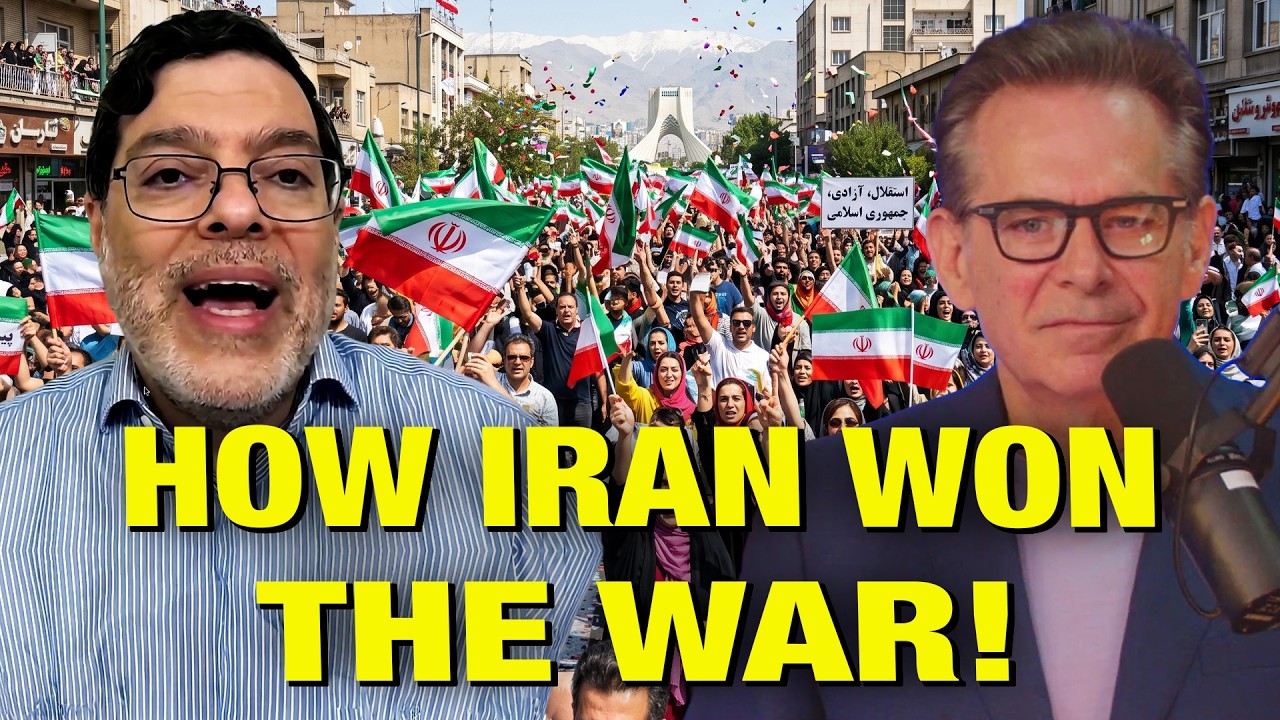
The REAL Story About The War From INSIDE IRAN! – Jimmy Interviews Prof. Marandi
"Professor Marandi, an Iranian academic, details how Iran emerged stronger from recent conflicts, now controlling the Strait of Hormuz and possessing a credible deterrent against its adversaries, despite facing economic siege and Western-backed regional proxies."
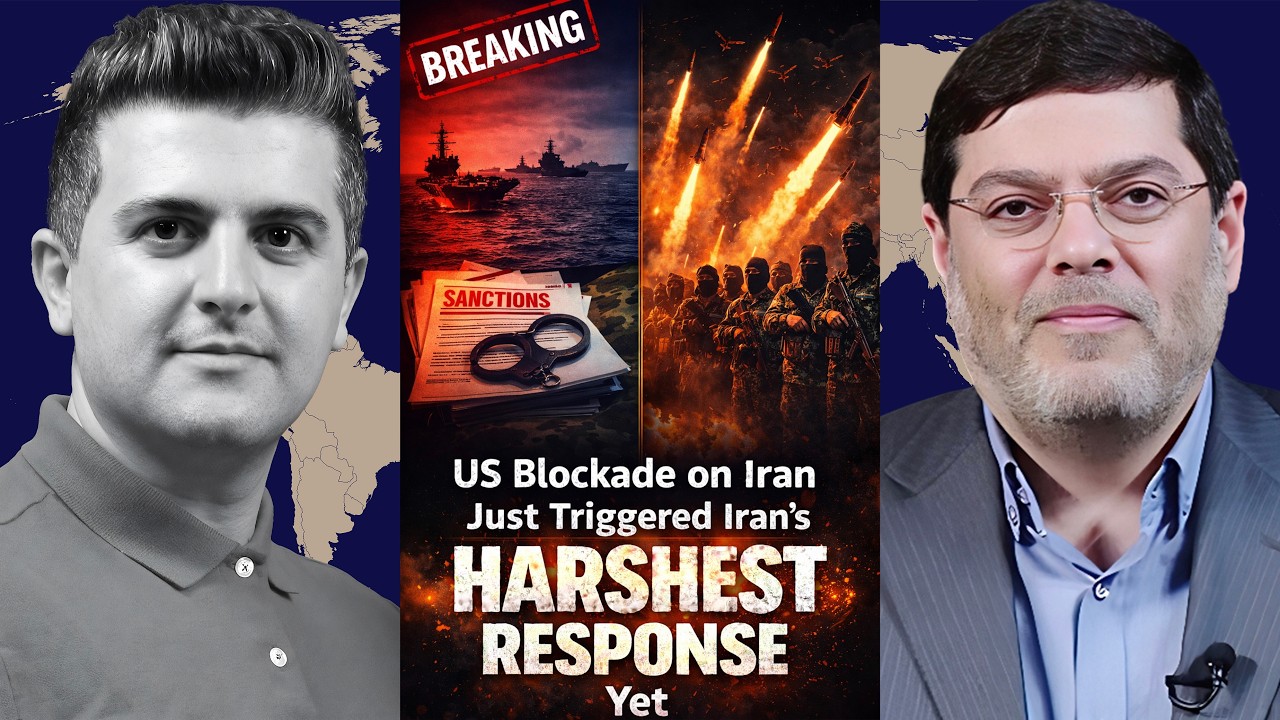
Seyed M. Marandi: US Blockade on Iran Just Triggered Iran’s HARSHEST Response Yet
"An Iranian professor details how US demands and an imposed blockade triggered Iran's harshest response, exposing American strategic missteps and the vulnerability of Gulf Arab states."
BREAKING: U.S.-Iran Talks COLLAPSE; Hormuz Standoff Deepens; Hezbollah Fire | TBN Israel
"US-Iran negotiations in Islamabad collapsed over the nuclear issue and control of the Strait of Hormuz, leading to heightened tensions and a potential US naval blockade strategy."
Robby Soave GOES OFF On ANNOYING Liberal Black Woman Making Emotional Trump Deranged Arguments!
"The host dissects a heated foreign policy debate, arguing that 'left-wing' emotionalism and 'Trump derangement' prevent a rational understanding of US sanction strategies against Cuba and Iran."