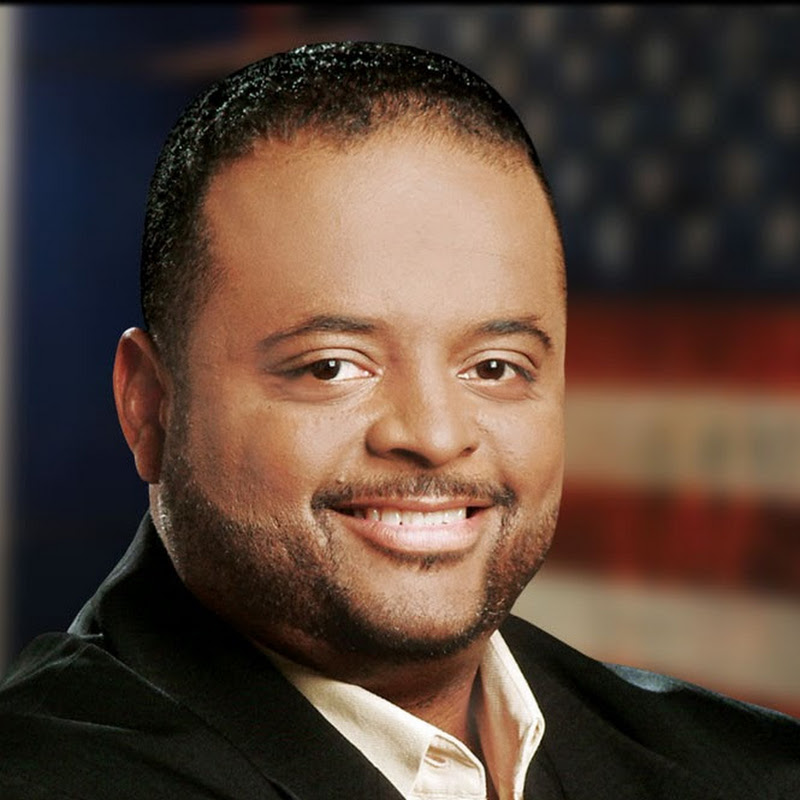
Roland, Howard Bryant talk "Kings and Pawns: Jackie Robinson and Paul Robeson in America"
YouTube · gN9r-vvIVx8
Quick Read
Summary
Takeaways
- ❖Paul Robeson, a Renaissance man (singer, athlete, lawyer, actor, activist), was intentionally erased from American and Black history due to his radical progressive views and connections to the Communist Party.
- ❖Jackie Robinson was strategically positioned by Branch Rickey and the House Un-American Activities Committee (HUAC) to publicly denounce Robeson, despite Robinson not being a political figure prior to this.
- ❖Branch Rickey's integration of baseball was not purely altruistic; he initially sought Latino players to avoid upsetting American segregation and only turned to American Black players when they proved superior.
- ❖The Cold War forced Black leadership (NAACP, Urban League) to decouple from Pan-African and anti-colonial movements to avoid being labeled 'anti-American' and jeopardize civil rights gains.
- ❖The historical pattern of demanding Black patriotism to silence dissent is a recurring tactic, from Robeson and Robinson to MLK and Kaepernick.
- ❖The baseball owners in 1945 feared Jackie Robinson's success would lead to Black fans, driving away white fans and causing an 'existential financial crisis' for the sport.
- ❖The 'illusion of merit' often masks the reality that white institutions 'hire for comfort' rather than purely for talent, as seen in baseball's reluctance to integrate and contemporary DEI backlash.
Insights
1Paul Robeson's Intentional Erasure from History
Paul Robeson, a globally renowned polymath and the 'number one black voice in America' in the mid-20th century, was systematically erased from American and Black history. This was not accidental but a massive, intentional campaign to silence his unabashed progressive, anti-capitalist, and pro-Soviet views during the Cold War, which were deemed a threat to the American imperial design.
Host Roland Martin and guest Howard Bryant express amazement at how few people know Robeson's significance (, ). Bryant states, 'You can't erase somebody like that by accident. Time didn't just erase him.' (). Robeson was denied a passport for eight years (1950-1958) to prevent him from earning a living and speaking abroad (, ).
2Jackie Robinson's Strategic Manipulation Against Robeson
Jackie Robinson was strategically placed in opposition to Paul Robeson by powerful white figures, notably Branch Rickey and the House Un-American Activities Committee (HUAC). Robinson, not a political figure prior, was compelled to testify against Robeson to prove American patriotism and counter Robeson's influence, creating a false narrative of division within Black leadership.
Bryant notes the common historical sentence: 'In 1949, Jackie Robinson testified against Paul Roberson in front of the House and American Activities Committee and then kept it moving.' (). He explains that Robinson was 'placed in opposition to each other in front of the entire country' () and that 'Branch Ricky had been looking for his Robesin for a very long time and he found it... in Jackie Robinson' ().
3Branch Rickey's Self-Serving Motivations for Baseball Integration
Branch Rickey, often hailed as a progressive ally for integrating baseball, had complex and largely self-serving motivations. He initially sought to integrate baseball with Latino players to avoid upsetting American segregation and only turned to American Black players like Jackie Robinson after realizing they were the best talent, not out of a primary commitment to racial equality. He also actively worked to undermine Paul Robeson.
Bryant reveals that Rickey 'had no intention of integrating' with American Black players and 'spent $25,000 scouring Mexico and Venezuela in Cuba in the Dominican Republic looking for the right player to integrate' (). Rickey 'hated black baseball' and 'had no respect for black baseball' (). He was 'aligned with some of the most rabid right-wing elements in the country' and 'placed Jackie Robinson in a terrible position' ().
4Cold War Politics Decoupled Black Leadership from Pan-Africanism
The Cold War significantly impacted Black American leadership, forcing organizations like the NAACP and Urban League to distance themselves from Pan-African and anti-colonial movements. This strategic decoupling was driven by a fear of being labeled 'anti-American' and jeopardizing the nascent civil rights movement and its white allies, thereby sacrificing a potentially unified global Black struggle.
Bryant states that 'black leadership in the United States really did decouple from those movements because they didn't want to be called anti-American' (). Robeson was seen as the figure who 'could couple all of these people together' (), and for that reason, 'a lot of people felt he needed to be destroyed' ().
5Baseball Owners Feared Black Economic Power, Not Just Presence
Major League Baseball owners in the 1940s did not merely oppose Black players due to racial prejudice; they feared the economic consequences. They believed that if Jackie Robinson succeeded and Black fans brought their money to the sport, white fans would leave, leading to an 'existential crisis financially' and ruining franchise values, mirroring housing segregation patterns.
Bryant explains that owners were convinced 'Jackie was going to destroy baseball, not because he couldn't play, but because he could' (). They believed 'if black fans brought their black money to the sport, white fans wouldn't want to sit next to them' (). A private report in 1946 stated Rickey 'done irreparable damage to the sport' ().
Bottom Line
The historical tactic of demanding Black patriotism to silence dissent and pit Black leaders against each other is a continuous lineage, from Paul Robeson and Jackie Robinson to Martin Luther King Jr. and Colin Kaepernick.
This reveals a consistent playbook used by dominant power structures to control Black narratives and suppress challenges to the status quo, especially when Black voices address systemic issues beyond domestic civil rights, such as foreign policy or economic inequality.
Recognizing this pattern allows for proactive strategies to resist co-optation, maintain internal unity, and develop independent platforms that cannot be easily manipulated by external forces.
The 'illusion of merit' persists, where Black individuals are constantly forced to prove their worth, while white institutions prioritize 'comfort' and existing networks, often at the expense of talent or diversity.
This dynamic explains why even highly qualified Black professionals are often dismissed (e.g., 'DEI hire') and why diversity initiatives face backlash, as the underlying preference is for maintaining familiar, often homogenous, environments.
Advocates for equity should shift focus from 'proving merit' to challenging the 'comfort' bias in hiring and promotion, and building parallel institutions where merit is genuinely recognized and rewarded without racial filters.
Key Concepts
The Illusion of Merit vs. Hiring for Comfort
This model highlights how institutions often claim to prioritize merit but, in practice, prioritize comfort and maintaining existing power structures. In the context of Black Americans, proving merit is often an endless task, while the dominant group hires based on familiarity and perceived ease, often at the expense of talent or diversity. This was evident in baseball owners' initial reluctance to integrate, despite the clear talent in the Negro Leagues.
The Meeting is Not the Reward
This model cautions against mistaking access or dialogue with power structures as a victory in itself. Historically, Black leaders and activists have been granted 'meetings' or a 'seat at the table' as a strategic tactic by the dominant group to slow down protests, buy time, or create positive public relations, without any genuine intention of enacting substantive change. The real 'win' comes from tangible outcomes, not mere engagement.
Lessons
- Actively seek out and engage with historical narratives that challenge mainstream accounts, particularly those written by and for marginalized communities, to gain a more complete understanding of American history.
- Analyze contemporary social and political movements for signs of strategic co-optation or attempts to divide leaders, drawing parallels to how figures like Robeson and Robinson were manipulated.
- Support and build independent Black-owned and Black-focused media, educational, and economic institutions to ensure agency over narratives, resources, and cultural production, rather than relying solely on mainstream platforms.
- Question the motivations behind calls for 'national unity' or 'patriotism' when they coincide with efforts to silence dissent or defer discussions on racial and economic justice.
- Recognize that 'the meeting is not the reward'; true progress requires tangible outcomes and shifts in power, not just symbolic gestures of inclusion or dialogue.
Notable Moments
The guest discovered previously unreleased transcripts from a 1943 baseball owners' meeting where Paul Robeson addressed them about integration. This document revealed Branch Rickey's early, self-serving intentions and the owners' immediate dismissal of integration.
This archival discovery fundamentally alters the understanding of baseball's integration, exposing the true motivations of key figures like Branch Rickey and demonstrating how historical narratives can be shaped by selective information and suppressed documents.
Jackie Robinson and Paul Robeson, two titanic Black figures of the 20th century, never met, despite their parallel lives and forced public opposition.
This fact underscores the profound and often tragic impact of the strategic divisions created by white power structures. It highlights how external forces can prevent natural alliances and interactions among influential Black leaders, shaping the course of history and the perception of their relationships.
Quotes
"It is amazing to me how many people have no clue how huge Paul Robeson was... this Renaissance man who singer, athlete, lawyer, actor, activist, all of this is essentially written out not only American history but black history."
"You can't erase somebody like that by accident. Time didn't just erase him."
"The black leadership's decision... really did decouple from those movements because they didn't want to be called anti-American."
"The black man who is willing to criticize another black person publicly will have a job for life."
"Branch Ricky had been looking for his Robesin for a very long time and he found it or at least he thought he had found it in Jackie Robinson."
"He hated black baseball. He had no respect for black baseball. He thought that the Negro Leagues were run by uh low lives and gangsters and numbers runners."
"We often say this is America. John Hope Bryant and I always talk about it. He's like it ain't black, it ain't white, it's green. Well, there are numerous examples where they will forego more green to maintain whiteness."
"We spend a lot of our time trying to prove merit, they hire for comfort. We talk about merit. They talk about comfort."
"We are Americans and we love this country, but we are reminded in so many heartbreaking ways that it does not love us."
Q&A
Recent Questions
Related Episodes

The Immortal Jim Crow. 'Goon Squad' Defamation Suit. Google Race Discrimination Case. #TheBreakdown
"This episode exposes the enduring grip of systemic racism through a Mississippi defamation suit, Google's racial discrimination settlement, and a deep dive into how Jim Crow's legacy still shapes Black America today."
Rev. C.T. Vivian talks MLK and staring death in the face. #MLKDay2026
"Civil Rights icon Rev. C.T. Vivian reflects on a lifetime of struggle, from facing childhood bullies to confronting Jim Clark, and shares his profound insights on the continuous fight for freedom and the true cost of a movement."

Obama Center Opens. Fox Expert Wants More Teen Pregnancy. Viral Black Doll Trend Backlash
"The opening of the Obama Presidential Center sparks discussions on legacy, while a Fox News expert's call for more teen pregnancies exposes deeper anxieties about declining white birth rates and the global shift of power to Africa, revealing a systemic effort to dismantle civil rights and maintain white dominance."

Obama Center Opens. Fox Expert Wants More Teen Pregnancy. Viral Black Doll Trend Backlash
"This episode unpacks the opening of the Obama Presidential Center, exposes a Fox News expert's call for more teen pregnancies, and reveals the global geopolitical implications of declining white birth rates and the ongoing dismantling of civil rights infrastructure in the US."