
Paul Craig Roberts: Trump’s Desperation Hits a BREAKING POINT as the War on Iran was LOST
YouTube · vQGo03V1tvQ
Quick Read
Summary
Takeaways
- ❖Donald Trump's announcement of postponed strikes and ongoing negotiations with Iran is likely a strategic maneuver to declare a 'victory' and withdraw from a losing conflict.
- ❖The US and Israel have reportedly depleted their missile stockpiles, particularly interceptor missiles, while Iran possesses a vast, long-range missile arsenal capable of penetrating their defenses.
- ❖Iran's successful strikes on Dimona (research center) and Diego Garcia demonstrate its advanced missile capabilities and intelligence, challenging previous US/Israeli assessments.
- ❖The Israel lobby exerts unparalleled influence over US foreign policy, driving decisions that lead to prolonged wars in the Middle East, including the conflict with Iran.
- ❖Iran's demands for war compensation, lifted sanctions, and guarantees against US interference indicate its strong negotiating position and confidence in its military strength.
- ❖Iran could potentially destroy Israel by targeting its nuclear power plant at Dimona with conventional missiles, negating Israel's nuclear deterrent without needing its own nuclear weapons.
- ❖The 'Greater Israel' agenda, aiming for control from the Nile to Pakistan, is identified as the underlying cause of perpetual conflict, leaving no room for independent Muslim nations like Iran.
Insights
1Trump's 'Victory' Declaration as an Exit Strategy
Paul Craig Roberts interprets Donald Trump's announcement of postponing strikes and engaging in 'very good discussions' with Iran as a strategic move to declare a fabricated victory and withdraw from the conflict. This allows Trump to save face, claim success (e.g., Iran agreeing not to make nukes, stopping missile production), remove sanctions, stabilize energy prices, and redirect public attention, especially with midterm elections approaching.
Trump's statement (), Roberts' analysis of two possible readings (), and the Iranian denial of talks ().
2US/Israel Missile Depletion and Iranian Superiority
The US and Israel have reportedly run out of missiles, particularly interceptor missiles, making sustained attacks difficult. Conversely, Iran has accumulated and stored missiles for over 20 years, possessing a huge supply. Iran's missiles have demonstrated a range of 4,000 kilometers (hitting Diego Garcia) and the ability to penetrate Israeli defenses (hitting Dimona), rendering US aircraft carriers and ground troops vulnerable and ineffective.
Roberts states 'the United States and Israel have run out of missiles' () and 'Iran did not collapse in three days' (). He cites the hits on Dimona and Diego Garcia (, ) and Iran's 20+ years of missile production ().
3Iran's Demands and Confidence
Iranian General Musen Resi's demands—compensation for damages, lifted economic sanctions, and guarantees against US interference—reflect Iran's confidence in its strong position. This confidence stems from its military capabilities, its ability to sustain a long-term war, and its strategic advantage in controlling the Strait of Hormuz, which can disrupt global oil supplies and inflict severe economic consequences.
Musen Resi's demands (), Roberts' comment on 'Iranian confidence' (), and the discussion of Iran's ability to stop oil flow from the Persian Gulf ().
4The Overwhelming Power of the Israel Lobby
The Israel lobby is described as the most powerful lobby in the United States, exerting more leverage than Congress, the President, and the executive branch combined. This influence extends to canceling academic tenure, passing state laws against Israel criticism, expelling students, controlling media narratives, and shaping entertainment and book publishing. This pervasive control ensures that US policy in the Middle East consistently aligns with Israeli interests, even against the advice of military and intelligence officials.
Roberts states 'the Israel lobby in the United States is the most powerful of all lobbies' () and provides examples of its reach into universities, state laws, media, and publishing (-). He also mentions Trump ignoring his general's advice not to attack Iran due to Netanyahu's influence ().
5Iran's Non-Nuclear Deterrent Against Israel
Iran does not need its own nuclear weapons to destroy Israel. By hitting Israel's nuclear power plant at Dimona with conventional missiles, Iran could cause a catastrophic radioactive event that would render Israel uninhabitable. Iran's recent strike on Dimona's research facility is framed as a message demonstrating this capability and the ineffectiveness of Israeli air defenses.
Roberts states 'Iran doesn't need nukes to destroy Israel. All they have to do is hit the Israeli nuclear power plant' () and 'I think this was the message to Ned Nao that we don't need nukes to destroy you' ().
Bottom Line
The 'Greater Israel' agenda, aiming for control from the Nile to Pakistan, is the fundamental driver of perpetual conflict in the Middle East, making any 'peace' with Iran merely a temporary postponement.
This implies that even if the current US-Iran conflict de-escalates, the underlying geopolitical tension will persist indefinitely, as Israel's stated expansionist goals necessitate the elimination of all independent Muslim states in the region, including Iran and potentially Turkey.
For geopolitical analysts, this framework suggests that understanding Israeli long-term strategic objectives is paramount to predicting future conflicts, rather than focusing solely on immediate diplomatic or military maneuvers. It also highlights the potential for a regional coalition against this perceived threat.
The US and Israel have effectively run out of critical missile stockpiles, particularly interceptors, severely limiting their ability to sustain a prolonged conventional war against a well-armed adversary like Iran.
This suggests a significant vulnerability in US and Israeli military readiness, indicating that their perceived technological and numerical superiority might be overstated in a direct, protracted conflict. It also implies that their military options are more constrained than publicly acknowledged.
This could lead to a re-evaluation of defense spending and production capabilities in the US and allied nations, potentially driving investment in missile manufacturing and stockpiling. For adversaries, it highlights a potential window of opportunity or a strategic weakness to exploit in future confrontations.
Quotes
"The real problem seems to be with continuing the attack on Iran is that the United States and Israel have run out of missiles and and particularly interceptor missiles because Deona is not supposed to be hit and and neither was DGO Garcia 4,000 kilometers away."
"Trump has to choose between himself and Netaou. Is he going to save Net Naou and destroy himself? Or is he going to use the opportunity to get out of it and claim a victory and go do something else and get the whole attention of the American public onto some other issue."
"The war continues until all damages are compensated, all economic sanctions are lifted and a guarantee is obtained that the United States will not interfere in Iran's affairs."
"The Israel lobby has more leverage than anyone. In fact, they've got more leverage than the Congress and the president and the executive branch put together."
"Iran doesn't need nukes to destroy Israel. All they have to do is hit the Israeli nuclear power plant because the radiation from that will destroy Israel."
Q&A
Recent Questions
Related Episodes
BREAKING: U.S. Weighs INVADING Iran Oil Island; Gulf Energy Crisis Grows | TBN Israel
"As the US and Israel systematically dismantle Iran's military and leadership, the conflict escalates into an energy war, with the US considering ground invasion of Iran's critical Karag oil island to secure global oil routes."

BREAKING: Kharg Island HIT By U.S. Bombers; Iran Threatens Gulf Targets | TBN Israel
"The US launched heavy bomber strikes on Iran's critical Kharg Island, destroying military targets while intentionally sparing oil infrastructure, signaling a direct economic threat if Iran continues to disrupt the Strait of Hormuz."
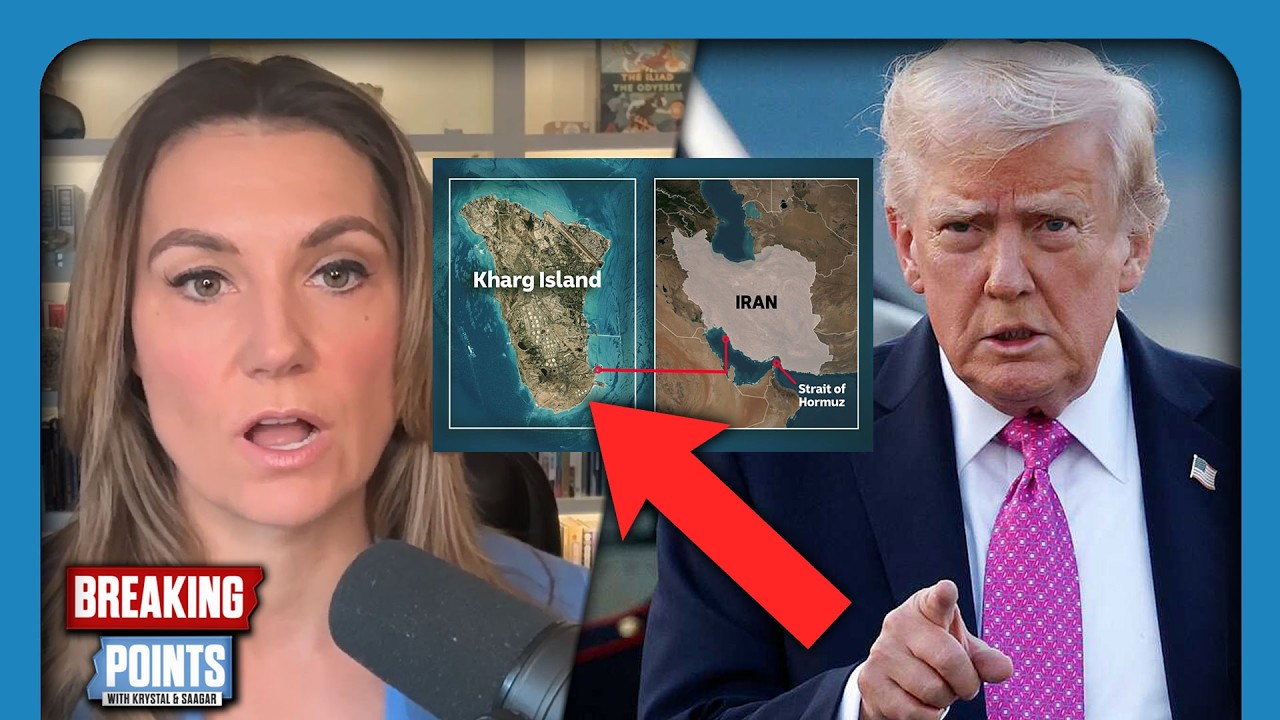
BREAKING: TRUMP ATTACKS OIL ISLAND, MARINES CALLED IN, 5 US PLANES HIT
"The US-Iran conflict escalates with a Trump-ordered strike on Iran's Karg Island, triggering Iranian retaliation against UAE oil facilities and US military assets, while the US deploys Marines and Israel plans a ground invasion of Lebanon."
The REAL Story About The War From INSIDE IRAN! – Jimmy Interviews Prof. Marandi
"Professor Marandi, an Iranian academic, details how Iran emerged stronger from recent conflicts, now controlling the Strait of Hormuz and possessing a credible deterrent against its adversaries, despite facing economic siege and Western-backed regional proxies."