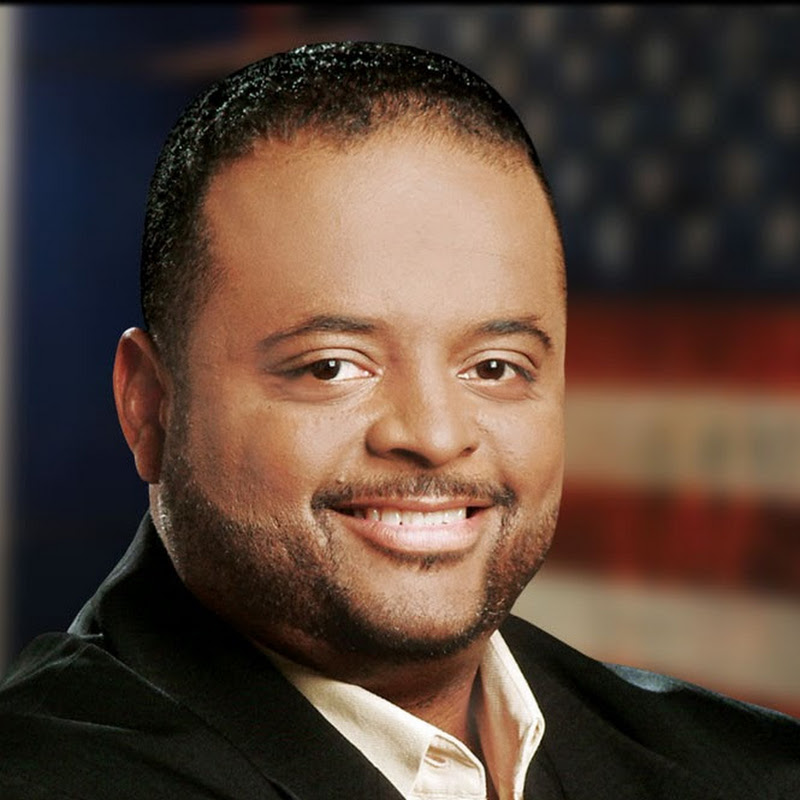
#RolandMartinUnfiltered Presents: “April 4, 1968”
YouTube · yMlRsEmpe8U
Quick Read
Summary
Takeaways
- ❖Bernice King, MLK's daughter, remembers her father's funeral as a confusing event, primarily recalling his voice from a recorded sermon, and later processed deep-seated anger and grief into adulthood.
- ❖Coretta Scott King displayed immense strength, prioritizing the movement and her children's well-being over her own public grief, only breaking down when trying on her funeral headdress.
- ❖Robert Kennedy provided immediate, practical support to Coretta Scott King, arranging phone lines, a private plane, and hotel accommodations for dignitaries, contrasting with generic condolences from others.
- ❖Many close to Dr. King, including Jim Lawson and other staff, immediately shifted into 'work mode' after his death, delaying their personal mourning for months to continue the movement and manage public outrage.
- ❖Clarence Jones, MLK's lawyer, experienced intense anger and even contemplated violent retaliation after the assassination, reflecting a broader sentiment of betrayal and a belief in a conspiracy beyond James Earl Ray.
Insights
1Children's Confused Grief and Delayed Processing
Bernice King, then five years old, described her father's funeral as a confusing event, primarily remembering his voice from a recorded sermon played at the service, which conflicted with her mother's explanation that he couldn't talk anymore. She later realized her childhood was spent processing the trauma of her father's death, followed by her uncle's mysterious death and grandmother's assassination, leading to delayed emotional processing into adulthood.
Bernice King's recollection of the funeral and her mother's attempts to explain her father's death, and her later struggles with anger and grief. [], [], [], []
2Coretta Scott King's Stoic Strength and Private Grief
Coretta Scott King maintained a strong public facade, not openly crying in front of her children or staff, immediately shifting into a 'mommy role' and 'carrying the legacy role.' Her only public emotional breakdown occurred when she tried on the headdress designed for her husband's funeral, a moment that crystallized the reality of her loss.
Zernona Clay's account of Mrs. King's stoicism, her instructions not to tell the children, and her breakdown when trying on the headdress. [], [], []
3Robert Kennedy's Practical and Immediate Support
In contrast to generic condolences, Robert Kennedy's call to Coretta Scott King after the assassination was uniquely practical. He immediately dispatched a team to install nine new telephone lines, arranged a private plane for her to retrieve MLK's body, and secured hotel rooms in Atlanta for incoming dignitaries, demonstrating a deep understanding of the logistical and emotional needs during such a crisis, likely drawn from his own experience with JFK's assassination.
Zernona Clay's detailed account of Robert Kennedy's specific actions and arrangements. [], []
4The Mortician's Inability to Conceal the Trauma
During the private viewing of Dr. King's body, Zernona Clay was horrified by the appearance of his face, noting it looked 'awful' and 'as if someone had gone and just dug up a big glob of clay and slapped it upside his face.' The mortician bluntly stated that King's jaw was 'blown up' and that was 'the best I could do,' highlighting the brutal reality of the assassination's impact.
Zernona Clay's description of MLK's appearance in the casket and the mortician's response. [], []
5The FBI's Acknowledgment of Past Misconduct
Former FBI Director James Comey kept a photostatic copy of the memo from J. Edgar Hoover to Robert F. Kennedy, authorizing the wiretapping of Martin Luther King Jr., under the glass top of his desk. He used this as a teaching tool for new agents, stating, 'The FBI can never become that agency again,' acknowledging the agency's historical overreach and surveillance against civil rights leaders.
Clarence Jones's account of his meeting with James Comey and the display of the wiretap memo. [], []
Bottom Line
Richard Nixon, then a Republican candidate, privately offered Coretta Scott King a personal check to cover the full education expenses for all four King children, expressing a sense of American responsibility for the climate that led to the assassination. This act was kept private and is not widely known.
This reveals a rarely seen side of Nixon and suggests a moment of bipartisan or personal empathy during a deeply divisive time. It complicates the historical narrative of Nixon's relationship with the Civil Rights Movement and the King family.
Further research into private acts of support or reconciliation from unexpected political figures during the Civil Rights era could uncover more nuanced historical perspectives.
Clarence Jones, MLK's lawyer and speechwriter, believed the assassination was a 'cold, calculated, premeditated conspiracy' extending beyond James Earl Ray, potentially involving figures like the Hunt brothers in Texas. He shared this strong opinion with former FBI Director James Comey, who responded, 'You didn't hear me say the case was closed, did you?'
This highlights a persistent belief among some close to King that the official narrative of his assassination is incomplete, suggesting a deeper, unaddressed conspiracy. Comey's ambiguous response implies that even within the FBI, the 'case closed' status might not be universally accepted internally.
Investigating the lingering questions and alternative theories surrounding MLK's assassination, particularly those held by his inner circle, could offer new angles for historical inquiry and public understanding.
Dr. King made several unusual calls to his mother and brother on April 4th, and also called a friend to inquire about his motel room number (306), which was the same as the friend's house number. He also left artificial roses for Coretta's upcoming birthday, stating he didn't know if he would be there in person.
These 'odd things' are framed as premonitions or a subconscious awareness of his impending death, adding a layer of tragic foresight to the final day of his life. It suggests a profound internal preparation for his fate.
Exploring the psychological and spiritual aspects of leaders facing existential threats, and how such premonitions might manifest, could offer insights into human resilience and foresight.
Key Concepts
Conquering the Love of Wealth and the Fear of Death
Hosea Williams described Martin Luther King Jr. as having conquered both the love of wealth and the fear of death. This mental model suggests that individuals who overcome these two fundamental human attachments become 'unstoppable' in their pursuit of justice and belief, as they are not swayed by material gain or personal safety.
Death as the Ultimate Democracy
Dr. King frequently told his colleagues that 'death is the ultimate democracy,' emphasizing that no one controls when, how, or where they die. The only decision one has is 'what is it you give your life for?' This model reframes death not as an end to be feared, but as an inevitable event that gives purpose to one's life choices and commitments.
Lessons
- Prioritize the continuation of justice-oriented work and community building, even in the face of profound loss or adversity, as many civil rights leaders did after MLK's death.
- Actively embrace and include all members of the community, fostering unity rather than exclusivity, as a way to honor Dr. King's legacy of collective action.
- Cultivate a mindset of 'conquering the love of wealth and the fear of death' to become more effective and unwavering in advocating for deeply held beliefs and justice.
Notable Moments
Bernice King's childhood confusion at her father's funeral, hearing his voice on a recording after being told he couldn't speak, and her later struggle with unprocessed grief from multiple family tragedies.
Illustrates the profound and complex psychological impact of such a public tragedy on a child, and the long-term process of healing and understanding.
Robert Kennedy's immediate and highly practical response to Coretta Scott King's needs after the assassination, arranging logistical support rather than just offering condolences.
Highlights the critical importance of actionable support during a crisis and offers a unique perspective on the solidarity between the Kennedy and King families, likely shaped by shared experiences of political assassination.
Zernona Clay's experience of applying makeup to Dr. King's disfigured face in the casket, after the mortician admitted his jaw was 'blown up' and he could do no more.
Reveals the brutal and visceral reality of the assassination's violence, and the personal, intimate acts of care performed by those closest to him in the face of immense trauma.
The silent embrace between Coretta Scott King and Jacqueline Kennedy, lasting an 'endless period of time,' without a single spoken word.
Symbolizes a profound, unspoken understanding of shared grief and trauma between two women who lost their husbands to assassination, transcending words through shared experience.
Quotes
"I think something died in America after death for Dr. King."
"His body was buried, but his spirit is more alive now in more ways than any of us could ever imagine."
"It was the way, the trauma, the traumatic way that he was killed that I think makes his message, his movement even more lasting."
"He conquered the love of wealth and the fear of death. Now understand when you don't really care about money... and you're not afraid to die, you're unstoppable."
"You're going to die. Death is the ultimate democracy. And you got nothing to say about when you die, how you die, where you die. The only decision you have is what is it you give your life for?"
"You didn't hear me say the case was closed, did you?"
Q&A
Recent Questions
Related Episodes
Celebrating the Legacy of the Rev. Dr. Bernard Lafayette, Jr.
"This memorial service celebrates the life and enduring legacy of Rev. Dr. Bernard Lafayette, Jr., a pivotal civil rights leader, nonviolence strategist, and educator whose teachings transformed movements globally."
Freedom to Discriminate: Realtors Conspired to Segregate Housing & Divide America |#RolandsBookClub
"This episode exposes how American realtors deliberately invented and institutionalized housing segregation, shaping federal policy and ultimately redefining the concept of 'freedom' to fuel a political ideology that continues to divide the nation."

Erika Cries…Again. A Mysterious Death In Pennsylvania Reignites Butler Conspiracies. | Ep 349
"Candace Owens connects the mysterious death of a Pennsylvania man with access to powerful explosives to the alleged assassination attempt on Donald Trump in Butler, Pennsylvania, and the subsequent death of Charlie Kirk, suggesting a deeper, coordinated conspiracy involving international actors and a cover-up by those close to Kirk."
Homegoing Service for Ronald LaPread, co-founder of and bassist for the Commodores
"Ronald LaPread, co-founder and bassist of The Commodores, is remembered through heartfelt eulogies highlighting his profound impact on music, family, and community, from his roots in Civil Rights-era Tuskegee to his later life in New Zealand."