
Retired General: Minneapolis Exposes Leadership Crisis Among ICE and CBP
YouTube · kfnAtVRWVxA
Quick Read
Summary
Takeaways
- ❖The National Guard's domestic mission is limited to supporting civilian authorities, such as guarding buildings, not policing or arresting citizens.
- ❖Invoking the Insurrection Act federalizes military forces, allowing them to act as soldiers using kinetic force, including deadly force, against American citizens.
- ❖Retired General Mark Hurtling critically assesses ICE and Border Patrol's conduct in Minneapolis as lacking leadership, training, and professionalism, contrasting it sharply with standard police accountability.
- ❖The administration's actions in Minneapolis were perceived as an attempt to instigate violence to justify invoking the Insurrection Act.
- ❖NATO allies, particularly the Nordic Baltic 8, are actively addressing Arctic defense and climate change impacts, challenging the U.S. narrative of sole capability.
Insights
1Distinction Between National Guard and Federalized Military Roles
General Hurtling clarifies that the National Guard, when activated by a governor for "support for civilian authorities," can guard buildings or provide logistics but cannot arrest or police citizens. The Insurrection Act, however, federalizes both National Guard and active-duty forces, enabling them to act as soldiers, use kinetic force, and even fire on American citizens if an "insurrection" is declared.
If I'm sitting in the Minnesota National Guard and I'm called out to do different functions, I can do relatively supportive functions to policing authorities... but I can't arrest somebody." and "If the president sees it in his mind to call out the Insurrection Act, that changes everything... you can actually ask the military to conduct the policing functions... you can also use them in a kinetic sense... they can fire on American citizens.
2Critique of ICE and Border Patrol Conduct in Minneapolis
General Hurtling asserts that the leadership of CBP and ICE patrols in Minneapolis was "terrible," with agents having "very little training" for their roles, yet dressing like soldiers and using aggressive tactics like bear spray, pepper spray, and pointing pistols without clear threats. He notes the delay in accountability for agents involved in a fatal shooting, taking five days to pull them off duty.
What I've seen in terms of the CBP and the ICE patrols is their leadership is terrible. They have very little training in what they're supposed to do and yet they are dressing up as if they want to be soldiers with all the kit, with the arms, with the weapons." and "How did it take 5 days to finally pull these officers who pulled the trigger off of the force? And and they were in fact it appeared to most of us as if they were actually hiding those individuals who shot the weapon.
3The Danger of Instigating Violence to Invoke the Insurrection Act
The general suggests the administration's deployment of federal agents in Minneapolis was an attempt to instigate riots and create the appearance of a rebellion, thereby justifying the invocation of the Insurrection Act to use military force against citizens.
I personally think that the president was attempting to instigate riots where it appeared that the citizens of Minneapolis were rebelling against the government through violent actions. So therefore they would have to be put down and in order to do that you would declare the insurrection act." and "They not only want to intimidate people on the streets, but they want to, it appears to me they want to instigate violence.
4NATO's Coordinated Arctic Defense Strategy
NATO, particularly influenced by the "Nordic Baltic 8" (Nordic and Baltic countries), has a long-standing, comprehensive strategy for defending the "high north," including the Greenland, Iceland, UK gap. This strategy accounts for climate change opening new sea lines and increased Russian and Chinese activity, leveraging the Arctic warfare expertise of nations like Norway, Sweden, and Finland.
The issues with the Greenland, Iceland, UK gap... has been a topic of conversation at all NATO ministries... for the last probably 15 to 20 years. It's a critical element of the NATO defense alliance because of primarily climate change and how the Arctic... is melting faster than the rest of the planet." and "Sweden and Finland have now entered the alliance and they have formed a block of individuals called the Nordic Baltic 8... and they are really forcing their agenda on the headquarters in B in Brussels to show them how important some of these Arctic issues are.
5Venezuela's Persistent Instability Post-Maduro Capture
Despite the capture of Maduro a month prior, Venezuela remains a "contested, unstable, and still deeply dysfunctional strategic space" due to entrenched corruption, oligarchs, and criminals. Secretary Rubio's testimony, while reinforcing a positive relationship with the new Venezuelan president, lacked clear objectives or a detailed plan for stabilization.
In the 3 plus weeks since that January 3rd strike and the capture of Maduro, Venezuela hasn't changed a whole lot. Uh there's still a contested, unstable, and still deeply dysfunctional strategic space because of corruption, because of the oligarchs and the criminals in the area." and "there is still no clean end point or clear objective in terms of what's going to happen in Venezuela.
Lessons
- Advocate for clear legal and operational distinctions between military and law enforcement roles in domestic contexts to prevent mission creep and preserve public trust.
- Demand rigorous training, clear rules of engagement, and robust accountability mechanisms for all federal agents (like ICE and Border Patrol) deployed in civilian areas.
- Recognize and resist attempts by political leadership to instigate violence or exploit civil unrest to justify extraordinary measures like invoking the Insurrection Act.
- Support international alliances like NATO for collective defense, particularly in complex geopolitical areas like the Arctic, leveraging diverse national expertise.
- Critically evaluate post-conflict interventions, understanding that leadership changes alone do not resolve deep-seated corruption and instability.
Quotes
"You don't want the military, even though they are much better trained and much better led than some of the yahoos we've been seeing on the streets of Minneapolis over the last couple of weeks. Uh, what I've seen in terms of the CBP and the ICE patrols is their leadership is terrible."
"When you start saying we're going to train on the streets of America, uh that that is not what we do."
"They not only want to intimidate people on the streets, but they want to, it appears to me they want to instigate violence."
"How did it take 5 days to finally pull these officers who pulled the trigger off of the force? And and they were in fact it appeared to most of us as if they were actually hiding those individuals who shot the weapon. You know, trying to get them out of there and put them in another place and not even naming that an investigation was going on. All of that is contrary to the way a democracy works."
Q&A
Recent Questions
Related Episodes

Taking Greenland Would Trigger a NATO Crisis (w/ Mark Hertling) | The Bulwark Podcast
"Retired US Army Lieutenant General Mark Hertling dissects the geopolitical absurdities of potential US military interventions in Greenland and Iran, highlighting the erosion of alliances and the critical need for comprehensive strategic planning."

Alex Krainer: Venezuela Goes Trap & With Greenland NATO Faces Collapse
"Alex Krainer dissects the perplexing 'abduction' of Venezuela's President Maduro, linking it to a vast global network of drug trafficking, money laundering, and election rigging, suggesting Trump's actions might be a covert assault on this 'deep state' system, rather than conventional foreign policy."
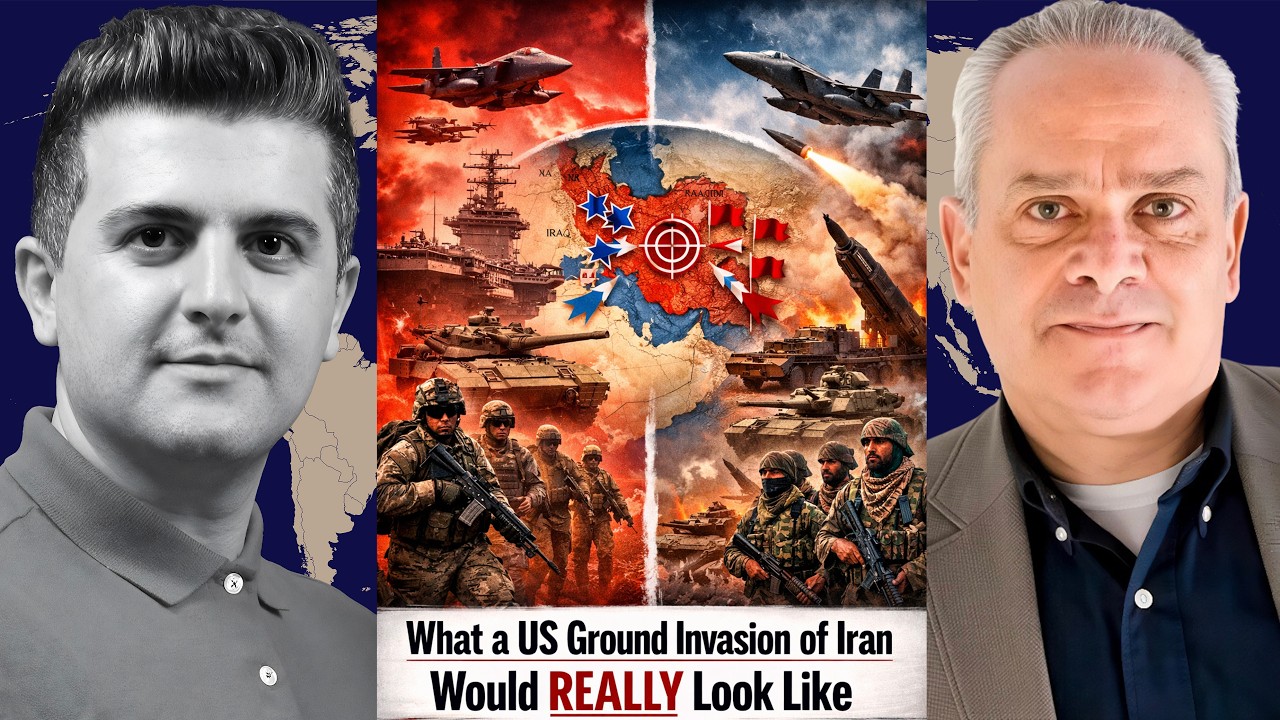
Col. Jacques Baud: What a US Ground Invasion of Iran Would REALLY Look Like
"Colonel Jacques Baud dissects the strategic futility of a US ground invasion of Iran, arguing that current troop levels are insufficient and such an action would backfire, exposing US allies and potentially leading to Iran's nuclearization."
Texas panic rises as Epstein problem gets worse
"Republicans face unexpected challenges in Texas, escalating political fallout from Epstein files, and concerning revelations about ICE's militarization and training, all while navigating internal hypocrisy."